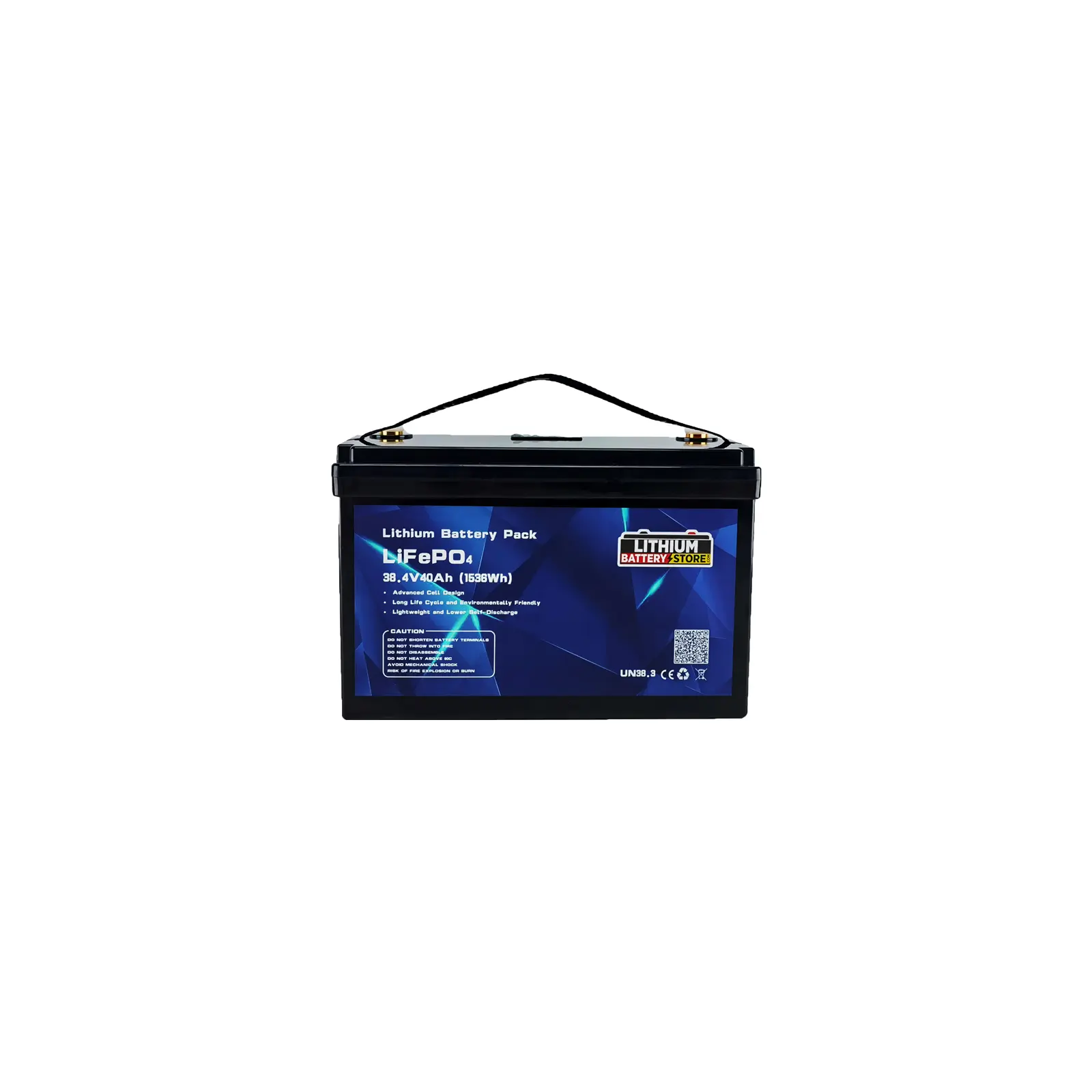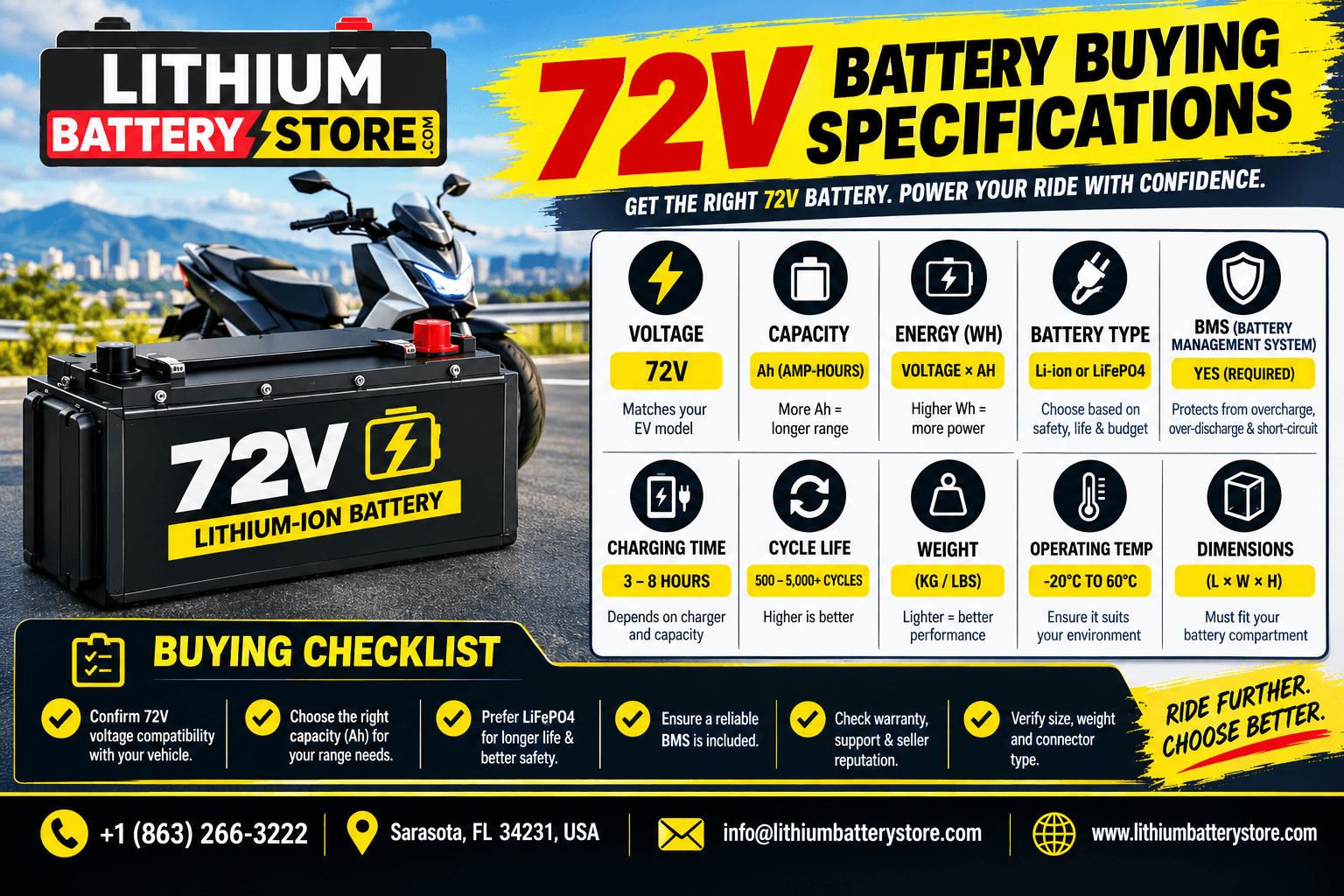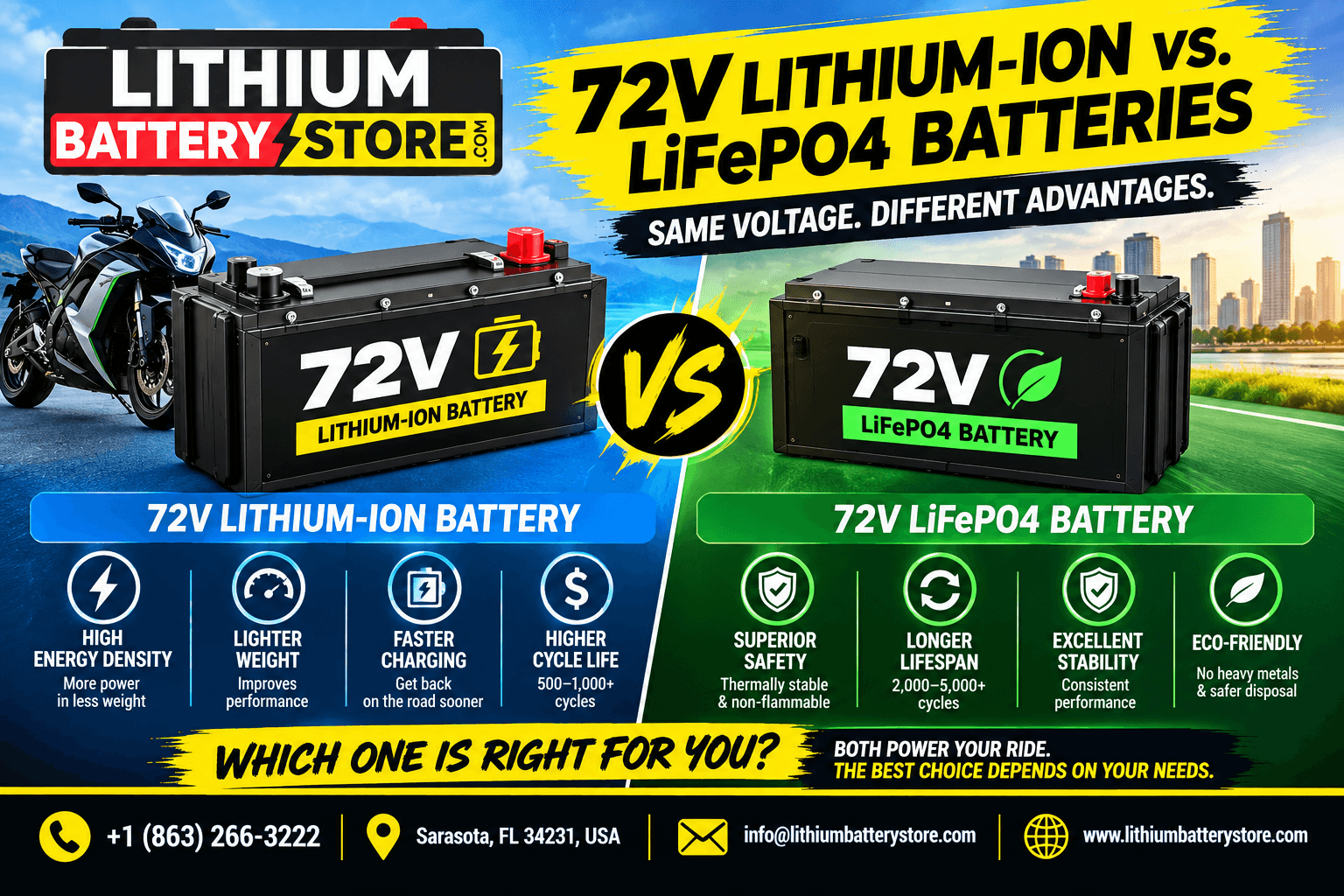
72V LiFePO4 Battery

72V LiFePO4 Battery Replacement Guide for Off Road ATVs

A reliable battery is essential for electric off-road ATVs. It supplies the power needed for acceleration, climbing, and riding across uneven terrain. When an existing battery loses capacity, charges poorly, or fails to deliver enough current, replacing it with a suitable 72V LiFePO4 battery may be a practical solution.

Lithium iron phosphate batteries are popular in electric vehicle applications because they offer stable performance and a long service life when used within their specifications. However, not every battery labeled 72V is compatible with every ATV. Before purchasing a replacement, riders should check the battery chemistry, voltage range, capacity, current requirements, charger, and physical dimensions.

This guide explains how to choose and replace a 72V LiFePO4 battery for an electric off-road ATV.

Why Consider a 72V LiFePO4 Battery Replacement?

A battery replacement can help restore an ATV’s usable riding time and consistent power delivery. LiFePO4 technology may also offer advantages over some traditional battery chemistries, depending on the original setup and the replacement battery’s specifications.

Key benefits can include:

  • Long service life: A well-designed LiFePO4 battery can support many charge and discharge cycles when operated correctly.
  • Stable power delivery: A suitable battery can provide consistent voltage during normal riding.
  • Reduced battery weight: Some lithium packs weigh less than comparable lead-acid battery banks, although actual weight depends on the design and capacity.
  • Integrated protection: Many packs include a battery management system (BMS) to protect against conditions such as overcurrent, overcharging, and excessive discharge.
  • Convenient maintenance: LiFePO4 batteries generally do not require the routine watering associated with flooded lead-acid batteries.

The benefits depend on the selected battery and the ATV’s electrical system. A replacement should always meet the vehicle manufacturer’s requirements.

1. Confirm Your ATV’s Voltage Requirements

The first step is to verify that the ATV is designed for the replacement battery’s voltage range. A label stating 72V does not tell you the battery’s complete operating or charging voltage.

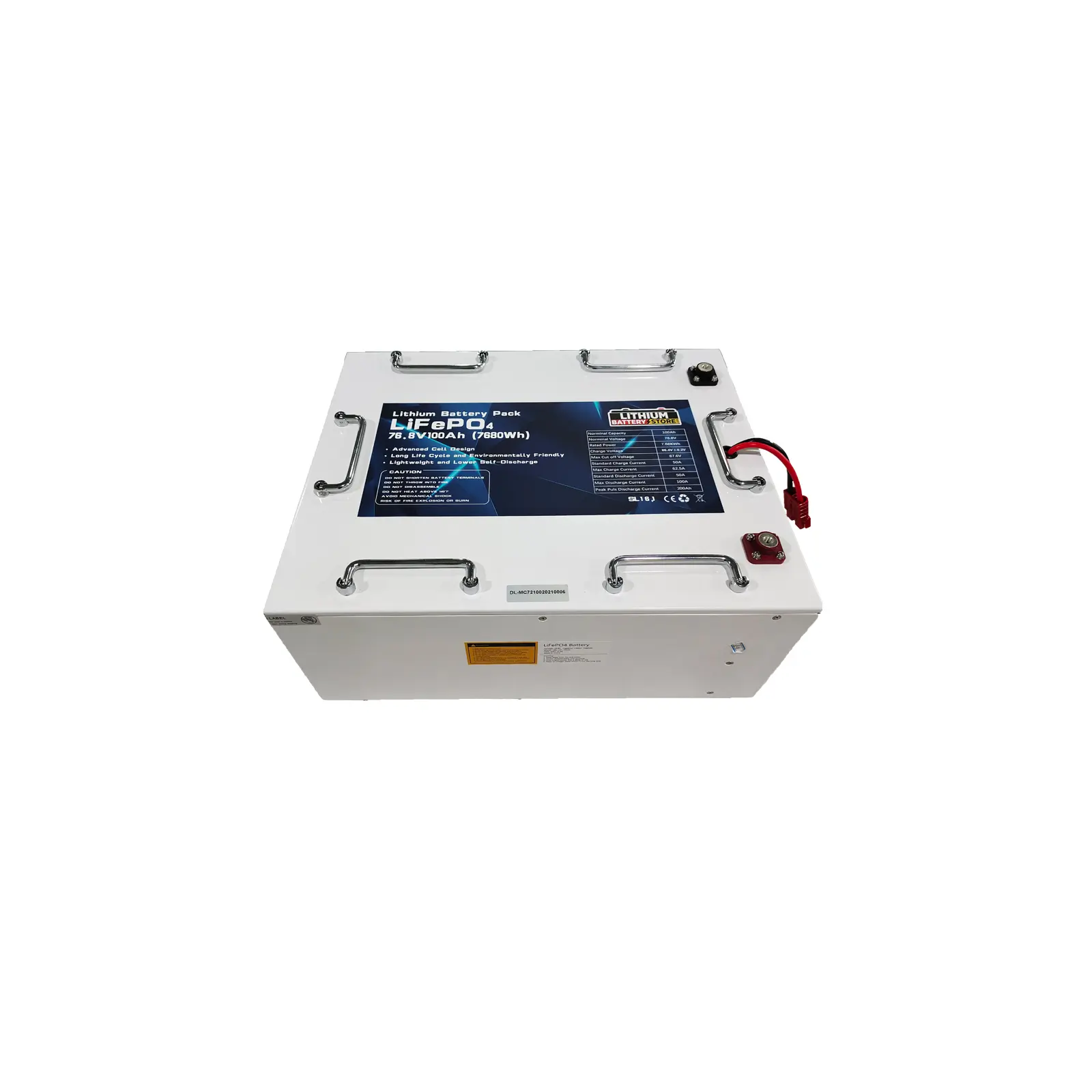
For example, a 24-series LiFePO4 pack typically has a nominal voltage of 76.8V and a full-charge voltage of 87.6V. Other battery chemistries marketed as 72V may have different voltage ranges.

Before buying a replacement, check:

  • The original battery label and specifications
  • The motor controller’s supported voltage range
  • The manufacturer’s recommended battery configuration
  • The maximum charging voltage
  • The vehicle’s low-voltage cutoff requirements

Do not assume that a 72V lithium-ion battery and a 72V LiFePO4 battery are interchangeable. Their cell configurations and full-charge voltages may differ.

2. Choose the Right Battery Capacity

Battery capacity, measured in amp-hours (Ah), affects how much energy the battery can store. A higher-capacity battery may provide longer riding time, provided the vehicle and installation can accommodate it.

Battery energy is commonly estimated by multiplying nominal voltage by amp-hour capacity.

For example, a 76.8V, 50Ah LiFePO4 battery has approximately 3,840 watt-hours (Wh) of nominal energy.

Actual riding time depends on terrain, rider weight, speed, temperature, tire pressure, motor efficiency, and riding style. Frequent acceleration and steep climbs can increase energy consumption.

When choosing capacity, consider your usual riding conditions. A recreational rider on moderate trails may have different needs from someone using an ATV on demanding terrain for extended periods. Also confirm that a larger battery will physically fit and remain within the vehicle’s weight and mounting limits.

3. Check Continuous and Peak Current Ratings

Voltage and capacity are only part of battery selection. An off-road ATV may require high current during acceleration, hill climbing, and movement through mud or loose ground.

The battery and its BMS must support the current demanded by the motor controller.

Review these specifications:

  • Continuous discharge current: The current the battery can supply under its stated operating conditions.
  • Peak discharge current: The higher current available for a limited period, if specified.
  • BMS current rating: The limits imposed by the battery management system.
  • Controller requirements: The maximum battery current and any short-duration current demands.

A battery with adequate amp-hour capacity may still be unsuitable if its current rating is too low. If the BMS repeatedly disconnects power under acceleration, the battery may not be matched to the controller or the system may have another electrical fault.

Ask the battery supplier to confirm compatibility with your ATV’s controller before ordering.

4. Select a Compatible Battery Charger

A replacement battery may require a different charging setup from the original battery. Use a charger specifically approved for the selected LiFePO4 pack.

Check the charger’s output voltage, charging current, connector, polarity, and charging profile. Do not rely on a matching plug or a “72V” label alone.

For example, a 24-series LiFePO4 pack may require a charging voltage of 87.6V, while a different 72V battery configuration may require another value. Always follow the battery manufacturer’s datasheet.

Avoid chargers with lead-acid equalization or desulfation modes unless the battery manufacturer explicitly approves the equipment and settings. Never exceed the pack’s specified charging voltage or current.

5. Measure the Battery Compartment

Physical fit is another important part of a successful battery replacement. Lithium batteries can have different dimensions, terminal positions, and mounting requirements from the original pack.

Before purchasing, measure:

  • Compartment length, width, and height
  • Available mounting and fastening points
  • Terminal orientation and connector clearance
  • Cable routing space
  • Ventilation and protection from dirt, moisture, and vibration

The replacement must be secured against movement during off-road use. Do not force a battery into a compartment or leave it loose because its dimensions are slightly different.

Also check whether the replacement requires a different connector, fuse, cable, or mounting bracket. Any changes should be correctly rated and installed according to the vehicle and battery manufacturers’ instructions.

6. Replace the Battery Safely

Battery replacement involves electrical and mechanical risks. A 72V-class battery can deliver substantial fault current, so installation should be performed by a qualified technician if you are unfamiliar with high-current electrical systems.

Use this general checklist:

  1. Switch off the ATV and follow the manufacturer’s shutdown and isolation procedure.
  2. Remove the key and disconnect the charging equipment.
  3. Isolate the battery using the designated disconnect, if fitted.
  4. Follow the vehicle service manual for disconnecting and removing the old battery.
  5. Inspect the compartment, cables, terminals, connectors, and fuse for damage or corrosion.
  6. Verify the replacement battery’s model, polarity, voltage, dimensions, and current ratings before connecting it.
  7. Secure the new battery using the approved mounting method.
  8. Reconnect the electrical system in the sequence specified by the manufacturer.
  9. Check that all covers and protective barriers are installed correctly.
  10. Charge the battery using its approved charger and perform the initial checks recommended by the supplier.

Never work on exposed live terminals with metal tools or allow the positive and negative terminals to short together. Do not open the battery enclosure, bypass the BMS, or improvise connections. If the old battery is swollen, leaking, unusually hot, or physically damaged, do not attempt a routine replacement procedure until the situation has been assessed safely.

7. Test the ATV After Installation

Once the battery has been installed and checked, follow the manufacturer’s commissioning instructions before riding.

Confirm that the battery display, charger, and vehicle indicators behave normally. Check for loose connections, unusual heat, warning lights, and unexpected power interruptions. If the ATV uses battery communication or a dedicated display, make sure the replacement supports the required interface.

Begin with a controlled, low-speed test in a safe area. Avoid demanding climbs or aggressive acceleration until normal operation has been confirmed. Stop using the vehicle if the battery overheats, the BMS repeatedly trips, or the ATV shows abnormal electrical behavior.

8. How to Choose a Reliable Replacement Supplier

A suitable supplier should provide clear technical specifications rather than relying on a generic 72V label. Look for documented information about the battery chemistry, nominal and full-charge voltage, capacity, continuous and peak current, BMS protections, charger requirements, dimensions, warranty, and support.

Lithium Battery Store can be considered when researching lithium battery replacement options. Before purchasing, provide the ATV’s make, model, model year, original battery specifications, and motor controller details so compatibility can be checked.

A supplier’s confirmation is especially important when replacing a lead-acid battery bank with a lithium pack or upgrading battery capacity. The vehicle may need a compatible charger, revised mounting, or other manufacturer-approved changes.

Conclusion

Replacing an off-road ATV battery with a 72V LiFePO4 battery can be a useful way to restore performance or meet different riding needs. The key is selecting a battery that matches the ATV’s electrical system, not simply choosing one with the right label.

Verify voltage and charging limits, capacity, continuous and peak current, BMS compatibility, charger settings, and physical fit before ordering. Follow the service manual during installation, secure the battery properly, and test the vehicle carefully before returning to the trail. With the right specifications and safe installation, a compatible LiFePO4 battery can provide dependable energy storage for an electric off-road ATV.

Frequently Asked Questions

Can I replace my ATV’s original battery with a 72V LiFePO4 battery?

Only if the ATV’s controller, wiring, voltage range, charger, and mounting arrangement are compatible. Confirm the exact specifications before purchasing.

Is every 72V lithium battery compatible with a 72V ATV?

No. Different lithium chemistries and cell configurations can have different nominal and full-charge voltages. Check the complete battery datasheet and the controller’s permitted voltage range.

What capacity should I choose for a 72V off-road ATV?

Choose capacity according to your desired riding time, energy consumption, available space, and vehicle limits. A higher Ah rating usually stores more energy, but it does not automatically guarantee better performance.

Can I use my existing ATV charger with a LiFePO4 replacement?

Not necessarily. The charger must match the replacement battery’s chemistry, charging voltage, and current requirements. Confirm compatibility with the battery manufacturer before charging.

Why does my replacement battery shut off during acceleration?

Possible causes include excessive current demand, a BMS limit, a poor connection, or a controller or battery fault. Stop riding and have the battery and electrical system checked rather than bypassing the BMS.

Does a LiFePO4 battery need regular maintenance?

LiFePO4 batteries generally require less routine maintenance than flooded lead-acid batteries. However, users should still inspect mounting and connections, keep the battery within its specified temperature range, use the correct charger, and follow the manufacturer’s storage instructions.

What details should I provide before ordering a replacement?

Provide the ATV make and model, model year, original battery voltage and chemistry, capacity, controller specifications, charger details, compartment dimensions, and connector information. These details help determine whether a replacement pack is suitable.

72V Lithium Battery

Choosing the Right 72V Lithium Battery Pack for Electric Vehicles

Electric vehicles require a reliable battery system to deliver consistent power, dependable performance, and efficient operation. Whether you operate an electric ATV, motorcycle, scooter, utility vehicle, mini EV, or industrial vehicle, choosing the right battery pack is essential for getting the best results from your vehicle.

A 72V lithium battery pack can be a suitable power solution for electric vehicles designed to operate with a compatible 72V system. Among the available battery technologies, lithium iron phosphate batteries, commonly known as LiFePO4 batteries, are worth considering because of their cycle life, stable chemistry, and reduced maintenance requirements.

However, selecting a battery involves more than matching the voltage. Capacity, discharge current, battery management system protection, charger compatibility, physical dimensions, and operating conditions all play an important role.

In this guide, we explain how to choose the right 72V lithium battery pack for electric vehicles and what to check before purchasing a replacement or upgrade.

Why Choose a 72V Lithium Battery Pack?

Lithium battery technology is widely used in electric mobility and industrial applications. When matched to the vehicle’s electrical system, a suitable lithium battery pack can offer several advantages.

Longer Battery Service Life

LiFePO4 batteries are known for their potential to deliver many charge and discharge cycles under appropriate operating conditions. Their actual service life depends on cell quality, charging habits, operating temperature, depth of discharge, and battery management.

For vehicles used regularly, a quality LiFePO4 battery may offer a practical long-term alternative to conventional lead acid batteries.

Reduced Maintenance

Many lithium iron phosphate battery packs do not require the routine electrolyte checks and watering associated with flooded lead acid batteries.

This can simplify maintenance for electric vehicles used in transportation, agriculture, commercial facilities, and industrial environments.

Lower Battery Weight

Lithium batteries generally have a higher energy density than lead acid batteries. Depending on the battery configuration, a lithium replacement may reduce the total battery system weight.

Lower weight can be beneficial for electric scooters, motorcycles, ATVs, and utility vehicles. However, the actual effect on vehicle handling and performance depends on the vehicle design and battery placement.

Consistent Power Delivery

A properly matched LiFePO4 battery can maintain relatively stable voltage across much of its discharge cycle. This can help support consistent operation when the battery and motor controller are compatible.

The battery must also provide sufficient current during acceleration, hill climbing, and other periods of increased electrical demand.

1. Confirm Your Vehicle’s Voltage Requirements

The first step in selecting a 72V lithium battery pack is confirming that your vehicle supports the battery’s electrical specifications.

Vehicles marketed as 72V may use different battery chemistries and cell configurations. As a result, their nominal voltage and full-charge voltage may differ.

Before purchasing a replacement battery, check the following:

  • Original battery voltage and chemistry
  • Motor controller operating voltage range
  • Required full-charge voltage
  • Minimum battery operating voltage
  • Vehicle manufacturer’s battery specifications

A battery that is incompatible with the motor controller may cause operational problems or damage electrical components.

Do not assume that every battery advertised as a 72V lithium battery is suitable for every electric vehicle. Confirm the complete voltage specifications with the vehicle manufacturer or a qualified technician.

2. Select the Right Battery Capacity

Battery capacity is generally measured in amp-hours (Ah), while energy is measured in watt-hours (Wh).

Amp-hours indicate the amount of electrical charge a battery can store. Watt-hours provide a more useful estimate of the battery’s nominal energy capacity.

For example, a nominal 72V 50Ah battery provides approximately 3,600Wh of nominal energy. A nominal 72V 100Ah battery provides approximately 7,200Wh.

These figures represent nominal energy, not guaranteed usable energy or driving range.

When choosing capacity, consider how long your vehicle needs to operate between charges. A small electric utility vehicle used for occasional short trips may have different requirements from an ATV used on challenging terrain or an industrial vehicle operating for extended shifts.

Factors to consider include daily travel distance, vehicle load, terrain, average speed, motor efficiency, and charging frequency.

Choosing a suitable capacity helps balance operating time, battery cost, weight, and available installation space.

3. Check Continuous and Peak Discharge Current

Battery discharge capability is particularly important for electric vehicles because motors can demand substantial current during acceleration and heavy operation.

Two specifications deserve close attention.

Continuous discharge current is the current a battery can supply under its specified operating conditions.

Peak discharge current is the higher current it can supply for a limited period, according to the manufacturer’s rating.

For example, an electric ATV climbing a steep slope may require more current than a utility vehicle traveling on flat ground. The selected battery must be able to support the current demanded by the motor controller.

A battery with insufficient discharge capability may trigger BMS protection, interrupt vehicle operation, or fail to deliver the expected performance.

Always compare the battery’s current ratings with the controller and motor requirements before purchasing.

4. Choose a Lithium Battery with BMS Protection

A battery management system, commonly known as a BMS, monitors the battery pack and provides protective functions according to its design.

For a 72V lithium battery pack, the BMS is an important component because it helps monitor battery operating conditions and can protect against issues such as overcharging, excessive discharge, overcurrent, and temperature extremes.

When comparing battery packs, check the following features:

  • Overvoltage and undervoltage protection
  • Continuous and peak current ratings
  • Temperature monitoring and protection
  • Cell balancing capabilities
  • Short-circuit protection
  • Communication features, where required

The BMS must be appropriate for the battery’s cell configuration and the vehicle’s electrical demands.

For demanding applications such as electric ATVs, utility vehicles, and industrial equipment, selecting the correct BMS current rating is especially important.

5. Verify Charger Compatibility

A 72V lithium battery pack needs a charger compatible with its chemistry and electrical specifications.

A charger originally supplied with a lead acid battery system should not automatically be used with a LiFePO4 battery. Charging voltage, charging profile, and BMS requirements must all be considered.

Before selecting a charger, verify its output voltage, charging current, charging profile, and compatibility with the battery manufacturer’s recommendations.

Some battery systems also require communication between the battery and charger. If this is necessary, confirm that the selected components support the required communication protocol.

Using a compatible charger can help support safe charging and maintain battery performance over time.

6. Consider Battery Dimensions and Installation Requirements

A battery pack can meet the vehicle’s voltage and current requirements yet still be unsuitable because of its size or connection arrangement.

Measure the available battery compartment and compare it with the dimensions of the proposed battery.

Check the following details:

  • Battery length, width, and height
  • Weight and mounting requirements
  • Terminal position and connector type
  • Cable size and connection arrangement
  • Enclosure protection and ventilation requirements
  • Clearance for maintenance and inspection

The battery should be securely mounted and protected against movement and vibration during normal operation.

Electrical installation should use appropriately rated cables, connectors, fuses, and protective components. A qualified technician should assess any conversion that requires changes to the original wiring or vehicle controller.

7. Choose a Battery for Your Vehicle Application

Different electric vehicles have different power and energy requirements. The best battery configuration depends on the vehicle’s intended use.

Electric ATVs and Off Road Vehicles

Electric ATVs may need high discharge current during acceleration and climbing. A suitable 72V LiFePO4 battery should meet the controller’s current requirements and be designed for the environmental conditions associated with off road use.

Electric Motorcycles and Scooters

Two-wheeled electric vehicles require careful attention to battery weight, dimensions, discharge capability, and available installation space. Check the manufacturer’s specifications before choosing a replacement battery.

Utility Vehicles and Mini EVs

Utility vehicles and mini EVs may prioritize operating time, dependable power, and reduced maintenance. Select a battery with suitable capacity and verify its compatibility with the vehicle’s electrical system.

Industrial Vehicles and AGVs

Industrial vehicles and automated guided vehicles may operate for extended periods or under demanding duty cycles. Battery selection should account for charging schedules, continuous power requirements, operating temperature, and any vehicle communication requirements.

A battery designed for one application should not be assumed to be suitable for another without a technical compatibility assessment.

8. Compare Battery Quality, Warranty, and Supplier Support

Battery specifications are important, but supplier support also matters when choosing a long-term power solution.

Look for clearly documented cell specifications, battery capacity, discharge ratings, BMS features, charging instructions, warranty terms, and operating limits.

Lithium Battery Store can be a starting point for exploring lithium battery options for compatible electric vehicles and utility applications.

Before purchasing a 72V lithium battery pack, provide the vehicle model, model year, original battery specifications, and motor controller details. Ask the supplier to confirm the battery’s nominal voltage, full-charge voltage, capacity, current ratings, dimensions, and charger requirements.

Lithium Battery Store can also be contacted to discuss the technical information needed to evaluate a suitable battery configuration for your application.

Choosing a battery based on documented specifications rather than voltage alone can help reduce compatibility problems.

How to Maintain a 72V LiFePO4 Battery

Proper care can help support reliable operation and extend battery service life.

Use only a compatible charger and follow the manufacturer’s charging instructions. Keep the battery within its specified operating temperature range and avoid exposing it to conditions beyond its environmental rating.

Inspect cables, connectors, mounting hardware, and the battery enclosure periodically. Follow the manufacturer’s recommendations for storage if the vehicle will remain unused for an extended period.

Do not bypass the BMS or continue operating a battery that shows signs of physical damage, unusual heating, or repeated protection shutdowns.

Regular inspections and correct charging practices can help maintain dependable battery performance.

Conclusion

Choosing the right 72V lithium battery pack for an electric vehicle requires careful consideration of voltage, capacity, discharge current, BMS protection, charger compatibility, physical dimensions, and operating conditions.

LiFePO4 batteries can offer reduced maintenance, a potentially long cycle life, and lower weight compared with many lead acid alternatives. However, the benefits depend on selecting a suitable battery and installing it correctly.

Before purchasing a replacement or upgrade, verify your vehicle’s specifications and confirm compatibility with the battery manufacturer or a qualified technician.

By evaluating these factors carefully, you can choose a reliable battery solution for your electric ATV, motorcycle, scooter, utility vehicle, or other compatible electric vehicle.

Frequently Asked Questions

What is the best 72V lithium battery pack for electric vehicles?

The best battery pack is one that matches the vehicle’s voltage range, capacity requirements, discharge current, charging system, and physical dimensions. LiFePO4 batteries are worth considering for applications that benefit from reduced maintenance and cycle life.

What is the difference between a 72V 50Ah and a 72V 100Ah lithium battery?

Both batteries have the same nominal voltage, but the 100Ah battery has approximately twice the nominal energy capacity of the 50Ah battery. Actual usable energy and operating time depend on the battery design and vehicle conditions.

Are LiFePO4 batteries suitable for electric ATVs?

They can be suitable for ATVs designed for a compatible LiFePO4 battery system. The pack must provide adequate discharge current, appropriate environmental protection, and a compatible charging profile.

Does a 72V lithium battery need a BMS?

A suitable BMS is an important part of a lithium battery pack. It monitors operating conditions and provides protective functions based on its design. The BMS must support the battery configuration and the vehicle’s current requirements.

Can I use a lead acid charger with a 72V lithium battery?

Only if the battery manufacturer confirms that the charger is compatible with the specific lithium battery pack. The charger’s output voltage and charging profile must meet the battery manufacturer’s requirements.

How long does a 72V LiFePO4 battery last?

Battery lifespan depends on cell quality, temperature, depth of discharge, charging habits, and operating conditions. Check the manufacturer’s cycle-life rating, warranty, and recommended usage conditions.

Can a 72V lithium battery increase electric vehicle range?

A suitable battery with greater usable energy may increase operating range. However, actual range also depends on vehicle efficiency, motor power, terrain, speed, load, temperature, and riding or driving style.

How do I find a compatible 72V battery for my electric vehicle?

Check the vehicle’s model, original battery voltage, controller specifications, charger requirements, current demand, and battery compartment dimensions. Share these details with the battery supplier before purchasing.

GEM Electric Vehicles

How to Upgrade GEM Electric Vehicles with Lithium Batteries

GEM electric vehicles are popular for neighborhood transportation, campus travel, resort operations, and other short-distance applications. Like other electric vehicles, they depend on a reliable battery system to deliver consistent performance and dependable daily operation. Upgrading to lithium batteries can be an excellent option for GEM owners who want to reduce battery maintenance, improve energy efficiency, and explore longer-lasting power solutions.

LiFePO4 batteries, also known as lithium iron phosphate batteries, are worth considering because of their cycle life, stable chemistry, and suitability for many deep-cycle applications. However, choosing the right battery requires careful attention to the vehicle’s voltage, battery capacity, controller requirements, and charging system.

In this guide, we explain how to upgrade GEM electric vehicles with lithium batteries, what to check before purchasing a replacement pack, and how to select a suitable battery for your vehicle.

Why Upgrade GEM Electric Vehicles with Lithium Batteries?

Traditional lead-acid batteries have powered many electric vehicles for years. However, they require periodic maintenance in some configurations, are relatively heavy, and may offer less usable energy under certain operating conditions.

A properly designed lithium battery pack can provide several advantages.

1. Longer Battery Service Life

LiFePO4 batteries are known for their potential to deliver many charge and discharge cycles when used within their recommended operating limits. Actual battery life depends on cell quality, temperature, depth of discharge, charging practices, and battery management.

For GEM vehicle owners, a quality lithium battery can be a worthwhile long-term investment when it is correctly matched to the vehicle.

2. Reduced Maintenance

Many LiFePO4 batteries are designed to operate without the routine watering required by flooded lead-acid batteries. They can therefore reduce regular battery maintenance.

A lithium battery with BMS protection also helps monitor important operating conditions and can provide protective functions against issues such as overcharging, excessive discharge, and overcurrent, depending on the BMS design.

3. Lower Battery Weight

Lithium batteries generally offer a higher energy density than lead-acid batteries. A suitable lithium replacement may reduce the overall battery system weight.

Lower weight can be beneficial, but the final effect on vehicle performance depends on the motor, controller, battery configuration, and vehicle load.

4. Consistent Power Delivery

A correctly selected LiFePO4 battery can maintain a relatively stable voltage across much of its discharge cycle. This can support consistent vehicle operation when the battery pack and controller are compatible.

These advantages make lithium technology worth evaluating for GEM electric vehicles used in residential communities, campuses, and commercial environments.

Step 1: Identify Your GEM Vehicle Model

Before purchasing a replacement battery, identify the exact GEM vehicle model and model year. Different GEM vehicles can have different electrical specifications, battery configurations, and charging requirements.

Models such as the GEM e2, e4, and e6 should not automatically be assumed to use interchangeable battery packs.

Check the owner’s manual, vehicle identification information, existing battery labels, and manufacturer documentation to determine the original specifications.

Record the following details:

  • Vehicle model and model year
  • Original battery system voltage
  • Existing battery type and configuration
  • Available battery compartment dimensions
  • Battery cable and connector arrangement
  • Motor controller specifications
  • Required continuous and peak discharge current

This information helps you narrow down compatible lithium battery options and avoid purchasing a battery that cannot safely power your vehicle.

Step 2: Choose the Correct LiFePO4 Battery Voltage

Battery voltage is one of the most important factors when upgrading a GEM electric vehicle.

Your replacement battery must match the electrical requirements of the vehicle. Do not assume that a 12V, 24V, 48V, or 72V lithium battery will work simply because it is designed for an electric vehicle.

For example, a 48V lithium battery may be appropriate for a vehicle designed for a compatible 48V battery system, but it is not a universal replacement for every GEM model.

Also consider the battery’s voltage range during charging and discharging. LiFePO4 batteries have different full-charge voltage characteristics from other lithium chemistries, so the controller and charger must be compatible with the selected pack.

Before ordering, confirm the nominal voltage, full-charge voltage, minimum operating voltage, and controller limits.

Step 3: Select the Right Battery Capacity

Battery capacity is commonly expressed in amp-hours (Ah) and helps indicate how much electrical charge a battery can store.

A higher-capacity battery may support longer operating periods, provided the voltage, discharge capability, and physical dimensions are suitable for the vehicle.

When choosing a replacement battery for a GEM electric vehicle, consider how the vehicle is used.

For occasional neighborhood trips, the required capacity may differ from that needed for daily campus transportation or commercial fleet operations.

Evaluate these factors:

  • Typical distance traveled each day
  • Passenger and cargo load
  • Road conditions and gradients
  • Frequency of charging
  • Required operating time between charges
  • Available space and weight limits

Battery energy is also important. It can be estimated in watt-hours by multiplying nominal voltage by amp-hour capacity. However, actual driving range depends on energy consumption, temperature, terrain, driving style, and usable battery capacity.

Choose capacity based on your actual operating requirements rather than assuming that a larger battery will automatically deliver a specific range.

Step 4: Check the Battery Management System

A battery management system, or BMS, is an important part of a lithium battery pack. It monitors battery operating conditions and provides protective functions according to its design.

For GEM electric vehicle upgrades, check whether the BMS supports the battery’s required continuous current and peak current. These specifications matter because an electric motor can demand substantial current during acceleration or when climbing a slope.

Look for a lithium battery with suitable protection against overvoltage, undervoltage, overcurrent, and excessive temperature. Cell balancing and short-circuit protection may also be available, depending on the pack.

The BMS must be compatible with the vehicle’s power demands. A battery with insufficient discharge capability may trigger protection and interrupt vehicle operation.

For this reason, compare the battery specifications with the motor controller requirements before installation.

Step 5: Verify Charger Compatibility

A lithium battery conversion may require a different charger from the original lead-acid system.

A charger designed for lead-acid batteries may not use an appropriate charging profile for a LiFePO4 pack. Continued use without confirmation from the battery manufacturer can cause charging problems or reduce battery service life.

Before completing the upgrade, verify:

  • Charger output voltage
  • Charging current
  • LiFePO4 charging profile
  • Battery manufacturer’s charging recommendations
  • Compatibility with the BMS
  • Any communication requirements between the battery and charger

A compatible charger helps maintain safe and reliable operation. Do not select a charger based only on the battery’s nominal voltage.

Step 6: Confirm Physical Fit and Installation Requirements

Even if a lithium battery matches the vehicle’s voltage and current requirements, it must also fit the available battery compartment.

Measure the compartment and compare its dimensions with the replacement battery. Check terminal placement, cable lengths, mounting arrangements, ventilation requirements, and protection against vibration and moisture.

The battery must be securely mounted and protected from movement during driving. Electrical connections should use appropriately rated cables, connectors, fuses, and other protective components.

Lithium conversions can also affect battery weight distribution and the vehicle’s original electrical protection. Have a qualified electric vehicle technician assess the installation, particularly if the conversion involves changes to the original battery wiring or controller settings.

Step 7: Choose a Reliable Lithium Battery Supplier

Battery quality and technical support are important when selecting a replacement pack.

Lithium Battery Store can be a starting point for exploring lithium battery options for electric vehicles and identifying a suitable battery configuration for your application.

Before purchasing, ask the supplier to confirm the battery’s nominal voltage, capacity, dimensions, continuous discharge current, peak discharge current, BMS specifications, and charging requirements.

You should also confirm the warranty terms, expected operating conditions, and availability of technical support.

For a GEM electric vehicle, provide the exact model and year rather than requesting a battery based only on a general voltage description. This makes it easier to evaluate whether a proposed battery is appropriate for your vehicle.

How to Maintain Your GEM Lithium Battery

Once your lithium battery upgrade is complete, proper care can help support long-term performance.

Use a charger approved for the specific LiFePO4 battery pack and follow the manufacturer’s charging instructions. Avoid exposing the battery to temperatures outside its rated operating limits.

Inspect cables and connectors periodically for looseness, corrosion, or damage. Keep the battery compartment clean and dry according to the manufacturer’s requirements.

If the vehicle will remain unused for an extended period, follow the battery manufacturer’s storage guidance, including the recommended state of charge and inspection schedule.

Do not bypass the BMS or continue operating a battery that shows signs of physical damage, unusual heating, or repeated protection shutdowns.

Conclusion

Upgrading a GEM electric vehicle with a LiFePO4 battery can offer reduced maintenance, lower battery weight, and potentially longer service life. The key to a successful conversion is choosing a battery that matches the vehicle’s electrical system rather than selecting a pack based on voltage or capacity alone.

Check your GEM model, battery voltage, capacity requirements, controller current limits, charger compatibility, BMS specifications, and installation dimensions before making a purchase. Lithium Battery Store can help you explore battery options and identify the specifications needed for your application. With careful compatibility checks and a professionally installed battery system, you can make a more informed decision about upgrading your GEM electric vehicle.

Frequently Asked Questions

Can GEM electric vehicles use LiFePO4 batteries?

Some GEM electric vehicles may be suitable for LiFePO4 battery conversions, provided the replacement pack matches the vehicle’s voltage, current requirements, charging system, dimensions, and electrical protection requirements. Confirm compatibility for your specific model.

What is the best lithium battery for a GEM electric vehicle?

The best battery is one that meets the vehicle manufacturer’s electrical specifications and offers adequate capacity, discharge current, BMS protection, and a compatible charging profile. There is no single battery that fits every GEM model.

Can I use a 48V lithium battery in a GEM vehicle?

Only if the specific vehicle is designed for a compatible 48V battery system. Check the original battery specifications, controller limits, and charging requirements before installing a replacement.

Do LiFePO4 batteries require a special charger?

LiFePO4 batteries require a compatible charging profile. A charger designed for another battery chemistry should not be used unless the battery manufacturer confirms that it is suitable.

How long do GEM lithium batteries last?

Battery lifespan depends on cell quality, usage, charging habits, temperature, depth of discharge, and maintenance. Follow the manufacturer’s cycle-life ratings and operating recommendations when comparing batteries.

Is a BMS necessary for a GEM lithium battery upgrade?

A suitable BMS is an important part of a lithium battery system. It monitors battery conditions and provides protective functions, but its current ratings and other capabilities must be appropriate for the vehicle.

Will a lithium battery increase my GEM vehicle’s driving range?

It may increase usable energy or reduce battery weight compared with an existing battery system, but the result depends on the original battery condition, replacement capacity, vehicle efficiency, terrain, and driving conditions. No specific range increase should be assumed without supporting data.

How do I find a compatible lithium battery for my GEM vehicle?

Identify your GEM model and year, confirm the original battery voltage and controller requirements, measure the battery compartment, and verify charger and BMS compatibility with the supplier before purchasing.

72V Lithium Batteries for Electric

Best 72V Lithium Batteries for Electric Off Road ATVs

Electric off road ATVs need a reliable battery system to deliver consistent power across challenging terrain. Whether an ATV is used for recreational riding, farm work, property maintenance, or utility applications, battery performance plays an important role in its overall operation. Choosing the right battery can help improve energy efficiency, reduce maintenance requirements, and provide dependable power for everyday use.

A 72V lithium battery is an option for electric ATVs designed to operate with a compatible 72V battery system. Among the available battery technologies, lithium iron phosphate batteries, commonly known as LiFePO4 batteries, are worth considering because of their cycle life, stable chemistry, and suitability for repeated charging and discharging.

However, not every 72V lithium battery is suitable for every electric ATV. Battery capacity, discharge current, battery management system protection, charger compatibility, and physical dimensions must all match the vehicle’s requirements.

In this guide, we explain how to choose the best 72V lithium batteries for electric off road ATVs and what to consider before purchasing a replacement battery pack.

Why Choose a 72V LiFePO4 Battery for an Electric ATV?

LiFePO4 batteries are used in various electric mobility and utility applications. When designed for the correct vehicle specifications, they can offer several advantages over traditional lead acid batteries.

1. Long Battery Service Life

One of the main reasons buyers consider lithium iron phosphate batteries is their potential for a high number of charge and discharge cycles.

Actual battery lifespan depends on cell quality, charging practices, operating temperature, depth of discharge, and the battery management system. A properly selected and maintained LiFePO4 battery can be a practical long-term power solution for compatible electric ATVs.

2. Reduced Battery Maintenance

Some traditional lead acid batteries require periodic electrolyte checks and watering. LiFePO4 batteries generally do not require this type of routine maintenance.

This can be particularly useful for electric ATVs used on farms, large properties, and off road work sites, where reducing maintenance time can simplify daily operations.

3. Lower Weight Compared with Lead Acid Batteries

Lithium batteries generally provide higher energy density than lead acid batteries. A suitable lithium battery pack may therefore weigh less than an equivalent lead acid system.

Reducing battery weight can be beneficial for an electric ATV, but the final effect on handling and performance depends on the vehicle design, battery placement, suspension, and total load.

4. Consistent Power Delivery

A well-matched LiFePO4 battery can provide relatively stable voltage through much of its discharge cycle. This can support consistent operation when the battery, motor controller, and electrical system are properly matched.

For off road applications, the battery must also deliver sufficient current during acceleration, climbing, and other periods of increased motor demand.

How to Choose the Best 72V Lithium Battery for an Electric ATV

Selecting a battery involves more than matching the voltage printed on the product label. The following factors can help you make a better purchasing decision.

1. Confirm the ATV’s Battery Voltage

Before purchasing a replacement battery, confirm that your electric ATV is designed for a compatible 72V battery system.

Check the owner’s manual, original battery label, motor controller documentation, and manufacturer’s specifications. Do not assume that every battery marketed as 72V has the same electrical characteristics.

LiFePO4 battery packs have a specific nominal voltage and full-charge voltage based on their cell configuration. These values may differ from those of other lithium battery chemistries marketed for similar applications.

The battery’s operating voltage must remain within the limits supported by the ATV’s motor controller and electrical components.

2. Choose the Right Battery Capacity

Battery capacity is generally measured in amp-hours (Ah). It indicates how much electrical charge the battery can store, while watt-hours provide a more useful estimate of stored energy.

For example, a nominal 72V battery rated at 50Ah represents approximately 3,600Wh of nominal energy. A 100Ah battery at the same nominal voltage represents approximately 7,200Wh.

These figures are estimates of nominal energy, not guaranteed usable energy or driving range.

When selecting battery capacity, consider how you intend to use your ATV. Recreational riding on relatively flat terrain may require a different capacity from regular operation on steep trails or demanding work sites.

Your decision should account for riding duration, terrain, vehicle load, motor efficiency, charging frequency, and available battery space.

3. Check Continuous and Peak Discharge Current

Electric ATVs can draw substantial current when accelerating, climbing hills, or carrying heavy loads. A battery must be capable of supplying the current demanded by the motor controller.

Two specifications are especially important:

  • Continuous discharge current indicates how much current the battery can supply under its specified operating conditions.
  • Peak discharge current indicates the higher current the battery can provide for a limited period, according to the manufacturer’s rating.

A battery with insufficient discharge capability may trigger protection shutdowns or fail to deliver the performance expected from the ATV.

Before buying a 72V lithium battery pack, compare its current ratings with the controller’s requirements and the motor’s expected power demand.

4. Look for a Reliable Battery Management System

A battery management system, or BMS, monitors the battery pack and provides protective functions based on its design.

A suitable lithium battery with BMS protection can help protect against conditions such as overcharging, excessive discharge, overcurrent, and high or low temperatures.

For off road ATVs, the BMS must be rated for the vehicle’s continuous and peak current requirements. It should also be suitable for the battery’s cell configuration and intended operating environment.

Other features to investigate include cell balancing, short-circuit protection, temperature monitoring, and communication capabilities where required.

A BMS is an important part of a reliable battery system, but it cannot compensate for an incorrectly selected battery or an incompatible motor controller.

5. Consider Durability and Environmental Conditions

Electric ATVs may operate in environments where dust, vibration, moisture, and changing temperatures are common.

When choosing a battery for off road use, check its enclosure design, mounting requirements, operating temperature range, and stated protection rating.

An appropriate enclosure and secure mounting system help protect the battery during normal vehicle operation. However, do not assume that every lithium battery is waterproof or designed to withstand heavy vibration.

Review the manufacturer’s specifications to determine whether the battery is suitable for your intended environment.

6. Verify Charger Compatibility

A 72V lithium battery needs a charger that matches the specific battery chemistry and pack configuration.

A charger designed for lead acid batteries should not automatically be used with a LiFePO4 battery. Its charging profile and output voltage may not be suitable.

Before purchasing a battery, confirm the required charger output voltage, charging current, charging profile, and any communication requirements between the charger and BMS.

Using a compatible charger according to the manufacturer’s instructions helps support safe charging and long-term battery performance.

7. Check Battery Dimensions and Connections

Even a battery with the correct voltage and capacity may not fit your ATV.

Measure the available battery compartment and compare it with the replacement pack’s dimensions. Check the terminal arrangement, connector type, cable requirements, mounting points, and available clearance.

Also verify that the replacement battery’s weight is appropriate for the vehicle’s design.

Electrical installation should use correctly rated cables, connectors, fuses, and other required protection. For a custom battery conversion, consult a qualified electric vehicle technician to confirm compatibility and installation safety.

Where Are 72V LiFePO4 Batteries Used?

A compatible 72V lithium battery pack may be suitable for several electric vehicle applications, depending on the vehicle’s electrical specifications.

Electric Off Road ATVs

Electric ATVs designed for 72V systems can use compatible lithium battery packs for recreational riding and selected utility applications. Battery selection should account for motor demand, terrain, operating time, and environmental conditions.

Electric Utility Vehicles

Some electric utility vehicles use high-voltage battery systems to support regular operation across farms, large properties, and industrial facilities. Confirm the required voltage and discharge characteristics before selecting a replacement battery.

Electric UTVs and Specialty Vehicles

Certain electric UTVs and specialty vehicles may use 72V battery configurations. Compatibility depends on the original battery architecture, controller, charger, and installation requirements.

A battery intended for one vehicle category should not be assumed to work in another without checking the technical specifications.

Why Choose Lithium Battery Store for Your Battery Requirements?

Finding the right battery supplier is an important part of upgrading an electric ATV. Buyers should look for clear product specifications, suitable battery protection, charger guidance, warranty information, and technical support.

Lithium Battery Store can be a starting point for exploring lithium battery options for compatible electric vehicles and utility applications.

Before purchasing a 72V LiFePO4 battery, confirm the nominal voltage, full-charge voltage, amp-hour capacity, continuous and peak discharge current, BMS specifications, dimensions, and charging requirements.

Providing your ATV model, model year, motor controller details, and current battery specifications can help the supplier assess whether a particular battery configuration is appropriate.

Lithium Battery Store can also be contacted to discuss battery specifications and identify the information needed to evaluate a potential replacement or upgrade.

Tips for Maintaining Your 72V LiFePO4 ATV Battery

Proper battery care can help support reliable operation and maximize service life.

Use only a compatible charger and follow the battery manufacturer’s charging recommendations. Avoid charging or operating the battery outside its rated temperature range.

Inspect battery cables, connectors, mounting hardware, and the enclosure periodically for damage or looseness. Keep the battery clean and dry according to the manufacturer’s instructions.

If the ATV will remain unused for an extended period, follow the recommended storage state of charge and inspection schedule.

Never bypass the BMS or continue using a battery that shows signs of physical damage, unusual heating, swelling, or repeated protective shutdowns.

Conclusion

The best 72V lithium battery for an electric off road ATV is one that matches the vehicle’s electrical requirements, delivers sufficient current, provides suitable capacity, and includes appropriate battery management protection.

LiFePO4 batteries can offer long cycle life, reduced maintenance, and lower weight compared with many lead acid alternatives. However, the benefits depend on battery quality, correct installation, charging practices, and operating conditions.

Before buying a replacement battery, verify the ATV’s voltage requirements, capacity needs, controller current limits, charger compatibility, BMS specifications, and battery dimensions.

By evaluating these factors carefully and consulting a knowledgeable supplier, you can choose a suitable lithium battery solution for your electric ATV.

Frequently Asked Questions

What is the best 72V lithium battery for an electric ATV?

The best battery is one that matches the ATV’s voltage, capacity, continuous and peak current requirements, physical dimensions, and charging system. LiFePO4 batteries are worth considering for applications that benefit from cycle life and reduced maintenance.

Are LiFePO4 batteries suitable for off road ATVs?

They can be suitable for electric ATVs designed for compatible LiFePO4 battery systems. The battery must also have adequate discharge capability, appropriate environmental protection, and a compatible charger.

How long does a 72V LiFePO4 battery last?

Battery lifespan depends on cell quality, charging practices, temperature, depth of discharge, and operating conditions. Compare the manufacturer’s cycle-life rating and warranty rather than relying on a single lifespan estimate.

Does a 72V lithium battery need a BMS?

A suitable BMS is an important part of a lithium battery pack. It monitors battery conditions and provides protective functions based on its design. The BMS must be rated for the vehicle’s power requirements.

Can I replace a lead acid ATV battery with a 72V LiFePO4 battery?

A replacement may be possible if the ATV supports the selected lithium battery’s voltage range, discharge current, charging requirements, and physical configuration. Confirm compatibility with the vehicle manufacturer or a qualified technician before converting the system.

Does a higher Ah rating provide more driving range?

A higher amp-hour rating at the same nominal voltage generally indicates more nominal stored energy. However, actual driving range depends on usable battery capacity, motor efficiency, terrain, vehicle load, speed, and riding conditions.

Can I use my existing charger with a 72V LiFePO4 battery?

Only if the charger manufacturer or battery supplier confirms that the charger’s output voltage and charging profile are compatible with the specific battery pack.

How do I choose a reliable 72V lithium battery supplier?

Look for transparent specifications, BMS protection details, charging guidance, warranty terms, and technical support. Share your ATV model and electrical specifications so compatibility can be evaluated before purchasing.

72V Battery Buying Guide

72V Battery Buying Guide: 10 Important Specifications to Check Before You Buy

Choosing the right battery is essential for getting reliable performance from an electric vehicle. While a battery may appear to be a simple power source, its voltage, capacity, discharge capability, chemistry, Battery Management System (BMS), dimensions, and charging requirements can all affect how well it performs.

Electric vehicles and equipment are available with different battery voltage categories, including 12V, 24V, 36V, 48V, 60V, and 72V. Lower-voltage systems are commonly found in smaller applications, while 72V systems can support higher-power electric vehicles such as electric motorcycles, UTVs, utility vehicles, and some industrial applications.

If you are considering a 72V battery, don’t choose one based on voltage or price alone. Here are 10 important specifications to check before buying a 72V battery.

1. Nominal Voltage

The first specification to verify is voltage.

A 72V battery is designed for an electrical system that operates around a 72V nominal voltage. The actual voltage of a lithium battery can be higher when fully charged and lower as the battery discharges.

Before buying, confirm that your vehicle, motor, and controller are designed for a 72V battery system.

Electric battery categories commonly include:

  • 12V batteries – auxiliary and smaller electrical applications
  • 24V batteries – compact equipment and light-duty vehicles
  • 36V batteries – smaller electric mobility applications
  • 48V batteries – scooters, utility vehicles, and other EVs
  • 60V batteries – higher-performance electric vehicles
  • 72V batteries – higher-power motorcycles, UTVs, utility vehicles, and other EV applications

Never assume that a higher voltage battery can simply replace a lower-voltage battery. The entire electrical system must be compatible.

2. Battery Capacity in Amp-Hours

The second specification is capacity, measured in amp-hours (Ah).

Ah indicates how much electrical charge the battery can theoretically store. For a battery with the same voltage, a higher Ah rating generally means more stored energy.

For example:

  • 72V 20Ah = approximately 1.44kWh
  • 72V 30Ah = approximately 2.16kWh
  • 72V 40Ah = approximately 2.88kWh
  • 72V 50Ah = approximately 3.60kWh
  • 72V 60Ah = approximately 4.32kWh

The basic calculation is:

Voltage × Ah = Watt-hours

Therefore:

72V × 50Ah = 3,600Wh

When selecting capacity, consider your expected driving range, vehicle energy consumption, daily operating hours, and charging schedule.

3. Usable Energy

Nominal capacity doesn’t always represent the amount of energy that can actually be used by the vehicle.

Battery management systems may maintain a reserve to protect the cells from excessive discharge. Temperature, battery age, operating conditions, and manufacturer settings can also influence usable energy.

For this reason, ask about usable capacity as well as nominal capacity.

For example, a 72V 50Ah battery has approximately 3.6kWh of nominal energy, but the usable energy may be somewhat lower depending on the battery design.

When comparing two batteries, reviewing usable energy can give you a more realistic understanding of expected range.

4. Continuous and Peak Discharge Current

Battery capacity is not the only factor that determines performance. You should also check how much current the battery can safely deliver.

Two important specifications are:

  • Continuous discharge current
  • Peak discharge current

An electric motorcycle or UTV may require significantly more current during acceleration, hill climbing, or carrying heavy loads than during steady cruising.

For example, if the vehicle’s controller can demand high current but the battery has a low discharge rating, the system may experience reduced performance or protective shutdowns.

Always compare the battery’s discharge specifications with the motor and controller requirements.

5. Battery Management System

The Battery Management System (BMS) is one of the most important components in a modern lithium battery.

A BMS monitors and manages battery operation and may provide protection against conditions such as:

  • Overcharging
  • Over-discharging
  • Over-current
  • Short circuits
  • Excessive temperature
  • Cell imbalance

When purchasing a 72V battery, don’t simply ask whether it has a BMS. Check the BMS specifications, including its continuous and peak current capability and protection features.

For higher-power applications, BMS compatibility with the vehicle controller is particularly important.

6. Battery Chemistry

The sixth specification is battery chemistry.

Lithium batteries can use different chemistries, each with different characteristics.

For example, lithium-ion batteries can offer attractive energy density and compact packaging for applications where weight is important. LiFePO4 (lithium iron phosphate) batteries are known for strong cycle-life characteristics and thermal stability.

The appropriate chemistry depends on the application.

A lightweight electric motorcycle may prioritize energy density and weight, while an industrial or utility vehicle may place greater importance on durability and frequent cycling.

Don’t choose chemistry based only on marketing claims. Review the manufacturer’s specifications for cycle life, energy density, operating temperature, charging requirements, and discharge performance.

7. Physical Dimensions and Weight

A battery can have the correct voltage and capacity and still be unsuitable if it doesn’t physically fit the vehicle.

Before buying, check:

  • Length
  • Width
  • Height
  • Weight
  • Mounting points
  • Cable location
  • Connector position
  • Required clearance

This is especially important for electric motorcycles and scooters, where battery compartments can be relatively compact.

Larger batteries can provide more energy, but additional capacity may also increase battery size and weight.

The ideal battery is not necessarily the largest one available. It should provide the required energy while fitting securely within the vehicle.

8. Charging Voltage and Charger Compatibility

The charger is an essential part of the battery system.

A 72V battery should be paired with a charger specifically designed for that battery’s chemistry and configuration.

Check:

  • Charger output voltage
  • Charging current
  • Battery chemistry
  • Charging connector
  • BMS compatibility
  • Manufacturer charging recommendations

Using an incompatible charger can create safety and performance problems.

If you are replacing an existing battery, don’t automatically assume that the old charger will work with the new battery. Verify compatibility before connecting the system.

9. Operating Temperature

Temperature can affect battery performance, charging, and service life.

Very cold or hot conditions can influence available capacity and charging behavior. For vehicles operating outdoors, temperature specifications can be particularly important.

When evaluating a 72V battery, review the manufacturer’s recommended:

  • Discharge temperature range
  • Charging temperature range
  • Storage temperature range

For applications such as agricultural vehicles, outdoor utility vehicles, and UTVs, environmental conditions should be considered before selecting the battery.

10. Cycle Life and Warranty

The final specification to examine is expected cycle life and warranty coverage.

A battery cycle generally refers to using and recharging a portion or all of its available capacity. The number of cycles a battery can provide depends on chemistry, cell quality, depth of discharge, temperature, charging practices, and battery management.

When comparing batteries, look for cycle-life information under clearly stated testing conditions.

Also review the warranty carefully. Check what is covered, the warranty period, applicable operating conditions, and any limitations.

A battery with a higher purchase price may provide better long-term value if it offers longer service life and reduces replacement frequency.

How to Choose the Right 72V Battery

After checking the 10 specifications above, consider how the battery will actually be used.

For an electric motorcycle, weight, energy density, discharge current, dimensions, and range may be major priorities.

For an electric UTV, capacity, discharge capability, durability, weight, and environmental conditions may be more important.

For a utility or industrial vehicle, cycle life, reliability, charging speed, and total operating cost may receive greater consideration.

The right battery therefore depends on the complete application rather than one specification.

Don’t Confuse Voltage With Capacity

One of the most common battery-buying mistakes is assuming that voltage determines range.

It doesn’t.

For example:

48V × 60Ah = 2,880Wh

72V × 40Ah = 2,880Wh

Both batteries contain approximately the same nominal amount of energy, even though their voltage and Ah ratings are different.

This is why buyers should compare watt-hours or kilowatt-hours when evaluating energy storage.

Should You Choose the Largest 72V Battery?

Not necessarily.

A larger battery can provide greater energy capacity, but it may also increase cost, weight, and physical size.

Instead, determine:

  1. Required range or operating time
  2. Vehicle motor power
  3. Controller current requirements
  4. Available battery space
  5. Maximum acceptable battery weight
  6. Charging requirements
  7. Operating temperature
  8. Expected daily usage
  9. Desired service life
  10. Budget and total ownership cost

This approach can help you avoid buying either an undersized or unnecessarily oversized battery.

Final Buying Checklist

Before purchasing a 72V battery, confirm these 10 specifications:

✓ Nominal voltage

✓ Ah capacity

✓ Usable energy

✓ Continuous and peak discharge current

✓ BMS specifications

✓ Battery chemistry

✓ Dimensions and weight

✓ Charger compatibility

✓ Operating temperature

✓ Cycle life and warranty

Lithium Battery Store can be a useful starting point for researching battery options across different electric vehicle applications. However, always compare the battery specifications with your vehicle manufacturer’s requirements before making a purchase.

A good 72V battery is not simply the one with the highest Ah rating or the lowest price. The best option is one that provides sufficient energy, meets the vehicle’s power requirements, fits the available space, works with the charging system, and is designed for the conditions in which the vehicle will operate.

By checking these 10 specifications before buying, you can make a more informed decision and choose a 72V battery that offers an appropriate combination of performance, range, reliability, safety, and long-term value.

Frequently Asked Questions

What should I check before buying a 72V battery?

Check voltage, Ah capacity, usable energy, discharge current, BMS, battery chemistry, dimensions, weight, charger compatibility, operating temperature, cycle life, and warranty.

What does 72V mean on a battery?

72V refers to the battery’s nominal voltage. The vehicle’s motor, controller, charger, and electrical system should all be compatible with the 72V battery configuration.

How do I choose the right Ah for a 72V battery?

Choose the Ah capacity based on your required range or operating time, vehicle energy consumption, available battery space, and acceptable battery weight.

How much energy does a 72V 40Ah battery provide?

A 72V 40Ah battery provides approximately 2,880Wh or 2.88kWh of nominal energy, calculated as 72V × 40Ah.

What is BMS in a 72V lithium battery?

BMS stands for Battery Management System. It monitors the battery and can provide protection against overcharging, over-discharging, excessive current, temperature issues, and cell imbalance.

Is lithium-ion or LiFePO4 better for a 72V battery?

Neither is universally better. Lithium-ion can offer advantages in energy density and weight, while LiFePO4 is known for durability and strong cycle-life characteristics. The best choice depends on the application.

How important is the discharge current of a 72V battery?

It is very important for electric vehicles. The battery must be capable of supplying the current required by the motor and controller, particularly during acceleration and heavy loads.

Can I use any 72V charger with a 72V battery?

No. The charger must be compatible with the battery’s chemistry, charging voltage, current, BMS, and configuration. Always follow the battery manufacturer’s charging requirements.

Does a higher Ah rating mean a longer battery range?

Generally, a higher Ah rating provides more stored energy when voltage remains the same. However, actual range also depends on vehicle efficiency, speed, weight, terrain, weather, and driving conditions.

How do I know if a 72V battery will fit my vehicle?

Check the battery’s length, width, height, weight, mounting requirements, cable placement, and connectors against the available space and specifications of your electric vehicle.

72V Electric Vehicle Battery

How to Calculate the Range of a 72V Electric Vehicle Battery

Understanding how far an electric vehicle can travel on a single charge is one of the most important factors when choosing a battery. For vehicles using a 72V battery system, range depends on much more than voltage. Battery capacity, vehicle efficiency, motor power, speed, terrain, vehicle weight, temperature, and riding or driving habits can all affect the final result.

Whether you are selecting a battery for an electric motorcycle, scooter, UTV, utility vehicle, mini EV, or another electric vehicle, learning how to estimate battery range can help you choose an appropriate battery capacity.

This guide explains how to calculate the expected range of a 72V electric vehicle battery and how different battery capacities can affect real-world performance.

What Does 72V Mean?

The “72V” rating represents the nominal voltage of the battery system. It tells you the voltage level that the vehicle’s electrical system is designed to operate around.

Electric vehicles are available with different battery voltage categories, including:

  • 12V – commonly used for auxiliary or low-power electrical systems
  • 24V – used in smaller electric equipment and vehicles
  • 36V – common in lightweight electric mobility applications
  • 48V – widely used in electric scooters, utility vehicles, and other EVs
  • 60V – used in various higher-performance electric vehicles
  • 72V – suitable for many higher-power electric motorcycles, UTVs, utility vehicles, and other EV applications

However, voltage by itself does not tell you how much energy a battery stores. To estimate range, you also need to know the battery’s capacity in amp-hours (Ah).

Step 1: Calculate Battery Energy

The first step is to convert the battery’s voltage and amp-hour rating into watt-hours (Wh).

The basic formula is:

Battery Energy (Wh) = Voltage (V) × Capacity (Ah)

For example, a:

72V × 30Ah = 2,160Wh

That means the battery has a nominal energy capacity of approximately 2.16 kWh.

Here are some common 72V battery configurations:

BatteryApproximate Energy
72V 20Ah1.44 kWh
72V 30Ah2.16 kWh
72V 40Ah2.88 kWh
72V 50Ah3.60 kWh
72V 60Ah4.32 kWh
72V 80Ah5.76 kWh

These figures represent nominal energy. Actual usable energy can be lower depending on battery management settings, operating conditions, temperature, and the manufacturer’s specifications.

Step 2: Determine the Vehicle’s Energy Consumption

Once you know the battery’s energy, you need to determine how much electricity the vehicle consumes.

Energy consumption may be expressed in:

Wh per mile (Wh/mi)

or

Wh per kilometer (Wh/km).

For example, suppose an electric motorcycle consumes approximately 50Wh per mile under a particular set of riding conditions.

If the battery contains 2,880Wh:

2,880Wh ÷ 50Wh/mi = 57.6 miles

The theoretical range would therefore be approximately 58 miles.

However, real-world range will normally vary because energy consumption changes during actual operation.

The Basic Range Formula

A simplified range calculation is:

Range = Usable Battery Energy ÷ Vehicle Energy Consumption

For example:

72V × 40Ah = 2,880Wh

If the vehicle consumes:

60Wh per mile

Then:

2,880 ÷ 60 = 48 miles

The estimated range is approximately 48 miles under those assumed conditions.

This calculation is useful for comparing battery capacities, but it should not be treated as a guaranteed real-world range figure.

Why Usable Energy Matters

A battery’s nominal capacity is not always equal to the energy available for driving.

Battery management systems may maintain a reserve to help protect the cells. Temperature, battery age, discharge limits, and other operating conditions can also affect usable energy.

For this reason, it is better to use usable watt-hours when available rather than simply using the battery’s nominal watt-hour rating.

For example, if a 72V 50Ah battery has approximately 3,600Wh of nominal energy but only 90% is considered usable for a particular application:

3,600 × 0.90 = 3,240Wh usable energy

If the vehicle consumes 60Wh per mile:

3,240 ÷ 60 = 54 miles

The estimated usable range would be approximately 54 miles.

How Speed Affects 72V Battery Range

Speed can have a significant impact on electric vehicle range.

At higher speeds, the vehicle generally encounters greater aerodynamic resistance. Maintaining higher speeds can therefore require more power.

For example, the same 72V electric motorcycle may consume considerably more energy per mile when traveling at highway speeds than when operating at moderate urban speeds.

This means a battery range estimate should always be associated with an assumed driving or riding condition.

Instead of saying that a 72V 40Ah battery “will travel 50 miles,” it is more accurate to say that the battery may provide approximately 50 miles under specified operating conditions.

Vehicle Weight and Payload

Vehicle weight is another important factor.

A heavier vehicle generally requires more energy to accelerate, especially during repeated stops and starts. Additional passenger or cargo weight can therefore reduce range.

This is particularly relevant for:

  • Electric UTVs
  • Utility vehicles
  • Campus shuttles
  • Agricultural vehicles
  • Industrial vehicles

A 72V battery that provides a certain range with a lightweight load may deliver a shorter range when the vehicle regularly carries heavy equipment or passengers.

Terrain and Hills

Flat roads generally require less energy than steep or mountainous terrain.

When an electric vehicle climbs hills, additional power is required to overcome gravity. Frequent climbing can therefore increase Wh/mi consumption and reduce the estimated range.

For example, if a vehicle normally consumes 50Wh/mi on relatively flat roads but uses 70Wh/mi on demanding terrain, the same battery will provide substantially less range in the second scenario.

This is why local driving conditions should be considered when sizing a battery.

Temperature and Weather

Temperature can also influence battery performance.

Very cold or very hot conditions may affect battery efficiency, available capacity, charging behavior, and overall vehicle performance.

Wind is another factor. Strong headwinds can increase aerodynamic resistance and energy consumption.

For vehicles operating across the United States, seasonal and regional weather conditions can therefore affect real-world range.

Acceleration and Driving Style

Aggressive acceleration, frequent braking, high speeds, and repeated stop-and-go driving can increase energy consumption.

A smoother driving style can help reduce unnecessary energy use.

Regenerative braking, where supported by the vehicle, can recover some energy during deceleration. However, recovered energy should not be treated as a complete replacement for energy consumed during acceleration and cruising.

Example: Calculating Range for a 72V 60Ah Battery

Let’s consider a hypothetical electric UTV using a 72V 60Ah battery.

First, calculate battery energy:

72V × 60Ah = 4,320Wh

Assume the vehicle consumes approximately 80Wh per mile.

Then:

4,320 ÷ 80 = 54 miles

The theoretical range is approximately 54 miles.

If real-world conditions reduce usable energy and increase consumption, the actual range could be lower.

For example, if the practical usable energy is 90%:

4,320 × 0.90 = 3,888Wh

Then:

3,888 ÷ 80 = 48.6 miles

That gives a more conservative estimate of approximately 49 miles.

Comparing 72V Battery Sizes

Battery capacity can make a substantial difference.

Consider a vehicle consuming 60Wh per mile:

  • 72V 20Ah: 1,440Wh ÷ 60 = approximately 24 miles
  • 72V 30Ah: 2,160Wh ÷ 60 = approximately 36 miles
  • 72V 40Ah: 2,880Wh ÷ 60 = approximately 48 miles
  • 72V 50Ah: 3,600Wh ÷ 60 = approximately 60 miles
  • 72V 60Ah: 4,320Wh ÷ 60 = approximately 72 miles

These are simplified theoretical calculations. Actual range will vary according to vehicle efficiency and operating conditions.

Does a Higher Voltage Automatically Mean More Range?

No.

A 72V battery does not automatically provide more range than a 48V or 60V battery.

For example:

48V × 60Ah = 2,880Wh

72V × 40Ah = 2,880Wh

Both batteries have approximately the same nominal energy, even though their voltage and Ah ratings are different.

This illustrates why comparing batteries using only voltage can be misleading.

The better measurement for stored energy is watt-hours (Wh) or kilowatt-hours (kWh).

Choosing the Right 72V Battery Capacity

When selecting a battery, start with your required daily range.

If your vehicle needs approximately 30 miles of practical range, a very large battery may add unnecessary weight and cost. If you regularly need 70 miles of range, a smaller battery may require frequent charging.

Consider:

  • Required daily mileage
  • Vehicle energy consumption
  • Motor power
  • Controller current
  • Vehicle weight
  • Passenger or cargo load
  • Terrain
  • Average speed
  • Weather
  • Available charging time
  • Battery compartment size

For electric motorcycles and scooters, weight and physical dimensions can be particularly important. For UTVs and utility vehicles, payload and operating conditions may be more significant.

Why Battery Quality Matters

Two batteries with identical voltage and Ah ratings can perform differently.

Battery cell quality, internal resistance, BMS configuration, thermal management, construction, and discharge capability can all influence real-world performance.

The battery should also be compatible with the vehicle’s motor, controller, charger, connectors, and electrical system.

Lithium Battery Store can be a useful resource when comparing battery configurations for electric mobility and vehicle applications, but buyers should always verify the technical specifications against their specific vehicle requirements.

Final Takeaway

Calculating the range of a 72V electric vehicle battery starts with a simple energy calculation:

Voltage × Amp-hours = Watt-hours

Then divide usable battery energy by the vehicle’s energy consumption:

Range = Usable Wh ÷ Wh per mile

For example, a 72V 40Ah battery provides approximately 2,880Wh of nominal energy. If a vehicle consumes 60Wh per mile, the simplified theoretical range is approximately 48 miles.

However, real-world range depends on speed, weight, terrain, weather, acceleration, battery condition, and vehicle efficiency.

The best approach is to use the manufacturer’s tested energy-consumption figures whenever available and then add a reasonable operating margin. By considering these factors together, you can select a 72V battery that provides the right balance of range, performance, weight, and cost for your electric vehicle.

Frequently Asked Questions

How do you calculate the range of a 72V battery?

Calculate the battery’s energy by multiplying voltage by amp-hours: 72V × Ah = Wh. Then divide usable watt-hours by the vehicle’s energy consumption in Wh per mile.

How far can a 72V 40Ah battery travel?

A 72V 40Ah battery has approximately 2,880Wh of nominal energy. If an electric vehicle consumes 60Wh per mile, the theoretical range is about 48 miles, although actual range varies with driving conditions.

How much energy does a 72V 50Ah battery store?

A 72V 50Ah battery stores approximately 3,600Wh or 3.6kWh of nominal energy.

Does a higher Ah rating increase electric vehicle range?

Generally, yes. A higher Ah rating means greater energy storage when voltage remains the same, which can provide longer range. However, additional battery weight and vehicle efficiency also affect the final range.

Does 72V provide more range than 48V?

Not necessarily. Range depends on total stored energy in Wh, not voltage alone. For example, a 48V 60Ah battery and a 72V 40Ah battery both contain approximately 2.88kWh of nominal energy.

What factors affect 72V battery range?

Speed, vehicle weight, payload, terrain, weather, wind, acceleration, tire pressure, motor efficiency, battery condition, and driving style can all affect range.

Is the calculated 72V battery range exact?

No. A calculated range is an estimate. Real-world performance can differ because energy consumption changes according to driving conditions and battery operating conditions.

How can I get better range from a 72V electric vehicle battery?

Maintaining appropriate tire pressure, avoiding unnecessary weight, using moderate speeds, accelerating smoothly, and maintaining the battery according to manufacturer recommendations can help improve efficiency.

What is the difference between 72V 30Ah and 72V 60Ah batteries?

A 72V 30Ah battery stores approximately 2.16kWh, while a 72V 60Ah battery stores approximately 4.32kWh. The 60Ah battery therefore has roughly twice the nominal energy capacity.

Is a 72V battery suitable for electric motorcycles and UTVs?

Yes, 72V battery systems can be used in compatible electric motorcycles, UTVs, utility vehicles, and other EV applications. The battery must match the vehicle’s motor, controller, charger, BMS, and electrical specifications.

72V Lithium-Ion

72V Lithium-Ion vs. LiFePO4 Batteries: Which Is Better for Electric Vehicles?

Choosing the right battery chemistry is an important decision for electric vehicle owners, manufacturers, and fleet operators. While both lithium-ion and lithium iron phosphate (LiFePO4) batteries can provide reliable power, they have different characteristics that can make one technology more suitable than the other for a particular vehicle.

Electric vehicles use batteries across several voltage categories, including 12V, 24V, 36V, 48V, 60V, and 72V systems. Among these, 72V battery systems are commonly considered for applications that require higher power and energy, including electric motorcycles, UTVs, utility vehicles, industrial vehicles, and certain commercial transportation applications.

So, when comparing 72V lithium-ion vs. LiFePO4 batteries, which one is better? The answer depends on the vehicle’s range requirements, weight limitations, expected usage, charging needs, operating environment, and desired battery lifespan.

Understanding 72V Battery Systems

A 72V battery refers primarily to the battery system’s nominal voltage. Voltage determines how the battery interfaces with the vehicle’s electrical system, but it does not tell you how much energy the battery stores.

For example:

  • 72V 20Ah = approximately 1.44 kWh
  • 72V 30Ah = approximately 2.16 kWh
  • 72V 40Ah = approximately 2.88 kWh
  • 72V 50Ah = approximately 3.60 kWh
  • 72V 60Ah = approximately 4.32 kWh

The same principle applies to lower-voltage categories such as 12V, 24V, 36V, 48V, and 60V. Battery capacity and chemistry determine how effectively that stored energy can be delivered and used.

For a 72V electric vehicle, selecting the right chemistry is therefore just as important as choosing the appropriate capacity.

What Is a 72V Lithium-Ion Battery?

Lithium-ion is a broad family of rechargeable battery technologies. Different lithium-ion chemistries can offer different combinations of energy density, power capability, lifespan, and thermal characteristics.

For electric vehicles where space and weight are important, a suitable lithium-ion battery can provide substantial energy in a relatively compact package.

This can make lithium-ion technology attractive for applications such as:

  • Electric motorcycles
  • Electric scooters
  • Mini EVs
  • Electric UTVs
  • Lightweight utility vehicles

The specific performance of a lithium-ion battery depends on its cell chemistry, cell quality, BMS, construction, operating conditions, and manufacturer’s design.

What Is a 72V LiFePO4 Battery?

LiFePO4 stands for lithium iron phosphate. It is a lithium battery chemistry known for its durability and strong thermal characteristics.

LiFePO4 batteries are often considered for applications where long service life, consistent operation, and durability are major priorities.

They can be useful for applications such as:

  • Utility vehicles
  • Industrial vehicles
  • Agricultural vehicles
  • AGVs
  • Fleet vehicles
  • RV and camper applications

Like other lithium batteries, LiFePO4 systems require an appropriate battery management system and compatible charger.

Lithium-Ion vs. LiFePO4: Energy Density

One of the major considerations when comparing battery chemistries is energy density.

Energy density describes how much energy can be stored relative to the battery’s weight or volume. Higher energy density can be valuable when an electric vehicle has limited battery space or when minimizing weight is important.

Depending on the specific chemistry and cell design, conventional lithium-ion batteries can offer higher energy density than LiFePO4.

This can make lithium-ion attractive for electric motorcycles and other vehicles where reducing battery weight is particularly important.

However, energy density is only one part of the decision. A battery that is slightly heavier may still be preferable if its longer service life and durability better suit the application.

Battery Lifespan and Cycle Life

Battery lifespan is another major consideration.

LiFePO4 batteries are widely recognized for their strong cycle-life characteristics when properly designed and operated. This can be especially valuable for vehicles that are charged and discharged frequently.

For example, a commercial utility vehicle that operates throughout the day may place significantly more cycles on its battery than a personal vehicle used occasionally.

Lithium-ion batteries can also provide long service life, but actual lifespan varies significantly according to chemistry, cell quality, charging practices, depth of discharge, temperature, and battery management.

When comparing two batteries, look at the manufacturer’s stated cycle-life testing conditions rather than relying only on the chemistry name.

Weight Considerations

Battery weight can directly affect electric vehicle performance.

A lighter battery can help reduce overall vehicle weight, which may contribute to improved acceleration, handling, efficiency, and range under certain conditions.

This is one reason energy-dense lithium-ion battery systems can be attractive for electric motorcycles and lightweight electric vehicles.

LiFePO4 batteries may require more physical mass to store the same amount of energy compared with some lithium-ion chemistries. However, the additional weight may be acceptable in utility, industrial, agricultural, or fleet applications where durability and long-term operation are more important than minimizing weight.

Safety and Thermal Characteristics

Safety is an important consideration for every electric vehicle battery.

Battery safety depends on much more than chemistry. Cell quality, battery construction, electrical protection, BMS design, charging equipment, thermal management, and correct installation all play important roles.

LiFePO4 chemistry is known for strong thermal stability compared with some other lithium chemistries. This characteristic can make it attractive for applications where thermal performance is a major consideration.

A quality lithium-ion battery can also be designed with sophisticated protection systems. Features such as overcharge protection, over-discharge protection, over-current protection, temperature monitoring, and cell balancing can help manage battery operation.

Charging Performance

Charging requirements vary between battery systems.

Both lithium-ion and LiFePO4 batteries require chargers designed for their specific chemistry and voltage configuration. A 72V battery should not simply be paired with any charger labeled for 72V operation.

The charging profile, maximum charging voltage, current, BMS configuration, and connector must all be compatible.

For electric vehicle fleets, charging speed can have a significant impact on productivity. Vehicles that need to return to service quickly may require a battery and charging system specifically designed around their operational schedule.

Performance in Electric Vehicles

The best battery chemistry also depends on how the vehicle is used.

A high-performance electric motorcycle may prioritize:

  • Low battery weight
  • High power output
  • Compact packaging
  • Strong acceleration
  • Good energy density

In this type of application, a suitable lithium-ion battery may be advantageous.

A commercial utility vehicle or AGV may instead prioritize:

  • Long cycle life
  • Frequent daily operation
  • Durability
  • Stable performance
  • Lower long-term replacement frequency

In these situations, LiFePO4 can be an attractive option.

Which Battery Is Better for 72V Electric Motorcycles?

For electric motorcycles, weight and packaging can be especially important.

A motorcycle needs to balance battery capacity with handling, acceleration, range, and available installation space. A high-energy-density lithium-ion battery may therefore be an appealing choice when the goal is to maximize usable energy without adding unnecessary weight.

However, LiFePO4 can still be appropriate when durability, cycle life, and thermal characteristics are higher priorities.

The correct choice should be based on the motorcycle’s motor, controller, required range, battery compartment, current requirements, charger, and intended riding conditions.

Which Is Better for UTVs and Utility Vehicles?

Electric UTVs and utility vehicles often have different priorities than motorcycles.

These vehicles may carry heavier loads, operate at lower speeds, and spend extended periods working in demanding environments. In these cases, battery durability and long-term reliability can be more important than achieving the lowest possible battery weight.

A 72V LiFePO4 battery can be a strong candidate for these applications, provided the capacity and discharge specifications meet the vehicle’s requirements.

Which Is Better for Industrial and AGV Applications?

Industrial vehicles and automated guided vehicles can operate on predictable schedules and may undergo frequent charging cycles.

For these applications, battery cycle life, reliability, BMS performance, charging compatibility, and total operating cost are important considerations.

A LiFePO4 battery may be attractive where frequent cycling and long service life are key requirements. However, the final selection should be based on the vehicle manufacturer’s specifications and operating profile.

Cost: Look Beyond the Initial Price

The cheapest battery is not always the most economical choice.

When comparing lithium-ion and LiFePO4, consider the complete ownership cost, including:

  • Initial purchase price
  • Expected cycle life
  • Charging efficiency
  • Maintenance requirements
  • Replacement frequency
  • Downtime
  • Energy capacity
  • Installation requirements

A battery with a higher initial price may provide better long-term value if it lasts longer or reduces vehicle downtime.

How to Choose the Right 72V Battery

Before choosing a 72V lithium-ion or LiFePO4 battery, answer these questions:

  1. How much range does the vehicle require?
  2. What is the motor’s power rating?
  3. What current does the controller require?
  4. How much battery space is available?
  5. What battery weight can the vehicle accommodate?
  6. How frequently will the battery be charged?
  7. What temperatures will the vehicle operate in?
  8. What cycle life is required?
  9. Which charger is compatible?
  10. Does the BMS meet the vehicle’s electrical requirements?

These questions provide a much better basis for battery selection than choosing a chemistry based solely on price.

Final Verdict: Lithium-Ion or LiFePO4?

There is no single winner between 72V lithium-ion and LiFePO4 batteries.

Lithium-ion can be a strong choice when energy density, lower weight, compact design, and performance are important.

LiFePO4 can be a strong choice when cycle life, durability, and thermal characteristics are major priorities.

For electric motorcycles and lightweight EVs, lithium-ion may have an advantage when weight and energy density are critical. For utility, industrial, agricultural, and fleet applications, LiFePO4 may be attractive because of its durability and cycle-life characteristics.

Lithium Battery Store can help buyers research different battery configurations, but the final battery should always be selected according to the vehicle’s voltage, capacity, current, physical dimensions, charger requirements, and BMS compatibility.

Whether you are comparing 48V, 60V, or 72V systems, or evaluating battery options for an electric motorcycle, UTV, utility vehicle, or AGV, the best battery is the one that matches the complete vehicle system and its real-world operating requirements.

Frequently Asked Questions

Is LiFePO4 better than lithium-ion for electric vehicles?

Not universally. LiFePO4 can offer strong cycle life and thermal characteristics, while some lithium-ion chemistries offer higher energy density. The right choice depends on the vehicle and application.

Is a 72V LiFePO4 battery good for an electric motorcycle?

It can be, provided the motorcycle’s motor, controller, charger, BMS, and physical battery compartment are compatible with the battery system.

Which 72V battery gives better range?

Range depends primarily on usable energy, vehicle efficiency, riding conditions, and battery capacity. Comparing only lithium-ion versus LiFePO4 does not determine range.

Are 72V lithium-ion batteries safe?

A properly designed battery with quality cells, an appropriate BMS, suitable protection, and a compatible charger can be used safely when installed and operated according to manufacturer requirements.

Can I use the same charger for lithium-ion and LiFePO4 batteries?

Not necessarily. Charging profiles can differ by chemistry and battery design. Always use a charger specifically approved for the battery system.

72V Battery for Electric Motorcycle

What Size 72V Battery Do You Need for an Electric Motorcycle?

Choosing the right battery is one of the most important decisions when building, upgrading, or replacing an electric motorcycle power system. A 72V battery can deliver strong performance, but voltage alone does not determine how far the motorcycle can travel or how long it will operate between charges.

Battery capacity, measured in amp-hours (Ah), motor power, controller requirements, riding conditions, vehicle weight, and charging needs all influence the right battery size. Understanding these factors can help you select a 72V electric motorcycle battery that provides the right balance of performance, range, weight, and reliability.

Understanding Electric Motorcycle Battery Voltage

Electric vehicle batteries are commonly available in several voltage categories. Smaller systems may use 12V batteries, while larger electric vehicles can require 24V, 36V, 48V, 60V, or 72V battery systems.

For example:

  • 12V batteries are commonly used for auxiliary electrical systems and smaller applications.
  • 24V batteries can be found in compact electric equipment and light-duty vehicles.
  • 36V batteries are popular in smaller electric mobility applications.
  • 48V batteries are widely used in electric scooters, bikes, and utility vehicles.
  • 60V batteries can provide higher system voltage for performance-oriented electric vehicles.
  • 72V batteries are often selected for electric motorcycles and other applications requiring higher power and performance.

A 72V system can support higher power requirements, but the battery must still be correctly matched with the motorcycle’s motor, controller, charger, and electrical architecture.

What Does 72V Mean for an Electric Motorcycle?

A 72V battery provides the nominal voltage required by a compatible electric motorcycle system. However, two 72V batteries can provide very different levels of performance because their capacity and maximum discharge capabilities may differ.

For example, consider these simplified battery configurations:

  • 72V 20Ah = approximately 1.44 kWh
  • 72V 30Ah = approximately 2.16 kWh
  • 72V 40Ah = approximately 2.88 kWh
  • 72V 50Ah = approximately 3.60 kWh
  • 72V 60Ah = approximately 4.32 kWh

The basic energy calculation is:

Voltage × Amp-hours = Watt-hours

Therefore:

72V × 40Ah = 2,880Wh, or 2.88kWh

Actual usable energy will depend on battery management settings, operating conditions, and the manufacturer’s specifications.

How Many Ah Do You Need?

There is no single Ah rating that is ideal for every electric motorcycle. The appropriate capacity depends primarily on the motorcycle’s energy consumption and the range you want.

A smaller 72V battery, such as a 20Ah or 30Ah pack, may be suitable for a lightweight motorcycle used for shorter trips. A 40Ah or 50Ah battery may be more appropriate when longer range is required.

For riders who regularly travel longer distances, a 60Ah or larger battery may provide additional energy capacity, provided the motorcycle has enough physical space and the battery’s weight is acceptable.

The important point is that higher Ah generally means more stored energy, but it also usually means greater battery size and weight.

How to Estimate Your Required Battery Capacity

A practical way to estimate battery requirements is to start with the motorcycle’s expected energy consumption.

Suppose an electric motorcycle uses approximately 50Wh per mile and you want around 60 miles of theoretical range.

The calculation would be:

50Wh × 60 miles = 3,000Wh

At 72V:

3,000Wh ÷ 72V ≈ 41.7Ah

In this simplified example, a battery around 42Ah would theoretically provide the required energy. In real-world use, however, it is wise to account for factors such as hills, acceleration, rider weight, temperature, wind, traffic, and battery reserve.

This means a slightly larger capacity may be appropriate rather than selecting a battery based only on the theoretical calculation.

72V Battery Size by Riding Requirements

Your riding pattern can help narrow down the battery capacity.

Short Urban Trips

For short commutes and local riding, a 72V 20Ah–30Ah battery may be sufficient for some electric motorcycles. The advantage is lower weight and potentially easier installation.

Daily Commuting

For regular commuting, a 72V 30Ah–50Ah battery may provide a useful balance between range and battery size, depending on the motorcycle and riding conditions.

Long-Distance Riding

For longer journeys, riders may consider 72V 50Ah–60Ah or larger batteries. These packs provide more stored energy but require additional space, weight capacity, and charging considerations.

These are general categories rather than universal recommendations. Always check the motorcycle manufacturer’s electrical and physical specifications before selecting a battery.

Don’t Choose a Battery Based on Ah Alone

Amp-hours are important, but they are not the only specification to consider.

A suitable 72V electric motorcycle battery should also have an appropriate continuous discharge current and peak discharge capability.

For example, a high-powered motor may require substantial current during acceleration or climbing. If the battery cannot safely deliver the current demanded by the controller, performance may suffer and the battery system could experience excessive stress.

The battery’s Battery Management System (BMS) should therefore be compatible with the expected current requirements.

Match the Battery With the Motor and Controller

A 72V battery should be compatible with the motorcycle’s complete electrical system.

Before purchasing a battery, check:

  • Motor voltage requirements
  • Motor power rating
  • Controller voltage range
  • Controller maximum current
  • Battery continuous discharge current
  • Battery peak discharge current
  • Charger voltage and charging current
  • Connector type
  • Physical battery dimensions
  • BMS specifications

A battery should never be selected simply because it is labeled “72V.” The complete system needs to work together safely and correctly.

72V Lithium Battery Chemistry Matters

Battery chemistry can also influence performance, weight, lifespan, and safety.

Lithium-ion battery systems are popular for electric motorcycles because they can provide substantial energy in a relatively compact package. Different lithium chemistries have different characteristics, so the appropriate choice depends on the vehicle design and intended use.

For example, some applications prioritize energy density and compact size, while others may place greater emphasis on durability, thermal characteristics, or cycle life.

When comparing batteries, look beyond the voltage and Ah rating and review the manufacturer’s chemistry, cycle-life specifications, BMS design, charging requirements, and operating-temperature range.

Why Battery Weight Matters

A larger battery can increase range, but additional battery weight can also affect motorcycle handling and efficiency.

A 72V 60Ah battery stores significantly more energy than a 72V 20Ah battery, but it may also require more installation space and add considerable weight.

For this reason, the “largest battery possible” is not automatically the best choice.

The goal should be to find the smallest practical battery that provides the required range and power without compromising the motorcycle’s performance or operating requirements.

How Charging Requirements Affect Your Choice

Battery capacity also affects charging time.

A larger battery generally requires more energy to recharge. Charging time depends on the battery’s remaining charge, charger output, battery management system, charging limits, and other factors.

For daily commuters, charging convenience can be just as important as maximum range. A battery that comfortably covers the daily journey without requiring frequent charging may be more practical than choosing an oversized battery.

Always use a charger specifically compatible with the battery system and manufacturer’s charging specifications.

What Size 72V Battery Is Best?

There is no universal “best” 72V battery size for every electric motorcycle.

As a general starting point:

  • 20Ah–30Ah: Shorter trips and lightweight applications
  • 30Ah–40Ah: Moderate daily commuting
  • 40Ah–50Ah: Longer commuting and increased range
  • 50Ah–60Ah+: Extended riding and higher energy requirements

The correct selection ultimately depends on the motorcycle’s energy consumption, motor and controller specifications, desired range, available battery space, acceptable weight, and charging setup.

Final Considerations Before Buying

Before choosing a 72V electric motorcycle battery, identify your daily range requirement and determine the motorcycle’s actual power demands. Then compare battery capacity, discharge current, BMS specifications, chemistry, dimensions, weight, charging requirements, and expected cycle life.

Lithium Battery Store can be a useful starting point when researching battery options for electric mobility applications. However, the most important consideration is always compatibility with your specific vehicle and electrical system. Whether you are replacing an existing pack or upgrading an electric motorcycle, selecting the right battery is about more than choosing the highest Ah rating. A properly matched 72V battery can provide an effective balance of range, power, reliability, and practical everyday performance.

Frequently Asked Questions

Is a 72V battery good for an electric motorcycle?

Yes, 72V systems can be suitable for electric motorcycles designed to operate at that voltage. The battery must be matched with the motor, controller, charger, and other electrical components.

Is a 72V 40Ah battery better than a 72V 20Ah battery?

A 72V 40Ah battery stores approximately twice the energy of a 72V 20Ah battery. However, whether it is better depends on the motorcycle’s range requirements, available space, weight limitations, and power demands.

How far can a 72V electric motorcycle travel?

Range varies significantly based on battery capacity, motor efficiency, rider weight, speed, terrain, weather, tire pressure, and riding style. Battery voltage alone cannot determine range.

Can I replace a lower-voltage battery with a 72V battery?

Not automatically. A motorcycle designed for a lower voltage may require a compatible motor, controller, charger, wiring, and other components before a 72V system can be used.

What is the most important specification besides voltage?

Battery capacity in Ah, energy in Wh, continuous and peak discharge current, BMS specifications, chemistry, physical dimensions, and charger compatibility are all important when selecting a battery.

LiFePO4 Battery

What Is a LiFePO4 Battery and Why Is It Different from Lead-Acid?

For over a century, lead-acid batteries were the default choice for powering everything from cars to boats to off-grid solar systems. That’s changed rapidly over the past decade with the rise of lithium iron phosphate (LiFePO4) batteries, a lithium chemistry now widely regarded as the superior replacement for most deep-cycle applications. Understanding what a LiFePO4 battery actually is — and why it performs so differently from lead-acid — helps explain why so many boaters, RV owners, and solar users are making the switch.

What Is a LiFePO4 Battery?

LiFePO4 stands for lithium iron phosphate, which describes the cathode material used in the battery’s cells. It’s one of several lithium-ion chemistries, but it’s specifically favored for deep-cycle and stationary applications because of its stability, safety profile, and long service life compared to other lithium formulations like lithium cobalt oxide, which is more commonly used in phones and laptops.

Inside a LiFePO4 battery, energy is stored and released through the movement of lithium ions between the cathode and anode during charge and discharge cycles. Multiple individual cells are wired together and paired with a battery management system (BMS), which monitors voltage, temperature, and current to keep each cell operating safely and in balance with the others.

This combination — stable chemistry plus active electronic monitoring — is a big part of what separates LiFePO4 from older battery technologies.

How Lead-Acid Batteries Work, by Comparison

Lead-acid batteries store energy through a chemical reaction between lead plates and a sulfuric acid electrolyte solution. This design has been refined for well over 150 years, and it’s cheap and well understood, but it comes with inherent physical limitations: heavy lead plates, liquid electrolyte that can spill or off-gas, and a chemistry that degrades noticeably every time the battery is deeply discharged.

Variants like AGM (absorbent glass mat) and gel batteries improve on some lead-acid weaknesses — spill resistance and vibration tolerance, for example — but they’re still fundamentally lead-acid at the core, and they share most of the same capacity, weight, and lifespan limitations.

Key Differences Between LiFePO4 and Lead-Acid

Usable Capacity

Lead-acid batteries are generally limited to about 50% depth of discharge to preserve their lifespan. Regularly discharging them further accelerates plate degradation and shortens battery life. LiFePO4 batteries, on the other hand, can typically be discharged to 80-100% of rated capacity on a regular basis without significant wear. This means a LiFePO4 battery rated at the same amp-hours as a lead-acid battery delivers roughly double the real, usable energy.

Weight

Lead is a dense, heavy metal, and lead-acid batteries reflect that in their construction. LiFePO4 batteries typically weigh 50-60% less than a lead-acid battery of equivalent capacity. This matters enormously in mobile applications — boats, RVs, and off-grid trailers — where every pound of battery weight affects handling, fuel or energy efficiency, and payload capacity.

Cycle Life

A quality lead-acid battery might last 300-500 cycles before capacity drops to an unusable level, and that number shrinks further if it’s routinely deep-discharged. LiFePO4 batteries commonly last 2,000-5,000+ cycles, depending on build quality and how they’re used. Over a multi-year ownership period, this difference alone can make LiFePO4 more cost-effective despite its higher upfront price.

Voltage Stability

Lead-acid batteries show a gradual voltage drop as they discharge, meaning connected devices experience reduced performance well before the battery is actually empty. LiFePO4 batteries maintain a flatter, more consistent voltage output across most of their discharge curve, which means equipment — from trolling motors to inverters — keeps performing at full strength for longer.

Charging Speed

LiFePO4 batteries generally accept higher charge currents and don’t require the same slow absorption tapering that lead-acid batteries do near full charge. This means significantly shorter charge times, which is especially valuable for solar setups with limited daylight hours or marine applications where downtime between trips matters.

Safety and Thermal Stability

Lithium iron phosphate is widely considered one of the safest lithium chemistries available. It’s more thermally stable than other lithium formulations and far less prone to thermal runaway. Combined with a proper BMS that manages charging limits, temperature, and cell balancing, LiFePO4 batteries are generally regarded as safer in everyday use than lead-acid batteries, which can produce explosive hydrogen gas during charging and contain corrosive liquid acid.

Maintenance

Lead-acid batteries, particularly flooded types, often require periodic maintenance — checking and topping off electrolyte fluid, cleaning corrosion from terminals, and ensuring proper ventilation. LiFePO4 batteries are sealed, maintenance-free units that don’t require any of this upkeep, which is a meaningful convenience for boat and RV owners who don’t want to add battery maintenance to their checklist.

Is LiFePO4 Worth the Higher Upfront Cost?

LiFePO4 batteries typically cost more per amp-hour than lead-acid batteries at the point of purchase. However, when factoring in usable capacity, weight savings, cycle life, and the elimination of maintenance and replacement costs over time, many owners find LiFePO4 delivers better long-term value. A lead-acid battery that needs replacing every 2-3 years can end up costing more over a decade than a single LiFePO4 battery that lasts the same period without significant capacity loss.

This is one of the most common questions retailers like Lithium Battery Store field from customers weighing the switch — and the answer usually depends on how the battery will be used, how often it’s cycled, and how much weight and space savings matter for the specific application.

Choosing the Right LiFePO4 Battery

Not all LiFePO4 batteries are built to the same standard. Cell quality, BMS sophistication, and enclosure durability vary widely between manufacturers, and these differences directly affect how well a battery performs and how long it actually lasts in real-world conditions. Buyers should look for:

  • A BMS with proper over-discharge, over-charge, and thermal protection
  • Cells sourced from reputable manufacturers with consistent quality control
  • Capacity and voltage ratings matched to the intended application
  • Clear warranty terms, since a genuine warranty is a strong signal of manufacturer confidence

Working with a specialized supplier such as Lithium Battery Store can help buyers cut through inconsistent marketing claims and choose a battery genuinely engineered for their application, whether that’s marine propulsion, RV house power, or off-grid solar storage.

The Bottom Line

LiFePO4 batteries differ from lead-acid batteries in nearly every meaningful way — usable capacity, weight, cycle life, voltage stability, charging speed, safety, and maintenance requirements. While lead-acid remains a cheaper starting point, LiFePO4’s advantages compound over time, making it the preferred choice for anyone who depends on reliable, long-lasting power. For buyers ready to make the switch, sourcing a well-engineered battery from a trusted supplier like Lithium Battery Store is just as important as understanding the chemistry itself.

Frequently Asked Questions

What is a LiFePO4 battery?

A LiFePO4 battery is a type of lithium-ion battery that uses lithium iron phosphate as its cathode material. It is known for its combination of energy efficiency, long cycle life and strong thermal stability. LiFePO4 batteries are commonly used in applications such as marine equipment, recreational vehicles, solar energy systems and electric vehicles.

How is a LiFePO4 battery different from a lead-acid battery?

The main differences involve weight, usable capacity, charging performance and lifespan. LiFePO4 batteries are generally lighter and can provide a greater proportion of their rated capacity for regular use. They also tend to have a longer cycle life than conventional lead-acid batteries, although the exact performance depends on the battery and how it is used.

Do LiFePO4 batteries last longer than lead-acid batteries?

In many applications, yes. LiFePO4 batteries can typically withstand substantially more charge and discharge cycles than traditional lead-acid batteries. Their longer cycle life can reduce the frequency of battery replacement, potentially making them a practical long-term option despite their higher initial purchase price.

Are LiFePO4 batteries lighter than lead-acid batteries?

Yes. A LiFePO4 battery can provide comparable usable energy at considerably less weight than a lead-acid battery. This can be particularly beneficial for boats, caravans and other applications where reducing overall weight can improve efficiency, performance or available payload.

Are LiFePO4 batteries safer than other lithium batteries?

LiFePO4 chemistry is widely regarded as one of the more thermally stable lithium-ion chemistries. However, safe operation still depends on using a properly designed battery with an appropriate battery management system (BMS), charger and electrical installation. Batteries should always be used according to the manufacturer’s specifications.

Why choose a LiFePO4 battery from Lithium Battery Store?

Lithium Battery Store can help you choose a LiFePO4 battery suited to your particular application, whether you need reliable power for a marine motor, solar setup, leisure vehicle or another system. The right battery depends on factors such as voltage, capacity, maximum current, physical dimensions and your expected energy requirements. Choosing the correct specification can help you get the best performance and service life from your investment.

Lithium Batteries

How Lithium Batteries Improve Range for Marine Electric Motors?

Electric propulsion is changing the way boaters think about time on the water. Whether it’s a small pontoon boat, a fishing skiff, or a fully electric cruiser, the biggest question owners ask is always the same: how far can I go before I need to recharge? The answer depends almost entirely on the battery bank powering the motor, and this is where lithium batteries have made the most dramatic difference.

Marine electric motors have existed for decades, but early systems were limited by heavy, low-capacity lead-acid batteries. Today, lithium battery technology — specifically lithium iron phosphate (LiFePO4) chemistry — has transformed what’s possible on the water. Boaters are seeing longer trips, faster charging, and more predictable performance than ever before. Here’s a closer look at why lithium batteries are the driving force behind better range for marine electric motors.

Why Range Matters So Much in Marine Applications

Unlike a car that can pull into a gas station or charging point along a highway, a boat’s “fuel stop” options are far more limited. Running out of power on the water isn’t just inconvenient — it can be genuinely unsafe, especially in open water, strong currents, or changing weather. This makes usable range one of the most important specifications for any electric marine motor setup.

Range is a function of three things: how much usable energy the battery bank can store, how efficiently that energy converts to thrust, and how much extra weight the boat has to carry to store it. Lithium batteries improve all three factors simultaneously, which is why they’ve become the standard choice for serious electric boating setups.

Higher Usable Energy Capacity

One of the most overlooked differences between lithium and lead-acid batteries is usable capacity. A traditional lead-acid battery typically shouldn’t be discharged below 50% without shortening its lifespan significantly. That means a 100Ah lead-acid battery really only offers around 50Ah of usable energy.

Lithium batteries, by contrast, can typically be discharged to 80-100% of their rated capacity without meaningful damage. A 100Ah lithium battery can deliver close to 100Ah of real, usable power. In practical terms, this alone can nearly double the effective range of a marine electric motor system using the same physical battery size, simply because more of the stored energy is actually accessible.

Significant Weight Savings

Weight is the enemy of range in any electric vehicle, and boats are no exception — extra weight increases drag and forces the motor to work harder, draining the battery faster. Lead-acid batteries are notoriously heavy due to their dense lead plates and liquid electrolyte.

Lithium batteries can weigh less than half of an equivalent lead-acid battery while delivering more usable energy. Lighter battery banks mean the hull sits higher in the water, the motor doesn’t have to compensate for extra mass, and every stored watt-hour goes further. Many boat owners who upgrade to lithium report noticeably better handling and speed in addition to extended range, purely as a side effect of reduced weight.

Consistent Voltage Under Load

Lead-acid batteries experience voltage sag as they discharge, meaning motor performance gradually drops off well before the battery is actually empty. Lithium batteries maintain a much flatter voltage curve throughout most of their discharge cycle. This means a marine electric motor keeps performing at near-full power output right up until the battery is close to depleted, instead of gradually losing thrust over the course of a trip.

This consistency translates directly into predictable range estimates. Boaters can plan trips with more confidence because the motor isn’t quietly losing efficiency as the battery drains, which is a common frustration with older lead-acid marine setups.

Faster, More Efficient Charging

Range isn’t only about how far you can go on a single charge — it’s also about how quickly you can get back on the water. Lithium batteries generally accept charge far faster than lead-acid batteries, which need to taper charging current significantly as they approach full capacity to avoid damage.

Faster charging means shorter downtime between outings, and for boaters who dock at a marina with shore power access, it can mean a full recharge overnight instead of over several days. Some lithium systems also support higher charge currents from solar panels or onboard generators, giving boaters more flexibility to top up range while underway.

Better Efficiency Across Temperature Ranges

Marine environments expose batteries to humidity, temperature swings, and constant vibration. Lead-acid batteries lose a meaningful portion of their capacity in cold conditions and can degrade faster in high-heat environments common on open water. Lithium batteries, particularly LiFePO4 chemistry, tend to hold their capacity more consistently across a wider temperature range, which helps preserve real-world range even in less-than-ideal conditions.

Longer Cycle Life Protects Range Over Time

Range isn’t just a day-one specification — it’s something that should hold up over years of use. Lead-acid batteries typically handle a few hundred charge cycles before capacity starts dropping noticeably. Lithium batteries, especially LiFePO4 options, are commonly rated for several thousand cycles while retaining a much higher percentage of their original capacity.

For boat owners, this means the range they get in year one is much closer to the range they’ll still have in year five. Choosing a quality lithium battery bank from a trusted supplier like Lithium Battery Store helps ensure that longevity claim actually holds up, since cell quality and battery management system (BMS) design vary significantly between manufacturers.

What to Look for When Choosing a Marine Lithium Battery

Not all lithium batteries are built the same, and marine use adds extra demands compared to land-based applications. When evaluating options, boaters should consider:

  • Marine-rated enclosures that resist moisture, salt exposure, and vibration
  • A quality built-in BMS to manage cell balancing, over-discharge protection, and thermal safety
  • Amp-hour capacity matched to motor draw and expected trip duration
  • Weight and physical dimensions that fit existing battery compartments
  • Manufacturer support and warranty, since marine batteries often see harder use than automotive or RV batteries

Working with a specialized retailer such as Lithium Battery Store can simplify this process, since suppliers focused specifically on lithium systems are generally better positioned to match battery specifications to a boat’s motor, hull size, and typical usage pattern than a generalist marine parts store.

The Bottom Line

Lithium batteries improve range for marine electric motors through a combination of higher usable capacity, reduced weight, stable voltage output, faster charging, and long-term durability. Rather than a single improvement, it’s the compounding effect of all these factors together that has made lithium the preferred choice for boaters who want reliable, predictable performance on the water.

For anyone planning an upgrade from lead-acid to lithium, or building a new electric propulsion system from scratch, sourcing quality cells and a properly engineered battery pack matters just as much as the chemistry itself. Retailers like Lithium Battery Store that specialize in marine-grade lithium solutions can help boaters select the right battery bank for their specific motor, hull, and range requirements — turning the theoretical advantages of lithium into real, dependable time on the water.

Frequently Asked Questions

How do lithium batteries improve the range of marine electric motors?

Lithium batteries can improve range by storing more usable energy in a relatively lightweight and compact package compared with traditional lead-acid batteries. Their ability to provide high current also makes them well suited to electric propulsion systems. A lighter battery can reduce the overall weight of the boat, which may help the motor use less energy to maintain speed.

Why are lithium batteries more efficient for electric boats?

Lithium batteries generally offer higher energy density and can maintain strong power delivery during operation. This allows marine electric motors to access a substantial amount of stored energy without carrying the same weight associated with conventional battery technologies. The result can be improved efficiency, performance and cruising range, depending on the boat and operating conditions.

Does a larger lithium battery always mean greater boat range?

Not necessarily. Increasing battery capacity provides more stored energy, but actual range also depends on factors such as boat weight, hull design, speed, propeller selection, weather, currents and how much power the motor uses. For example, published marine motor testing shows that range can vary significantly between slow, half-throttle and full-throttle operation.

Can lithium batteries provide better range than lead-acid batteries?

They can. Lithium batteries typically provide more energy for their weight and can deliver power more effectively than conventional lead batteries. This can allow a boat to carry less battery weight while retaining useful energy capacity, potentially improving range and overall propulsion performance.

How does a battery management system affect marine electric motor range?

A battery management system (BMS) monitors important battery conditions and can help protect the battery from issues such as overcharging, overcurrent and deep discharge. Some marine propulsion systems also use battery and motor data to provide more accurate information about remaining capacity and estimated range.

How can Lithium Battery Store help me choose a battery for my marine electric motor?

Lithium Battery Store can help you select a battery based on your electric motor, boat size, voltage requirements and desired cruising range. Choosing the correct battery capacity and configuration is important because range depends on the complete propulsion system and how the boat is operated. A suitable marine battery can provide the energy and power needed for reliable electric boating while helping you make the most of your motor’s available range.

Back to Top
Product has been added to your cart
Compare (0)