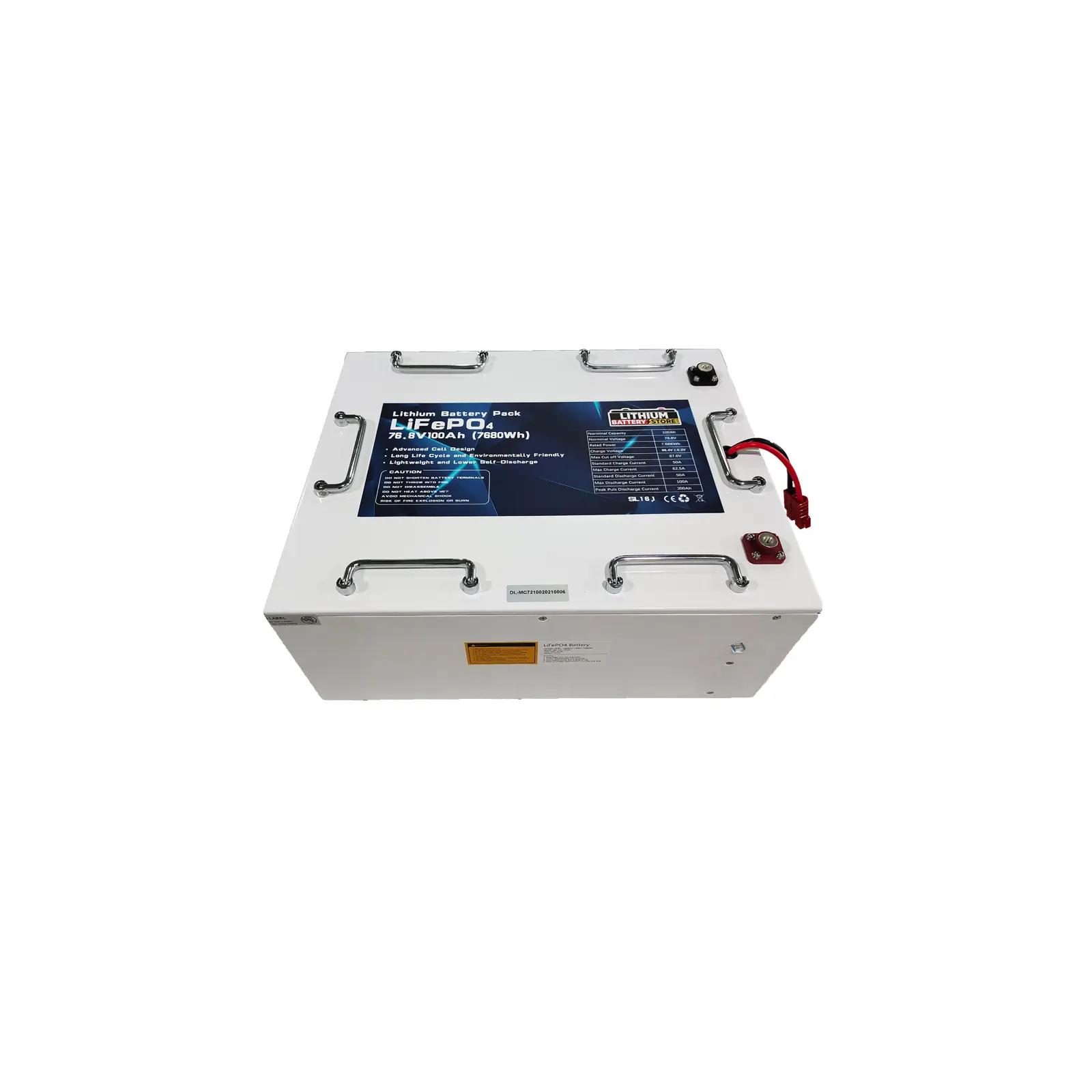
LiFePO4 Battery

What Is a LiFePO4 Battery and Why Is It Different from Lead-Acid?

For over a century, lead-acid batteries were the default choice for powering everything from cars to boats to off-grid solar systems. That’s changed rapidly over the past decade with the rise of lithium iron phosphate (LiFePO4) batteries, a lithium chemistry now widely regarded as the superior replacement for most deep-cycle applications. Understanding what a LiFePO4 battery actually is — and why it performs so differently from lead-acid — helps explain why so many boaters, RV owners, and solar users are making the switch.

What Is a LiFePO4 Battery?

LiFePO4 stands for lithium iron phosphate, which describes the cathode material used in the battery’s cells. It’s one of several lithium-ion chemistries, but it’s specifically favored for deep-cycle and stationary applications because of its stability, safety profile, and long service life compared to other lithium formulations like lithium cobalt oxide, which is more commonly used in phones and laptops.

Inside a LiFePO4 battery, energy is stored and released through the movement of lithium ions between the cathode and anode during charge and discharge cycles. Multiple individual cells are wired together and paired with a battery management system (BMS), which monitors voltage, temperature, and current to keep each cell operating safely and in balance with the others.

This combination — stable chemistry plus active electronic monitoring — is a big part of what separates LiFePO4 from older battery technologies.

How Lead-Acid Batteries Work, by Comparison

Lead-acid batteries store energy through a chemical reaction between lead plates and a sulfuric acid electrolyte solution. This design has been refined for well over 150 years, and it’s cheap and well understood, but it comes with inherent physical limitations: heavy lead plates, liquid electrolyte that can spill or off-gas, and a chemistry that degrades noticeably every time the battery is deeply discharged.

Variants like AGM (absorbent glass mat) and gel batteries improve on some lead-acid weaknesses — spill resistance and vibration tolerance, for example — but they’re still fundamentally lead-acid at the core, and they share most of the same capacity, weight, and lifespan limitations.

Key Differences Between LiFePO4 and Lead-Acid

Usable Capacity

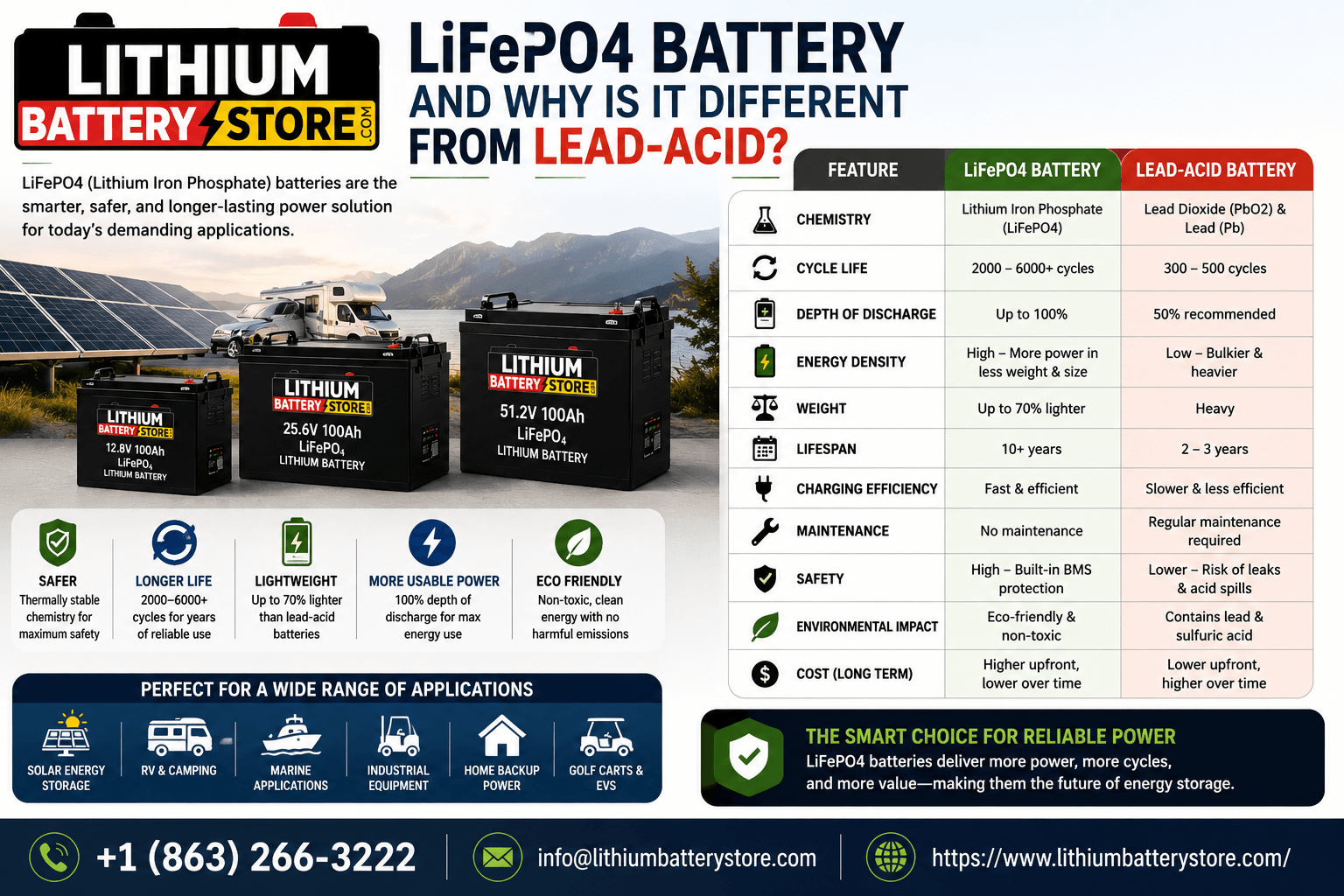
Lead-acid batteries are generally limited to about 50% depth of discharge to preserve their lifespan. Regularly discharging them further accelerates plate degradation and shortens battery life. LiFePO4 batteries, on the other hand, can typically be discharged to 80-100% of rated capacity on a regular basis without significant wear. This means a LiFePO4 battery rated at the same amp-hours as a lead-acid battery delivers roughly double the real, usable energy.

Weight

Lead is a dense, heavy metal, and lead-acid batteries reflect that in their construction. LiFePO4 batteries typically weigh 50-60% less than a lead-acid battery of equivalent capacity. This matters enormously in mobile applications — boats, RVs, and off-grid trailers — where every pound of battery weight affects handling, fuel or energy efficiency, and payload capacity.

Cycle Life

A quality lead-acid battery might last 300-500 cycles before capacity drops to an unusable level, and that number shrinks further if it’s routinely deep-discharged. LiFePO4 batteries commonly last 2,000-5,000+ cycles, depending on build quality and how they’re used. Over a multi-year ownership period, this difference alone can make LiFePO4 more cost-effective despite its higher upfront price.

Voltage Stability

Lead-acid batteries show a gradual voltage drop as they discharge, meaning connected devices experience reduced performance well before the battery is actually empty. LiFePO4 batteries maintain a flatter, more consistent voltage output across most of their discharge curve, which means equipment — from trolling motors to inverters — keeps performing at full strength for longer.

Charging Speed

LiFePO4 batteries generally accept higher charge currents and don’t require the same slow absorption tapering that lead-acid batteries do near full charge. This means significantly shorter charge times, which is especially valuable for solar setups with limited daylight hours or marine applications where downtime between trips matters.

Safety and Thermal Stability

Lithium iron phosphate is widely considered one of the safest lithium chemistries available. It’s more thermally stable than other lithium formulations and far less prone to thermal runaway. Combined with a proper BMS that manages charging limits, temperature, and cell balancing, LiFePO4 batteries are generally regarded as safer in everyday use than lead-acid batteries, which can produce explosive hydrogen gas during charging and contain corrosive liquid acid.

Maintenance

Lead-acid batteries, particularly flooded types, often require periodic maintenance — checking and topping off electrolyte fluid, cleaning corrosion from terminals, and ensuring proper ventilation. LiFePO4 batteries are sealed, maintenance-free units that don’t require any of this upkeep, which is a meaningful convenience for boat and RV owners who don’t want to add battery maintenance to their checklist.

Is LiFePO4 Worth the Higher Upfront Cost?

LiFePO4 batteries typically cost more per amp-hour than lead-acid batteries at the point of purchase. However, when factoring in usable capacity, weight savings, cycle life, and the elimination of maintenance and replacement costs over time, many owners find LiFePO4 delivers better long-term value. A lead-acid battery that needs replacing every 2-3 years can end up costing more over a decade than a single LiFePO4 battery that lasts the same period without significant capacity loss.

This is one of the most common questions retailers like Lithium Battery Store field from customers weighing the switch — and the answer usually depends on how the battery will be used, how often it’s cycled, and how much weight and space savings matter for the specific application.

Choosing the Right LiFePO4 Battery

Not all LiFePO4 batteries are built to the same standard. Cell quality, BMS sophistication, and enclosure durability vary widely between manufacturers, and these differences directly affect how well a battery performs and how long it actually lasts in real-world conditions. Buyers should look for:

  • A BMS with proper over-discharge, over-charge, and thermal protection
  • Cells sourced from reputable manufacturers with consistent quality control
  • Capacity and voltage ratings matched to the intended application
  • Clear warranty terms, since a genuine warranty is a strong signal of manufacturer confidence

Working with a specialized supplier such as Lithium Battery Store can help buyers cut through inconsistent marketing claims and choose a battery genuinely engineered for their application, whether that’s marine propulsion, RV house power, or off-grid solar storage.

The Bottom Line

LiFePO4 batteries differ from lead-acid batteries in nearly every meaningful way — usable capacity, weight, cycle life, voltage stability, charging speed, safety, and maintenance requirements. While lead-acid remains a cheaper starting point, LiFePO4’s advantages compound over time, making it the preferred choice for anyone who depends on reliable, long-lasting power. For buyers ready to make the switch, sourcing a well-engineered battery from a trusted supplier like Lithium Battery Store is just as important as understanding the chemistry itself.

Frequently Asked Questions

What is a LiFePO4 battery?

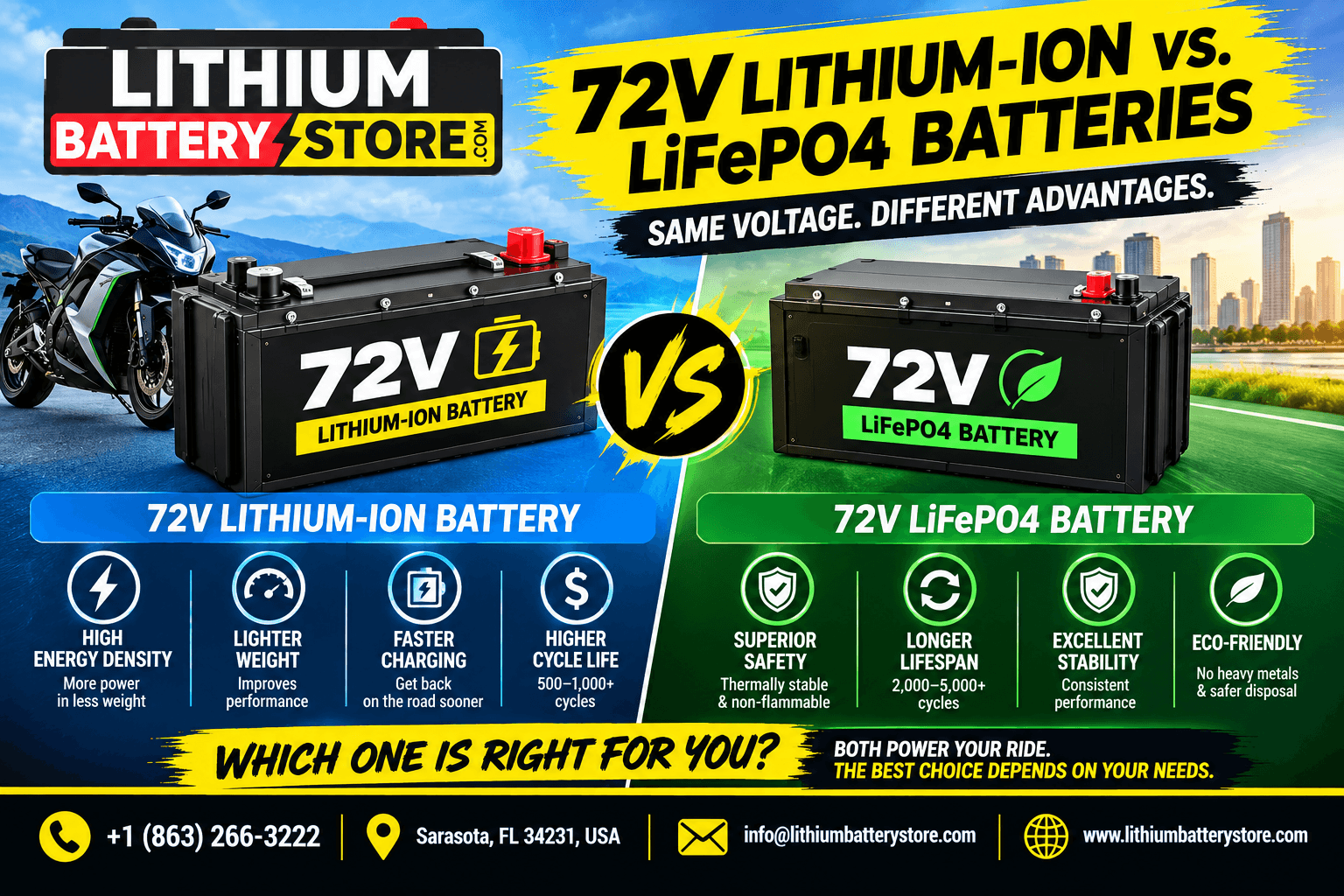
A LiFePO4 battery is a type of lithium-ion battery that uses lithium iron phosphate as its cathode material. It is known for its combination of energy efficiency, long cycle life and strong thermal stability. LiFePO4 batteries are commonly used in applications such as marine equipment, recreational vehicles, solar energy systems and electric vehicles.

How is a LiFePO4 battery different from a lead-acid battery?

The main differences involve weight, usable capacity, charging performance and lifespan. LiFePO4 batteries are generally lighter and can provide a greater proportion of their rated capacity for regular use. They also tend to have a longer cycle life than conventional lead-acid batteries, although the exact performance depends on the battery and how it is used.

Do LiFePO4 batteries last longer than lead-acid batteries?

In many applications, yes. LiFePO4 batteries can typically withstand substantially more charge and discharge cycles than traditional lead-acid batteries. Their longer cycle life can reduce the frequency of battery replacement, potentially making them a practical long-term option despite their higher initial purchase price.

Are LiFePO4 batteries lighter than lead-acid batteries?

Yes. A LiFePO4 battery can provide comparable usable energy at considerably less weight than a lead-acid battery. This can be particularly beneficial for boats, caravans and other applications where reducing overall weight can improve efficiency, performance or available payload.

Are LiFePO4 batteries safer than other lithium batteries?

LiFePO4 chemistry is widely regarded as one of the more thermally stable lithium-ion chemistries. However, safe operation still depends on using a properly designed battery with an appropriate battery management system (BMS), charger and electrical installation. Batteries should always be used according to the manufacturer’s specifications.

Why choose a LiFePO4 battery from Lithium Battery Store?

Lithium Battery Store can help you choose a LiFePO4 battery suited to your particular application, whether you need reliable power for a marine motor, solar setup, leisure vehicle or another system. The right battery depends on factors such as voltage, capacity, maximum current, physical dimensions and your expected energy requirements. Choosing the correct specification can help you get the best performance and service life from your investment.

Lithium Batteries

How Lithium Batteries Improve Range for Marine Electric Motors?

Electric propulsion is changing the way boaters think about time on the water. Whether it’s a small pontoon boat, a fishing skiff, or a fully electric cruiser, the biggest question owners ask is always the same: how far can I go before I need to recharge? The answer depends almost entirely on the battery bank powering the motor, and this is where lithium batteries have made the most dramatic difference.

Marine electric motors have existed for decades, but early systems were limited by heavy, low-capacity lead-acid batteries. Today, lithium battery technology — specifically lithium iron phosphate (LiFePO4) chemistry — has transformed what’s possible on the water. Boaters are seeing longer trips, faster charging, and more predictable performance than ever before. Here’s a closer look at why lithium batteries are the driving force behind better range for marine electric motors.

Why Range Matters So Much in Marine Applications

Unlike a car that can pull into a gas station or charging point along a highway, a boat’s “fuel stop” options are far more limited. Running out of power on the water isn’t just inconvenient — it can be genuinely unsafe, especially in open water, strong currents, or changing weather. This makes usable range one of the most important specifications for any electric marine motor setup.

Range is a function of three things: how much usable energy the battery bank can store, how efficiently that energy converts to thrust, and how much extra weight the boat has to carry to store it. Lithium batteries improve all three factors simultaneously, which is why they’ve become the standard choice for serious electric boating setups.

Higher Usable Energy Capacity

One of the most overlooked differences between lithium and lead-acid batteries is usable capacity. A traditional lead-acid battery typically shouldn’t be discharged below 50% without shortening its lifespan significantly. That means a 100Ah lead-acid battery really only offers around 50Ah of usable energy.

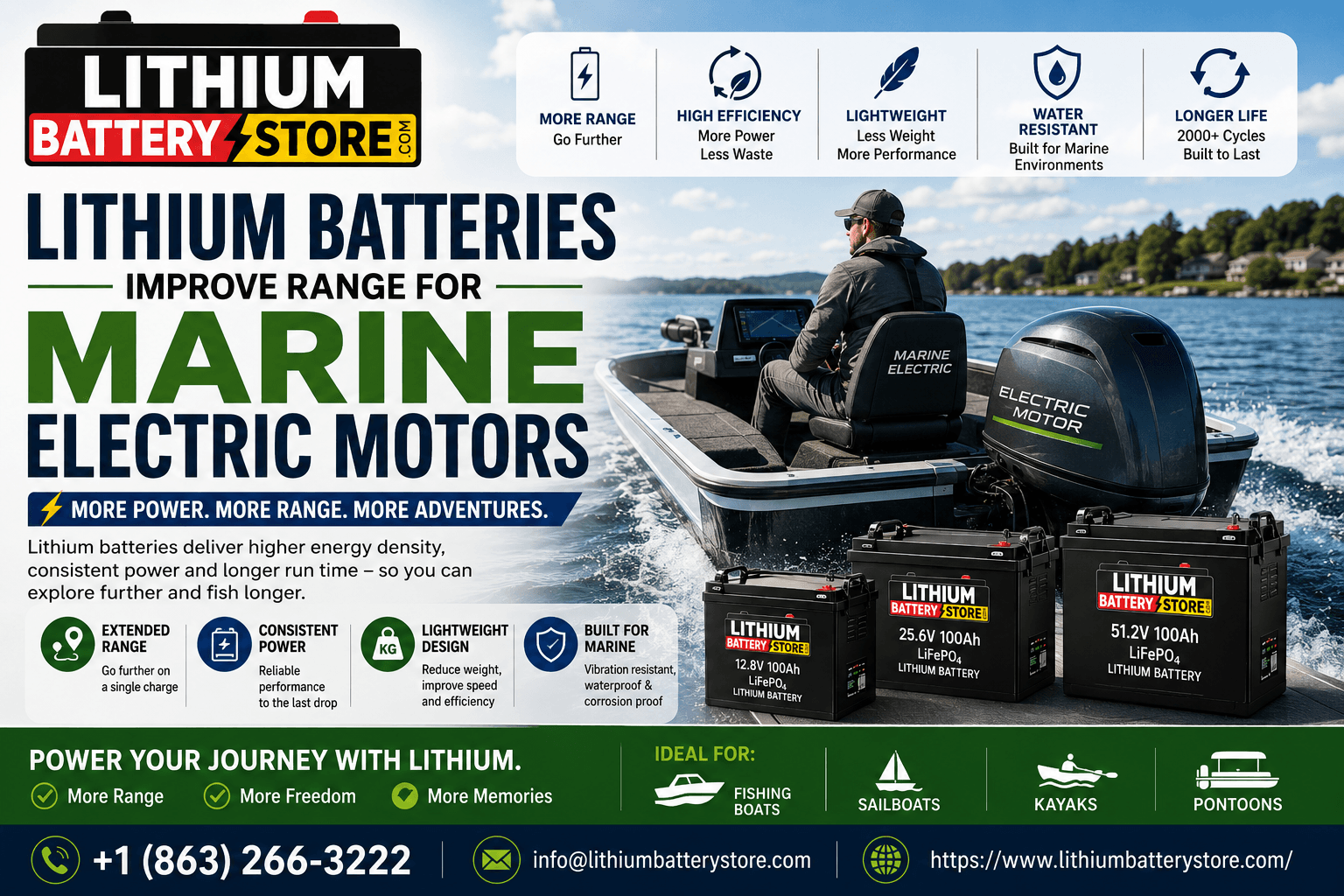
Lithium batteries, by contrast, can typically be discharged to 80-100% of their rated capacity without meaningful damage. A 100Ah lithium battery can deliver close to 100Ah of real, usable power. In practical terms, this alone can nearly double the effective range of a marine electric motor system using the same physical battery size, simply because more of the stored energy is actually accessible.

Significant Weight Savings

Weight is the enemy of range in any electric vehicle, and boats are no exception — extra weight increases drag and forces the motor to work harder, draining the battery faster. Lead-acid batteries are notoriously heavy due to their dense lead plates and liquid electrolyte.

Lithium batteries can weigh less than half of an equivalent lead-acid battery while delivering more usable energy. Lighter battery banks mean the hull sits higher in the water, the motor doesn’t have to compensate for extra mass, and every stored watt-hour goes further. Many boat owners who upgrade to lithium report noticeably better handling and speed in addition to extended range, purely as a side effect of reduced weight.

Consistent Voltage Under Load

Lead-acid batteries experience voltage sag as they discharge, meaning motor performance gradually drops off well before the battery is actually empty. Lithium batteries maintain a much flatter voltage curve throughout most of their discharge cycle. This means a marine electric motor keeps performing at near-full power output right up until the battery is close to depleted, instead of gradually losing thrust over the course of a trip.

This consistency translates directly into predictable range estimates. Boaters can plan trips with more confidence because the motor isn’t quietly losing efficiency as the battery drains, which is a common frustration with older lead-acid marine setups.

Faster, More Efficient Charging

Range isn’t only about how far you can go on a single charge — it’s also about how quickly you can get back on the water. Lithium batteries generally accept charge far faster than lead-acid batteries, which need to taper charging current significantly as they approach full capacity to avoid damage.

Faster charging means shorter downtime between outings, and for boaters who dock at a marina with shore power access, it can mean a full recharge overnight instead of over several days. Some lithium systems also support higher charge currents from solar panels or onboard generators, giving boaters more flexibility to top up range while underway.

Better Efficiency Across Temperature Ranges

Marine environments expose batteries to humidity, temperature swings, and constant vibration. Lead-acid batteries lose a meaningful portion of their capacity in cold conditions and can degrade faster in high-heat environments common on open water. Lithium batteries, particularly LiFePO4 chemistry, tend to hold their capacity more consistently across a wider temperature range, which helps preserve real-world range even in less-than-ideal conditions.

Longer Cycle Life Protects Range Over Time

Range isn’t just a day-one specification — it’s something that should hold up over years of use. Lead-acid batteries typically handle a few hundred charge cycles before capacity starts dropping noticeably. Lithium batteries, especially LiFePO4 options, are commonly rated for several thousand cycles while retaining a much higher percentage of their original capacity.

For boat owners, this means the range they get in year one is much closer to the range they’ll still have in year five. Choosing a quality lithium battery bank from a trusted supplier like Lithium Battery Store helps ensure that longevity claim actually holds up, since cell quality and battery management system (BMS) design vary significantly between manufacturers.

What to Look for When Choosing a Marine Lithium Battery

Not all lithium batteries are built the same, and marine use adds extra demands compared to land-based applications. When evaluating options, boaters should consider:

  • Marine-rated enclosures that resist moisture, salt exposure, and vibration
  • A quality built-in BMS to manage cell balancing, over-discharge protection, and thermal safety
  • Amp-hour capacity matched to motor draw and expected trip duration
  • Weight and physical dimensions that fit existing battery compartments
  • Manufacturer support and warranty, since marine batteries often see harder use than automotive or RV batteries

Working with a specialized retailer such as Lithium Battery Store can simplify this process, since suppliers focused specifically on lithium systems are generally better positioned to match battery specifications to a boat’s motor, hull size, and typical usage pattern than a generalist marine parts store.

The Bottom Line

Lithium batteries improve range for marine electric motors through a combination of higher usable capacity, reduced weight, stable voltage output, faster charging, and long-term durability. Rather than a single improvement, it’s the compounding effect of all these factors together that has made lithium the preferred choice for boaters who want reliable, predictable performance on the water.

For anyone planning an upgrade from lead-acid to lithium, or building a new electric propulsion system from scratch, sourcing quality cells and a properly engineered battery pack matters just as much as the chemistry itself. Retailers like Lithium Battery Store that specialize in marine-grade lithium solutions can help boaters select the right battery bank for their specific motor, hull, and range requirements — turning the theoretical advantages of lithium into real, dependable time on the water.

Frequently Asked Questions

How do lithium batteries improve the range of marine electric motors?

Lithium batteries can improve range by storing more usable energy in a relatively lightweight and compact package compared with traditional lead-acid batteries. Their ability to provide high current also makes them well suited to electric propulsion systems. A lighter battery can reduce the overall weight of the boat, which may help the motor use less energy to maintain speed.

Why are lithium batteries more efficient for electric boats?

Lithium batteries generally offer higher energy density and can maintain strong power delivery during operation. This allows marine electric motors to access a substantial amount of stored energy without carrying the same weight associated with conventional battery technologies. The result can be improved efficiency, performance and cruising range, depending on the boat and operating conditions.

Does a larger lithium battery always mean greater boat range?

Not necessarily. Increasing battery capacity provides more stored energy, but actual range also depends on factors such as boat weight, hull design, speed, propeller selection, weather, currents and how much power the motor uses. For example, published marine motor testing shows that range can vary significantly between slow, half-throttle and full-throttle operation.

Can lithium batteries provide better range than lead-acid batteries?

They can. Lithium batteries typically provide more energy for their weight and can deliver power more effectively than conventional lead batteries. This can allow a boat to carry less battery weight while retaining useful energy capacity, potentially improving range and overall propulsion performance.

How does a battery management system affect marine electric motor range?

A battery management system (BMS) monitors important battery conditions and can help protect the battery from issues such as overcharging, overcurrent and deep discharge. Some marine propulsion systems also use battery and motor data to provide more accurate information about remaining capacity and estimated range.

How can Lithium Battery Store help me choose a battery for my marine electric motor?

Lithium Battery Store can help you select a battery based on your electric motor, boat size, voltage requirements and desired cruising range. Choosing the correct battery capacity and configuration is important because range depends on the complete propulsion system and how the boat is operated. A suitable marine battery can provide the energy and power needed for reliable electric boating while helping you make the most of your motor’s available range.

48V lithium battery

12V vs 24V vs 48V Lithium Batteries: Which Do You Need?

Quick answer: Choose a 12V battery for small systems like basic RV setups, small boats, or backup power for a few appliances. Choose a 24V battery for mid-sized applications such as larger trolling motors, golf carts, or moderate solar setups. Choose a 48V battery for larger systems, including whole-home solar backup, larger golf carts and off-road vehicles, and commercial or industrial equipment like forklifts, where higher power output and efficiency matter most.

Battery voltage isn’t just a technical spec, it directly affects how efficiently your system runs, how much current flows through your wiring, and how well your battery matches your appliances, motor, or inverter. Choosing the wrong voltage can mean inefficient power delivery, excess heat in your cabling, or a system that simply can’t keep up with demand. Here’s how to work out which voltage is right for your application.

Why Voltage Matters

At the same power output, a higher voltage system draws less current (amps) than a lower voltage one. Since heat and energy loss in cabling are directly related to current, higher voltage systems are generally more efficient, especially for setups covering longer wiring runs or drawing significant power. This is why larger systems, such as whole-home solar setups or industrial equipment, typically move to 48V rather than staying at 12V or 24V.

The formula behind this is simple: Power (Watts) = Voltage × Current. For the same wattage requirement, increasing the voltage reduces the current needed, which in turn reduces cable heating and voltage drop over distance.

12V Batteries: Best for Smaller, Simpler Systems

Common Uses

  • Small RVs, campervans, and basic off-grid setups
  • Small boats and marine trolling motors
  • Backup power for a handful of essential appliances
  • Small solar setups for cabins, sheds, or basic off-grid power
  • Golf carts (in some smaller or older configurations)

Why Choose 12V

12V systems are the most common starting point for smaller power needs, largely because they’re widely supported by a huge range of consumer electronics, chargers, and accessories originally designed around traditional 12V lead-acid batteries. If you’re running a small number of appliances, a basic solar setup, or a smaller marine motor, a 12V LiFePO4 battery is often sufficient and typically the most straightforward option to source, wire, and maintain.

Limitations

As power demands increase, 12V systems require higher current to deliver the same wattage as a higher-voltage system, which means thicker cabling is often needed to handle that current safely and efficiently. For larger systems, this can make 12V setups less practical and more expensive to wire correctly.

24V Batteries: A Middle Ground for Moderate Power Needs

Common Uses

  • Larger marine trolling motors requiring more sustained power
  • Mid-sized golf carts and electric vehicles
  • Moderate off-grid or backup solar systems
  • Warehouse vehicles and some robotics applications

Why Choose 24V

24V systems offer a practical middle ground, delivering more power capability than a 12V setup while still being manageable in terms of wiring and component availability. For applications like larger trolling motors or mid-sized golf carts, a 24V battery can deliver noticeably better performance and range compared to a 12V system, without the added complexity that sometimes comes with 48V setups.

Limitations

While more efficient than 12V for higher-power applications, 24V systems still draw more current than an equivalent 48V setup at the same wattage, so very large or high-demand systems may still benefit more from moving up to 48V.

48V Batteries: Built for Higher-Power Applications

Common Uses

  • Whole-home or larger off-grid solar backup systems
  • Larger golf carts and off-road electric vehicles
  • Commercial and industrial equipment, including forklifts and warehouse vehicles
  • Larger marine propulsion systems
  • Yachts and higher-demand electric vehicle applications

Why Choose 48V

For systems with higher power demands, 48V batteries deliver significantly more power while keeping current draw, and therefore cable heating and energy loss, lower than an equivalent 12V or 24V setup. This makes 48V the standard choice for larger solar installations, commercial vehicles, and applications where consistent, efficient power delivery matters most.

48V batteries are also commonly used as direct replacements for combinations of smaller batteries wired in series. Rather than connecting several 12V batteries together to reach 48V, using a single dedicated 48V battery reduces the number of connection points, simplifies wiring, and avoids potential balancing issues between individual cells in a series setup.

Limitations

48V systems and their associated components, including chargers and inverters, are generally more expensive upfront than 12V or 24V equivalents, and may be more than necessary for smaller applications with modest power needs.

Quick Comparison: 12V vs 24V vs 48V

Factor12V24V48V
Best forSmall systems, basic appliancesMid-sized motors, moderate solarLarge systems, commercial/industrial use
Current draw at same wattageHighestModerateLowest
Cabling requirementsThicker cables needed for higher powerModerateThinner cables possible for same power
Typical applicationsSmall RVs, small boats, cabinsLarger trolling motors, mid-sized golf cartsWhole-home solar, forklifts, larger EVs
Component availabilityWidest rangeModerateGrowing, but more specialized
Upfront costGenerally lowestModerateGenerally highest

Should You Wire Batteries in Series Instead?

It’s technically possible to reach a higher voltage by wiring multiple lower-voltage batteries together in series, for example, connecting two 24V batteries to reach 48V. However, it’s generally better to choose a single battery rated for your target voltage rather than relying on series connections.

Choosing the Right Voltage for Your Application

At Lithium Battery Store, we stock LiFePO4 batteries across 12V, 24V, 36V, 48V, and 72V configurations, suited to everything from small RV and marine setups to larger solar installations and commercial or industrial vehicles. If you’re unsure which voltage best matches your application, our team can help you work through your power requirements and recommend the right battery and charger combination.

Browse our full range of lithium batteries or get in touch with our team for personalized advice.

Frequently Asked Questions

What voltage battery do I need for a solar system?

This depends on your system size. Small off-grid setups often use 12V or 24V, while larger or whole-home solar backup systems typically move to 48V for improved efficiency.

Is a 48V battery always better than 12V or 24V?

Not necessarily. A 48V battery is more efficient for high-power applications, but for smaller systems, a 12V or 24V battery is often simpler, more cost-effective, and perfectly adequate.

Can I connect lower-voltage batteries to reach a higher voltage?

Yes, this is possible through series wiring, but it’s generally better to use a single battery rated for your target voltage where available, to reduce complexity and potential balancing issues.

Do 12V, 24V, and 48V batteries use different chargers?

Yes. Battery chargers are voltage-specific, so it’s important to choose a charger rated for your exact battery voltage and capacity.

Lithium Battery for Solar Energy

How to Choose a Lithium Battery for Solar Energy Storage?

Quick answer: The right lithium battery for solar energy storage depends on three main factors: your system’s voltage (commonly 12V, 24V, or 48V), your daily energy usage in amp-hours (Ah) or kilowatt-hours (kWh), and how many days of backup power you want without sunlight. LiFePO4 (lithium iron phosphate) batteries are the standard choice for solar storage due to their long cycle life, safety, and consistent performance, with most solar batteries ranging from 100Ah to 300Ah depending on system size.

Choosing a battery for a solar energy storage system isn’t just about picking a large capacity and hoping it’s enough. Matching the battery to your solar panel output, your inverter, and your actual daily energy consumption makes the difference between a system that reliably powers your home or off-grid setup and one that falls short when you need it most. This guide walks through exactly how to make that decision.

Why LiFePO4 Is the Standard for Solar Storage

Lithium Iron Phosphate (LiFePO4) batteries have become the go-to choice for solar energy storage, replacing older lead-acid and AGM battery banks. Compared to lead-acid batteries, LiFePO4 batteries offer:

  • A significantly longer cycle life, often rated for thousands of charge cycles at full depth of discharge, compared to a few hundred for lead-acid
  • Higher usable capacity, since LiFePO4 batteries can typically be discharged to 100% depth of discharge (DoD) without damage, while lead-acid batteries are usually limited to 50% DoD to preserve their lifespan
  • Lighter weight, making installation and mounting easier, particularly for off-grid cabins, vans, or remote installations
  • More consistent voltage output throughout the discharge cycle, which helps connected appliances and inverters perform more reliably
  • Lower long-term cost, since the extended lifespan typically offsets the higher upfront price compared to repeatedly replacing lead-acid batteries

Step 1: Determine Your System Voltage

Solar battery systems are commonly built around 12V, 24V, or 48V configurations, and choosing the right one depends on the size of your system and the appliances or inverter you’re powering.

  • 12V systems are typically suited to smaller setups, such as cabins, small off-grid systems, or supplementary storage for basic appliances.
  • 24V systems offer a step up in power handling and are common in mid-sized off-grid or backup power setups.
  • 48V systems are generally recommended for larger solar installations, whole-home backup power, or setups powering higher-demand appliances, since higher voltage systems can carry more power with less energy loss over cabling.

As a general rule, it’s better to choose a single battery rated for your target voltage rather than wiring multiple lower-voltage batteries in series to reach it. A dedicated 48V battery, for example, is generally more efficient and reliable than connecting four 12V batteries in series, and avoids the extra wiring, connection points, and balancing issues that come with series configurations.

Step 2: Calculate Your Daily Energy Usage

Before choosing a battery capacity, you need a reasonably accurate picture of how much energy your system needs to store and deliver each day. This involves adding up the power draw (in watts) of everything you plan to run, multiplied by how many hours per day you expect to use it, to arrive at your total daily watt-hour (Wh) usage.

Once you know your daily Wh requirement, you can convert this to amp-hours (Ah) for your chosen system voltage using the formula:

Ah needed = Total Wh ÷ System Voltage

For example, a system with a daily usage of 2,400Wh on a 24V setup would need approximately 100Ah of battery capacity to cover a single day’s use, before accounting for any additional backup days.

Step 3: Decide How Many Days of Backup You Need

Solar energy storage isn’t just about covering daily use, it’s also about having enough reserve capacity for cloudy days or periods with reduced sunlight. Most solar storage setups are sized to provide at least one to three days of backup power, depending on the reliability of sunlight in your location and how critical continuous power is for your needs.

If you’re in an area with frequent cloud cover or want a larger safety margin, sizing your battery bank for two to three days of autonomy is generally a safer approach than sizing for daily use alone.

Step 4: Check Compatibility with Your Solar Charge Controller and Inverter

Not every lithium battery is automatically compatible with every solar charge controller or inverter. Before purchasing, it’s worth confirming:

  • That your charge controller supports LiFePO4 charging profiles, since lithium batteries have different charging voltage requirements than lead-acid
  • That your battery’s built-in Battery Management System (BMS) is compatible with your intended application, particularly for higher-power setups
  • That your inverter’s voltage input matches your chosen battery system voltage

Many solar batteries, including most modern LiFePO4 models, come with upgraded BMS protection as standard, but it’s still worth confirming compatibility with your specific charge controller and inverter setup before installation.

Common Solar Storage Applications

Off-Grid Cabins and Small Solar Setups

Smaller off-grid systems, such as cabins or sheds, typically work well with a single 12V or 24V LiFePO4 battery in the 100Ah–200Ah range, depending on daily energy needs.

Whole-Home Backup and Larger Off-Grid Systems

Larger installations powering a full home or multiple high-demand appliances generally benefit from a 48V system, often using higher-capacity batteries or multiple units connected in parallel to reach the required storage capacity.

Generator Replacement Systems

LiFePO4 battery banks paired with solar panels and a charge controller are increasingly used as a full generator replacement, offering quieter, maintenance-free power with no fuel costs. These setups typically require careful sizing based on peak load demands as well as daily usage, since generator-replacement systems often need to handle higher instantaneous power draws.

Choosing the Right Solar Battery for Your System

At Lithium Battery Store, we supply a full range of LiFePO4 batteries across 12V, 24V, 36V, 48V, and 72V configurations, suited to solar storage systems of all sizes, from small off-grid cabins to full generator-replacement setups. Our team is happy to help you work through voltage, capacity, and compatibility questions to find the right battery, and the right charger, for your specific solar application. Browse our solar battery range or get in touch with our team for personalized sizing advice.

Frequently Asked Questions

What size lithium battery do I need for solar power?

This depends on your daily energy usage and desired backup days. As a starting point, calculate your daily watt-hour usage, convert it to amp-hours for your system voltage, then multiply by the number of backup days you want.

Can I use a 12V battery for a whole-home solar system?

It’s possible for small loads, but larger or whole-home systems generally perform more efficiently on 24V or 48V systems, since higher voltage reduces current draw and energy loss across cabling.

Do LiFePO4 batteries work well in cold climates?

LiFePO4 batteries generally perform well in a wide range of temperatures, though charging in very cold conditions can require specific BMS protections. Checking a battery’s rated temperature range is worthwhile for installations in colder climates.

How many solar batteries do I need?

This depends on your total capacity requirement. If a single battery doesn’t meet your Ah needs, multiple batteries of the same voltage can typically be connected in parallel to increase total capacity.

Best Lithium Marine Battery

Choosing the Best Lithium Marine Battery and Solar Battery Supplier

Energy storage has become an essential part of modern life, especially as people move toward cleaner and more efficient power solutions. Whether it is for boating, outdoor marine activities, or renewable energy systems at home, lithium battery technology is now widely used due to its reliability and long lifespan. Two important areas where this technology plays a major role are marine power systems and solar energy storage. A lithium marine battery for boats ensures smooth and reliable performance on water, while choosing a trusted solar battery supplier Sarasota Florida helps homeowners and businesses maintain efficient energy storage systems.

Selecting the right battery and supplier is not just a technical decision; it is a long-term investment. The quality of the battery directly affects performance, safety, and cost savings over time. Understanding what to look for in both marine batteries and solar suppliers can help users make better and more informed decisions.

Importance of Lithium Battery Technology

Lithium batteries have revolutionized the energy storage industry. Compared to traditional lead-acid batteries, lithium batteries offer higher energy density, faster charging, and significantly longer life cycles. These advantages make them ideal for demanding applications such as marine environments and solar power systems.

A lithium marine battery for boats provides consistent and stable energy output, even in challenging water conditions. Similarly, working with a reliable solar battery supplier Sarasota Florida ensures that solar systems are equipped with efficient storage solutions that maximize energy usage and reduce dependency on the grid.

Lithium technology is also known for its lightweight design, which improves efficiency in boats and reduces installation complexity in solar setups. This combination of performance and convenience is the reason lithium batteries are quickly becoming the industry standard.

Choosing a Lithium Marine Battery for Boats

Boats require dependable and durable power sources to support navigation systems, lighting, communication devices, and onboard electronics. A lithium marine battery for boats is specifically designed to handle these demands while offering long-lasting performance.

One of the biggest advantages of a lithium marine battery is its ability to maintain stable voltage throughout its discharge cycle. This ensures that boat systems operate smoothly without sudden drops in power. Additionally, these batteries are built to withstand harsh marine environments, including vibration, humidity, and temperature changes.

Another important factor is weight. A lithium marine battery for boats is significantly lighter than traditional battery types, which improves fuel efficiency and overall boat performance. The longer lifespan of lithium batteries also means fewer replacements, reducing long-term maintenance costs for boat owners.

Understanding Solar Battery Suppliers in Sarasota, Florida

As solar energy becomes more popular, the demand for efficient storage systems continues to grow. A professional solar battery supplier Sarasota Florida plays a key role in providing high-quality batteries that store solar energy effectively and reliably.

Solar batteries allow users to store excess energy generated during the day and use it at night or during power outages. Without proper storage, much of the generated solar energy would go unused. This makes battery selection a critical part of any solar installation.

A reliable solar battery supplier Sarasota Florida ensures that customers receive batteries that are compatible with their solar systems and capable of handling long-term energy storage needs. These suppliers also help customers understand system requirements and recommend suitable battery capacities based on usage patterns.

Key Factors in Choosing the Right Supplier

When selecting a battery supplier, quality and reliability should always come first. A trusted supplier provides not only the product but also technical support and after-sales service.

A good solar battery supplier Sarasota Florida offers batteries that are tested for safety, durability, and performance. This ensures that customers receive products that can handle long-term energy storage without frequent issues. Similarly, when choosing a lithium marine battery for boats, it is important to consider whether the battery is designed specifically for marine environments and can handle continuous use under demanding conditions.

Warranty support is another important factor. A reliable supplier stands behind their products and offers protection in case of defects or performance issues. This adds an extra layer of security for customers making long-term investments.

Benefits of Lithium Marine Batteries and Solar Storage Systems

Lithium batteries provide several advantages across both marine and solar applications. A lithium marine battery for boats delivers consistent power output, making it ideal for long trips and extended use on the water. Its ability to discharge deeply without damage also improves overall efficiency and usability.

In solar systems, working with a trusted solar battery supplier Sarasota Florida ensures that energy is stored efficiently and used effectively. Lithium batteries charge faster and last significantly longer than traditional alternatives, making them a cost-effective solution over time.

Another key benefit is low maintenance. Unlike older battery technologies, lithium batteries do not require frequent upkeep, which saves both time and effort for users. Their high efficiency also means less energy loss during charging and discharging cycles.

Why Quality Should Be a Priority

Choosing high-quality batteries and reliable suppliers is essential for long-term performance. Poor-quality batteries can lead to system failures, reduced efficiency, and higher replacement costs.

A well-designed lithium marine battery for boats ensures safe and stable operation in all marine conditions. Similarly, a dependable solar battery supplier Sarasota Florida guarantees that customers receive energy storage solutions that match their system requirements and deliver consistent performance.

Investing in quality products not only improves efficiency but also enhances safety and long-term value. This is especially important for systems that are used daily or in critical environments.

Future of Lithium Energy Storage

The future of energy storage is strongly connected to lithium battery technology. As demand for renewable energy and electric mobility continues to grow, lithium batteries will play an even more important role in powering homes, vehicles, and marine systems.

Advancements in battery design are expected to improve energy density, charging speed, and lifespan even further. This means that both marine and solar applications will benefit from more efficient and reliable energy storage solutions in the coming years.

Conclusion

Choosing the right battery and supplier is a critical decision for anyone investing in marine or solar energy systems. A lithium marine battery for boats provides reliable, lightweight, and long-lasting power for marine applications, while a trusted solar battery supplier Sarasota Florida ensures efficient and dependable energy storage for solar systems.

By focusing on quality, reliability, and proper system compatibility, users can enjoy better performance, lower maintenance costs, and long-term energy savings. Lithium technology continues to reshape the energy storage industry, making it one of the most reliable and efficient solutions for both marine and solar applications today.

24V lithium ion battery

What Is the Difference Between 24V Lithium and EV Batteries?

Lithium battery technology has become the preferred power solution for modern applications ranging from energy storage systems to electric transportation. As more consumers and businesses move away from traditional lead-acid batteries, two popular options often come into discussion: the 24V lithium ion battery and the lithium battery for electric vehicles. Although both use advanced lithium technology, they are designed for different purposes and deliver different levels of performance. Understanding these differences can help buyers choose the right battery solution for their needs.

Understanding 24V Lithium Ion Batteries

A 24V lithium ion battery is designed to deliver stable and efficient power for equipment that requires a 24-volt energy system. These batteries are widely used in solar energy storage, marine applications, recreational vehicles, industrial equipment, and portable power solutions. Their popularity continues to grow because they offer longer service life, faster charging times, and better efficiency than conventional battery technologies.

One of the biggest advantages of a 24V lithium ion battery is its versatility. It can provide reliable power while remaining lightweight and compact. Users also benefit from lower maintenance requirements and improved overall efficiency. For businesses and homeowners looking for dependable energy storage, a 24V lithium ion battery is often an excellent choice.

Understanding Lithium Batteries for Electric Vehicles

A lithium battery for electric vehicles is specifically engineered to power electric transportation systems. Unlike a standard 24V lithium ion battery, these batteries are designed to handle the higher energy demands of electric cars, electric scooters, electric motorcycles, and commercial electric vehicles.

The main goal of a lithium battery for electric vehicles is to provide sufficient energy for longer driving distances while maintaining high levels of efficiency. Modern electric vehicles rely on advanced battery systems that support rapid charging, enhanced safety features, and consistent performance. As the electric vehicle market continues to expand, the importance of reliable lithium battery technology becomes even greater.

The Main Difference Between 24V Lithium and EV Batteries

The most significant difference between these battery types lies in their intended application. A 24V lithium ion battery is commonly used in equipment, energy storage systems, and various industrial applications. A lithium battery for electric vehicles is specifically built for transportation and mobility.

Another major difference is battery capacity. Electric vehicles require much larger battery systems because they must power an entire vehicle for extended periods. A lithium battery for electric vehicles is therefore designed to store more energy and deliver higher performance than a standard 24V lithium ion battery.

Size also plays an important role. Electric vehicle batteries are generally larger and more complex because they contain multiple battery modules working together. A 24V lithium ion battery is often smaller and easier to integrate into compact systems.

Cost is another area where differences become clear. Because a lithium battery for electric vehicles contains advanced technology and higher energy capacity, it is usually more expensive. A 24V lithium ion battery is often a more affordable solution for applications that do not require large amounts of stored energy.

Why Lithium Batteries Continue to Grow in Popularity

Whether choosing a 24V lithium ion battery or a lithium battery for electric vehicles, users benefit from the advantages of lithium technology. These batteries offer excellent energy efficiency and can maintain reliable performance over thousands of charging cycles.

Compared with traditional lead-acid batteries, lithium batteries charge more quickly and deliver more usable energy. They also weigh significantly less, making them easier to transport and install. This lightweight design is especially important for electric vehicles, where reducing weight can improve overall efficiency and driving range.

Another reason for the growing popularity of lithium batteries is their long operational life. Many users find that investing in lithium technology reduces long-term replacement and maintenance costs. This makes both the 24V lithium ion battery and the lithium battery for electric vehicles attractive options for modern power applications.

Choosing the Right Battery for Your Needs

The best battery depends entirely on your intended application. If you need reliable energy storage for equipment, marine systems, solar installations, or recreational vehicles, a 24V lithium ion battery may be the ideal solution. It offers dependable performance while remaining compact and efficient.

If your goal is to power an electric car, scooter, motorcycle, or other electric transportation system, a lithium battery for electric vehicles is the better choice. These batteries are designed to handle the unique demands of electric mobility and provide the power necessary for long-distance performance.

When selecting any battery, quality should always be a priority. Purchasing from a trusted supplier helps ensure safety, performance, and long-term reliability.

Why Choose Lithium Battery Store

Lithium Battery Store is committed to providing high-quality battery solutions for a wide range of applications. Whether customers need a dependable 24V lithium ion battery or a high-performance lithium battery for electric vehicles, selecting the right supplier can make a significant difference. Quality batteries deliver better efficiency, longer service life, and greater overall value.

Conclusion

Understanding the difference between a 24V lithium ion battery and a lithium battery for electric vehicles is important when choosing the right power solution. While both rely on advanced lithium technology, they are designed for different applications and performance requirements. A 24V lithium ion battery is ideal for energy storage and equipment, while a lithium battery for electric vehicles is built specifically for transportation needs. By selecting the appropriate battery and purchasing from a trusted provider like Lithium Battery Store, users can enjoy reliable and efficient power for years to come.

Lithium Battery

Which Lithium Battery Is Best for Trolling Motors and Off-Grid Use?

Choosing the right battery is one of the most important decisions for anyone who relies on marine equipment or independent power systems. Whether you are powering a fishing boat or creating a reliable energy solution away from the grid, selecting a quality lithium battery for trolling motor applications and finding the best lithium battery for off-grid system performance can significantly improve efficiency and reliability.

Traditional lead-acid batteries have served users for decades, but modern lithium technology has transformed the market. A high-quality lithium battery for trolling motor offers longer runtime, faster charging, and lighter weight, while the best lithium battery for off-grid system applications provides dependable energy storage and long-term savings.

At Lithium Battery Store, customers can find advanced lithium battery solutions designed to meet the demands of both marine and off-grid power users.

Why Are Lithium Batteries Becoming So Popular?

Lithium batteries have become the preferred choice for many boat owners and off-grid enthusiasts. Compared to traditional batteries, a lithium battery for trolling motor provides greater energy efficiency and a longer service life.

Similarly, the best lithium battery for off-grid system installations delivers consistent power while requiring less maintenance. These advantages make lithium batteries an attractive investment for those seeking reliable energy solutions.

The growing popularity of a lithium battery for trolling motor is also driven by improved performance on the water. Anglers and boaters appreciate the ability to spend more time operating equipment without worrying about battery depletion.

What Makes a Lithium Battery for Trolling Motor a Smart Choice?

A quality lithium battery for trolling motor offers several important benefits that improve overall boating performance.

Lightweight Design

One of the biggest advantages of a lithium battery for trolling motor is its lighter weight. Lithium batteries are significantly lighter than comparable lead-acid models, making boats easier to handle and improving efficiency.

Longer Runtime

A premium lithium battery for trolling motor can provide longer operating times, allowing users to spend more time on the water without interruption.

Faster Charging

Another benefit of a lithium battery for trolling motor is faster charging capability. This means less downtime between trips and more time enjoying outdoor activities.

Longer Lifespan

Most lithium batteries offer thousands of charge cycles. This makes a lithium battery for trolling motor a cost-effective long-term investment.

What Is the Best Lithium Battery for Off-Grid System Applications?

The best lithium battery for off-grid system installations is one that delivers dependable energy storage, efficient performance, and long-term durability. Off-grid systems often rely on solar panels, wind turbines, or backup generators, making battery storage a critical component.

A high-quality best lithium battery for off-grid system setup allows users to store energy efficiently and access power when needed. Whether powering a cabin, RV, workshop, or remote property, reliable battery storage ensures consistent performance.

The best lithium battery for off-grid system solutions also provide excellent depth of discharge, allowing users to utilize more of the battery’s capacity without causing damage.

Key Features to Look For

When selecting a lithium battery for trolling motor or the best lithium battery for off-grid system, several important features should be considered.

Battery Capacity

Capacity determines how much energy the battery can store. A larger capacity lithium battery for trolling motor can support longer operating times, while the best lithium battery for off-grid system should provide enough storage to meet daily energy demands.

Battery Management System (BMS)

A quality battery should include a built-in Battery Management System. This feature protects the lithium battery for trolling motor and the best lithium battery for off-grid system from overcharging, overheating, and excessive discharge.

Durability

Durability is essential in both marine and off-grid environments. A reliable lithium battery for trolling motor should withstand vibration and moisture, while the best lithium battery for off-grid system should handle varying environmental conditions.

Efficiency

The best lithium battery for off-grid system should maximize energy usage and reduce losses. Likewise, an efficient lithium battery for trolling motor ensures consistent performance throughout its charge cycle.

Benefits of Using Lithium Batteries for Off-Grid Living

The best lithium battery for off-grid system installations provides several advantages over traditional battery technologies.

Greater Energy Storage

A quality best lithium battery for off-grid system stores more usable energy, helping users maximize power availability.

Reduced Maintenance

Unlike lead-acid batteries, the best lithium battery for off-grid system requires minimal maintenance, saving both time and effort.

Reliable Performance

The best lithium battery for off-grid system delivers consistent energy output, making it ideal for remote locations and backup power applications.

Long-Term Savings

Although the initial investment may be higher, the extended lifespan of the best lithium battery for off-grid system often results in lower overall ownership costs.

Why Choose Lithium Battery Store?

Lithium Battery Store specializes in providing advanced battery solutions for marine, recreational, and off-grid applications. Whether you need a dependable lithium battery for trolling motor or are searching for the best lithium battery for off-grid system, the company offers products designed for performance and reliability.

Customers choose Lithium Battery Store because of its commitment to quality, innovative technology, and customer support. Their battery solutions are engineered to provide long-lasting power and dependable operation in demanding environments.

How to Select the Right Battery

Choosing the ideal lithium battery for trolling motor depends on factors such as boat size, motor requirements, and expected runtime. Users should carefully evaluate their power needs before making a purchase.

Similarly, selecting the best lithium battery for off-grid system requires consideration of energy consumption, solar generation capacity, and backup power requirements. Proper planning ensures optimal battery performance and long-term satisfaction.

Consulting experts and choosing trusted suppliers such as Lithium Battery Store can simplify the decision-making process and help users find the most suitable battery solution.

Conclusion

When evaluating modern energy storage solutions, a lithium battery for trolling motor and the best lithium battery for off-grid system stand out as excellent choices. Their lightweight design, long lifespan, fast charging capabilities, and efficient performance make them ideal for a wide range of applications.

Whether you are spending long days on the water or building a dependable off-grid energy system, investing in a high-quality lithium battery for trolling motor and the best lithium battery for off-grid system can provide years of reliable service. With trusted products available from Lithium Battery Store, users can enjoy advanced battery technology designed to meet today’s energy demands while preparing for future power needs.

Best Battery for Bad Boy Buggies

Which Battery Should I Use for My Bad Boy Buggies?

Best Battery for Bad Boy Buggies

Picture yourself navigating through rugged trails or swiftly traversing golf courses in your Bad Boy Buggy. You are ready with your Bad Boy Buggy to take on the wild. The air smells of adventure. But suddenly, your buggy slows down or stops. This happens when the battery of your Bad Boy Buggy dies.

So, what happens when your battery depletes prematurely? Your adventure comes to an abrupt stop. Frustration inevitably ensues. You require power that can sustain your journey. This is where the importance of selecting the right battery becomes evident.

Whether you desire long-lasting dependability or rapid charging capabilities, choosing the ideal battery can significantly enhance your Bad Boy buggy experience. Although there are various options, let’s explore the best battery for Bad Boy Buggies.

Which Battery Is Most Suited and the Best Battery for Bad Boy Buggies?

LiFePO4 Batteries: Why They Are Ideal for Bad Boy Buggies?

LiFePO4 batteries represent the pinnacle or gold standard for Bad Boy Buggies. They are not only lightweight but also incredibly powerful. In fact, these batteries tend to outlast traditional lead-acid alternatives. Moreover, any LiFePO4 battery charges more rapidly, so this results in reduced downtime for your Bad Boy Buggy.

However, safety is perhaps the most significant advantage. LiFePO4 batteries exhibit remarkable resistance to overheating and fires, which is vital. They consistently perform better under various weather conditions.

Although other options exist, if you seek durability, and peace of mind, and want stress-free adventures, then you should definitely opt for a LiFePO4 battery for your Bad Boy buggy. Contact us for the best LiFePO4 batteries to power up your Bad Boy buggy and go on the adventure of your dreams.

Choosing the Right Voltage

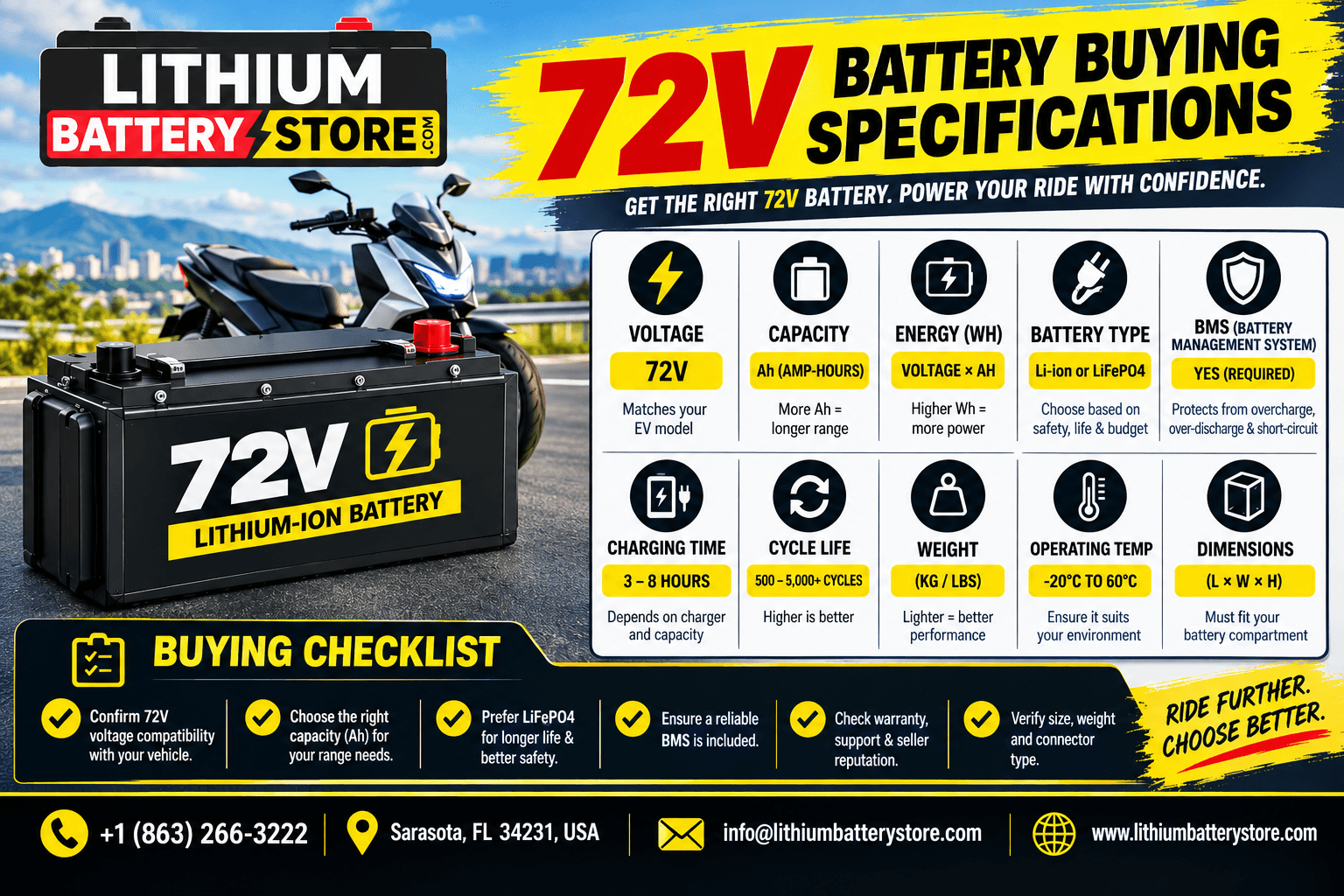
When it comes to bad boy buggies, a 72V Lithium Battery is optimal for heavy-duty performance, making it the best choice for long-distance travel or challenging terrains.

Whether you want to experience challenging conditions or navigate rugged trails on your bad boy buggy, reach out to Lithium Battery Store for superior-quality 72 V lithium batteries!

Advantages of Lithium Batteries

Lithium batteries are superior to lead-acid batteries (the traditional choice for Bad Boy Buggies) in various aspects.

  • Lithium batteries are often chosen over lead-acid ones because they are significantly lighter, which makes your Bad Boy Buggy more efficient.
  • Additionally, they deliver consistent power until they are fully discharged. This means that your Bad Boy Buggy does not slow down as the battery drains.
  • Also, lithium batteries demand less maintenance. There is no need for water refills or acid checks.
  • Their lifespan can extend up to 10 years and this ultimately saves you money in the long run.

Pairing Batteries with Chargers for Optimal Performance

Every excellent battery requires a dependable charger and it is essential to always utilize the appropriate charger for your lithium battery. Investing in high-quality battery chargers that are compatible with your battery is crucial. LiFePO4 chargers are specifically engineered to offer optimal charging cycles. This guarantees the longevity of the battery.

Nonetheless, overcharging can harm the battery because it leads to degradation. So, chargers equipped with auto-shutoff features are generally considered the best option, although some users may overlook this important detail.

When choosing a charger:

  • Bad Boy Buggies renders exceptional performance with a 72V lithium battery; it is advisable to select a charger that matches its capacity. However, when using a 36V lithium battery, or even a 48V lithium battery for other applications, one should utilize chargers specifically engineered for those voltage levels. This approach guarantees not only quicker charging but also a safer experience.
  • It is important to seek out smart chargers that feature automatic shut-off mechanisms because they enhance safety.
  • Also, ensure that the charger is both durable and weather-resistant, particularly for outdoor applications.

Why Lithium-Ion Batteries Often Win?

LiFePO4 batteries which outperform traditional lead-acid batteries have gained popularity among Bad Boy Buggy owners. Because of their long lifespan and efficiency, lithium-ion batteries are increasingly seen as the superior choice. They can endure rugged terrains and challenging conditions.

However, regardless of whether you utilize your Bad Boy Buggy for hunting, work, or recreation, these batteries significantly enhance performance. Although some may hesitate due to cost, if you seek long-lasting performance, reliability, and stress-free adventures then this is the way to go.

Final Thoughts

Your Bad Boy Buggy is more than just a vehicle; it’s a companion. Its battery serves as the soul that powers every adventure. For peak performance, consider opting for a 72V lithium battery for a Bad Boy Buggy.

Also, remember to pair it with a reliable charger to maximize its life and ensure optimal performance. Don’t allow a poor battery to limit your freedom. So, choose a LiFePO4 battery that can keep your buggy unstoppable. Trails await and make sure you’re ready.

Visit the Lithium Battery Store to get premium quality LiFePO4 batteries for your Bad Boy Buggies and many other applications. It has established itself as a reliable provider of all types of high-quality lithium batteries since 2017. We are the foremost privately owned company specializing in the sale of LiFePO4 batteries, which are produced in China to meet our USA standards.

We also provide the best lithium battery for a trolling motor and many more similar applications. We are also renowned for our exceptional deep-cycle batteries. Let Lithium Battery Store serve as your dependable partner in powering your equipment because we excel in this area. Call us today for the finest lithium batteries and deep-cycle batteries suitable for a variety of purposes.

FAQs

Why do you prefer to use lithium over lead acid batteries?

Lithium batteries, of course, last the longest, charge the quickest, and require no upkeep. And they are eco-friendly!

Are lithium batteries weatherproof?

Yes, they easily withstand different climates like pros! Rain or shine, you are good to go!

Is it good to have a 72V lithium battery for hilly terrain?

Absolutely! It represents the perfect balance of strength and efficiency for most Bad-Boy Buggies.

Disclaimer- The information provided in this content is just for educational purposes and is written by a professional writer. Consult us to learn more about the batteries in bad boy buggies.

Deep Cycle vs. Cranking Batteries

Deep Cycle vs. Cranking Batteries: What’s the Difference?

Deep Cycle vs. Cranking Batteries

Batteries often serve as the silent powerhouse behind numerous machines and systems. Whether you are planning a road trip or a fishing expedition, being equipped with the appropriate kind of battery will ensure you have a smooth journey. Now, imagine, for instance, being stranded in the midst of a boating adventure or a lengthy road trip due to an ill-fated battery choice. It’s not only frustrating but also costly.

Among the top choices of batteries are deep cycle and cranking batteries. Choosing between a deep cycle battery and a cranking battery can indeed save you from this kind of trouble. This guide aims to discuss deep cycle vs. cranking batteries, and elucidate their differences, allowing you to make an informed decision that ensures a smooth and stress-free journey. Although the decision may seem straightforward, the implications (positive and negative) can be significant.

Deep Cycle vs. Cranking Batteries

What Is a Deep Cycle Battery?

A deep-cycle battery is engineered to deliver consistent and sustained power over an extended duration. This type of battery is ideal for applications that necessitate steady energy, such as a trolling motor, solar system, or recreational vehicle appliances. Unlike cranking batteries, deep-cycle batteries can be discharged and recharged multiple times without damaging the battery.

Popular choices encompass the 12V lithium battery, the 36V battery, and even the robust 48V lithium battery. For boaters, the most economical option for a trolling motor battery is often a deep-cycle battery, primarily because of its durability and performance. However, one must consider their specific needs.

What Is a Cranking Battery?

A cranking battery, often referred to as a starting battery is engineered to provide a rapid, potent surge of energy. This makes it particularly suitable for initiating engines, including those found in cars, motorcycles, jet skis, or boats. For marine enthusiasts, a cranking battery for boats guarantees that the engine starts consistently. However, it is important to note that cranking batteries are not intended for prolonged energy supply.

Key Differences: Deep Cycle vs. Cranking Batteries

Although both cranking and deep cycle batteries serve essential functions, they differ significantly in design and purpose. Reach out to us for the best of both kinds of batteries. Now, let’s explore the different aspects of these two types of batteries.

Purpose

  • Deep cycle batteries are designed for prolonged energy consumption. So, they are ideal for applications like powering trolling motor or supporting off-grid setups.
  • Cranking batteries, however, serve a different purpose. They provide short, intense bursts of power to initiate engine operation.

Discharge Rate

  • Deep cycle batteries are designed to manage deep discharges without damage. Thus, they are considered the optimal choice for marine applications involving trolling motors.
  • Cranking batteries, on the other hand, perform most effectively with shallow discharges.

Construction

Deep cycle batteries are designed for resilience and are constructed with thicker plates to withstand deep discharging.

However, cranking batteries focus on maximizing surface area for rapid energy bursts.

Applications

  • Utilize a deep cycle battery for applications such as trolling motors or solar systems
  • Use a cranking battery for starting engines.

Lifespan

Deep-cycle batteries tend to have a longer lifespan than cranking batteries. This is because deep-cycle batteries are built to withstand being recharged multiple times without losing their effectiveness.

Although both types of batteries are essential, they fulfill distinct functions and have different designs. Comprehending this differentiation is crucial because using the wrong type can lead to inefficiency or even damage.

Why Use Lithium Batteries?

Lithium batteries, for instance, LiFePO4 batteries merge the advantages of both types. They can use both for deep-cycle applications and also as starting batteries. These batteries are also lightweight, efficient, and notably long-lasting.

Whether one is utilizing a 72V lithium battery for extensive arrangements or a 12V lithium battery for more compact requirements, they tend to outperform conventional choices. However, pairing these batteries with quality chargers is essential, because it helps to maximize their lifespan.

Maintenance Tips

Utilizing appropriate battery chargers is essential for preserving your battery’s lifespan and functionality. Chargers that are specifically engineered for lithium batteries prevent overcharging and also guarantee optimal efficiency. This is important because improper charging can lead to diminished performance. Although many chargers exist, not all are suitable for lithium technology batteries.

Choosing the Best Battery for Your Needs

When choosing a battery, it is essential to assess your specific needs. If you require a battery for engine ignition, a cranking battery is typically the most suitable option. For prolonged power, however, a deep-cycle battery should be selected. Various batteries such as the lifepo4 battery and the 12V lithium battery, provide dependable choices.

In marine contexts, consider the 48V lithium battery or the 36V battery, especially for high-performance demands. The best lithium battery for a trolling motor guarantees both durability and efficiency. Although budget constraints may arise, you can still find the best trolling motor battery on a budget that fulfills your power needs.

For certain configurations, a dual-purpose battery could be a valuable consideration. These hybrid alternatives merge characteristics from both categories, providing flexibility for individuals with limited space or overlapping requirements.

Final Thoughts

The appropriate battery guarantees uninterrupted adventures. Whether you require a cranking battery for a boat or anything other applications, or perhaps a deep cycle battery for a trolling motor, understanding their differences is crucial. Choose wisely; because this decision impacts your experience. Enjoy your journeys, powered by reliability. However, make sure to consider all factors of each kind of battery to avoid any unwanted issues.

Lithium Battery Store has been a trusted source for customers for providing exceptional quality lithium batteries since 2017. We are the most premium privately owned company selling LiFePO4 batteries that are manufactured in China to our USA standards. Let Lithium Battery Store be your trusted partner in powering all your equipment. Call us now for the best quality batteries for all purposes.

FAQs

How do I extend the life of my batteries?

Regular maintenance and the usage of proper battery chargers can prolong the life of batteries.

How often must I replace my cranking battery?

Typically after 3-5 years, or if you see signs of failure such as slow cranking of the engine or frequent need to charge

Lithium Marine Batteries for Boating

Why Lithium Marine Batteries Are Changing the Boating Game?

Lithium Marine Batteries for Boating

As the world is shifting towards better battery solutions, lithium batteries are leading the charge in the boating landscape. Today, boating enthusiasts and professional boaters alike are turning to lithium batteries to boost their efficiency and performance in water. Lithium Battery Store has been at the forefront of this revolutionary change, offering top-tier lithium batteries.

Dive into the blog now and explore how lithium batteries are changing the boating game!

Benefits of lithium marine batteries for boating

High Energy density: Contrary to popular belief, lithium batteries, despite their lighter weight, can store a remarkably high amount of energy. Unlike lead-acid batteries, they offer more energy storage in a smaller, lighter package, freeing up valuable space on boats.

Lifespan: Lithium batteries can last up to four times longer than lead-acid batteries, giving you peace of mind that you don’t have to replace your lithium batteries again and again.

Whether you choose a 12V lithium battery, 36V lithium battery, 48V lithium battery, or 72V lithium battery from Lithium Battery Store, all our batteries give 6000 life cycles at 100% DOD.

What if there are manufacturing defects that can affect my boating experience, you ask? Lithium Battery Store offers a 4-year full replacement warranty that covers the manufacturer defects within the warranty timeframe.

Charging:  Lithium batteries can charge up to twice as fast as lead-acid batteries!  However, ensure that you only use the charger that is specifically designed and manufactured for your lithium battery for boating. For instance, a 36 V lithium battery for marine applications will last longer and offer exceptional performance with the charger that’s specifically designed for it.

Nowadays, life is busier than ever. With so many responsibilities and demands, it’s easy to forget to unplug your lithium battery after charging. Don’t worry because there is pre-installed high-end battery management system in lithium batteries that closely monitors and analyzes the charging and discharging, and also prevents and safeguards them from overcharging.

 Power: Another way lithium batteries are elevating the boating game is by offering a consistent level of power throughout their discharge. This means your boating experience will be smooth and hassle-free, away from challenges like interrupted power supply or lack of power.

Other benefits of consistent power supply in boats may include optimal engine performance, well-lit boat lights, high electrolyte levels, and more.

Environmental impact: One of the most under-appreciated yet vital advantages of lithium marine batteries for boating is that it is less harmful to the environment than their lead-acid counterparts. They constitute a low amount of hazardous materials and are recyclable, which can give you peace of mind that you’re utilizing green energy without contaminants for your boating endeavor.

Safety: As discussed above, lithium batteries are designed with advanced safety features, such as built-in battery management systems (BMS) that prevent overheating, overcharging, and short circuits. This ensures that your boating experience remains safe and worry-free, even in demanding conditions on the water.

How to enhance the performance and increase the life of lithium battery in marine applications?

  • Always use a charger that matches your battery’s voltage (e.g., a 36V marine charger for a 36V battery) and is rated for marine environments. It is advisable because these chargers are specifically designed to handle the moisture and corrosive elements of saltwater.
  • Lithium batteries in marine applications are prone to extended use. Avoid the over-discharging instances as they may harm the cells and recharge it again when the battery level drops to 20-30%.
  • For seasonal marine use, ensure your lithium battery is stored in a cool, dry, and ventilated area. Ensure that you store it at a 50% charge to preserve the battery’s health during long periods of inactivity.
  • Saltwater can corrode even well-sealed batteries over time. Ensure that your lithium battery is not exposed to salt water for a seamless and hassle-free boating experience.
  • Marine environments can cause terminal corrosion due to humidity and salt. Inspect and clean the terminals to ensure unrestricted power flow.
  • Running multiple high-powered marine devices like trolling motors, fish finders, and navigation lights on a single battery can put excess strain on it. So, make sure you use one battery in the same device every time. Remember, Lithium Battery Store has the best trolling motor battery on a budget and the best battery for other marine applications.
  • Direct sunlight can reduce the lifespan of batteries. So, when using lithium marine batteries for boating, make sure you place them in a shaded area on board or make use of insulated battery boxes to keep temperatures stable, even on hot days.

Bottom Line:

Now that you know about all the good reasons why lithium batteries are elevating the boating game, what are you waiting for? Lithium Battery Store offers the best-in-class lithium batteries that can incredibly enhance your future boating experience.

Invest in our lithium batteries today to enjoy reliable power, long-lasting performance, and a cleaner, eco-friendly boating journey.

FAQs

Which lithium battery is best for marine applications?

36V lithium batteries from Lithium Battery Store can perform exceptionally well in marine applications.

Are lithium marine batteries for boating a cost-effective option?

Lithium batteries have lower overall ownership costs than lead-acid due to their increased life, low maintenance requirement, and longer run time.

Back to Top
Product has been added to your cart
Compare (0)