
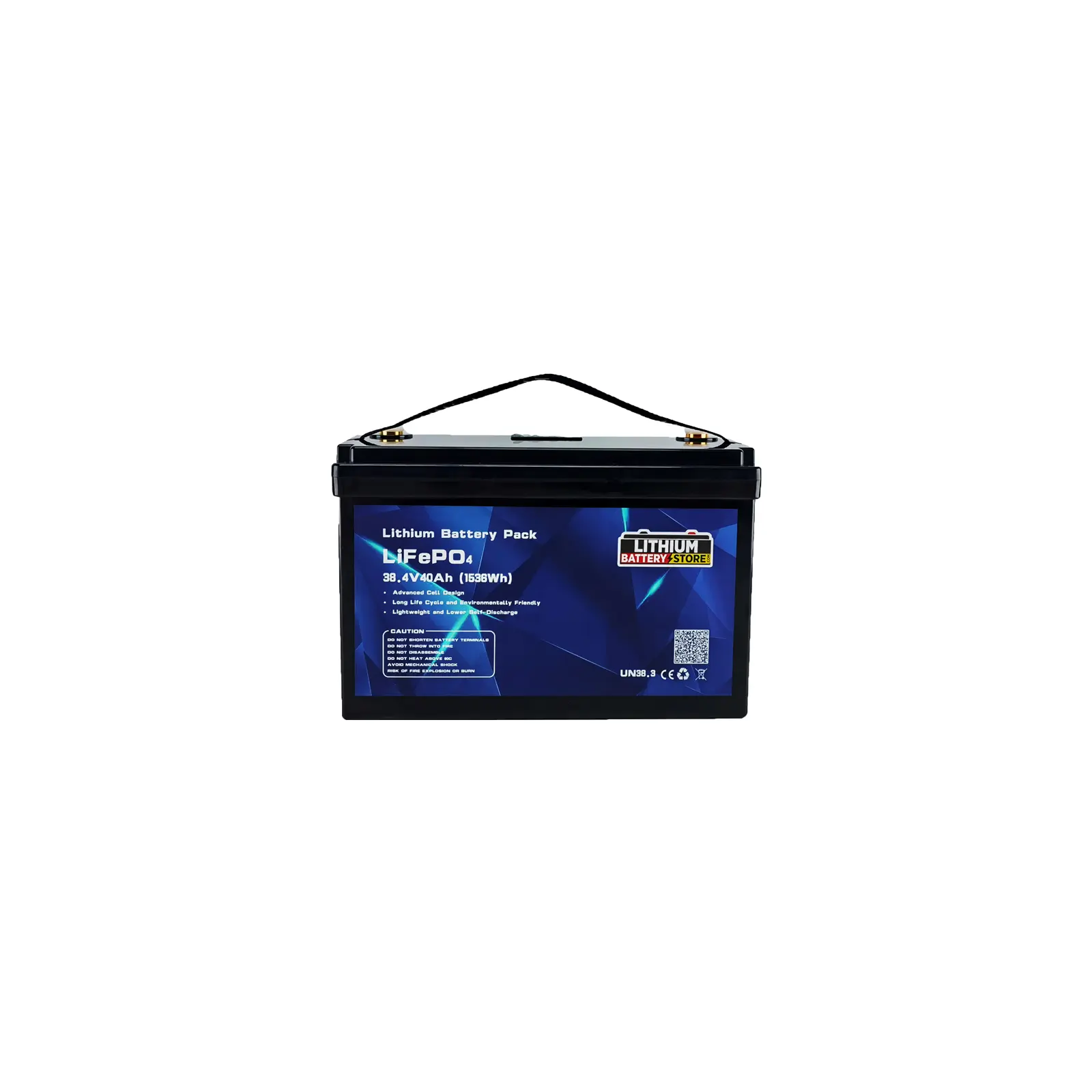
Best 72V Lithium Batteries for Electric Off Road ATVs
Electric off road ATVs need a reliable battery system to deliver consistent power across challenging terrain. Whether an ATV is used for recreational riding, farm work, property maintenance, or utility applications, battery performance plays an important role in its overall operation. Choosing the right battery can help improve energy efficiency, reduce maintenance requirements, and provide dependable power for everyday use.
A 72V lithium battery is an option for electric ATVs designed to operate with a compatible 72V battery system. Among the available battery technologies, lithium iron phosphate batteries, commonly known as LiFePO4 batteries, are worth considering because of their cycle life, stable chemistry, and suitability for repeated charging and discharging.
However, not every 72V lithium battery is suitable for every electric ATV. Battery capacity, discharge current, battery management system protection, charger compatibility, and physical dimensions must all match the vehicle’s requirements.
In this guide, we explain how to choose the best 72V lithium batteries for electric off road ATVs and what to consider before purchasing a replacement battery pack.
Why Choose a 72V LiFePO4 Battery for an Electric ATV?
LiFePO4 batteries are used in various electric mobility and utility applications. When designed for the correct vehicle specifications, they can offer several advantages over traditional lead acid batteries.
1. Long Battery Service Life
One of the main reasons buyers consider lithium iron phosphate batteries is their potential for a high number of charge and discharge cycles.
Actual battery lifespan depends on cell quality, charging practices, operating temperature, depth of discharge, and the battery management system. A properly selected and maintained LiFePO4 battery can be a practical long-term power solution for compatible electric ATVs.
2. Reduced Battery Maintenance
Some traditional lead acid batteries require periodic electrolyte checks and watering. LiFePO4 batteries generally do not require this type of routine maintenance.
This can be particularly useful for electric ATVs used on farms, large properties, and off road work sites, where reducing maintenance time can simplify daily operations.
3. Lower Weight Compared with Lead Acid Batteries
Lithium batteries generally provide higher energy density than lead acid batteries. A suitable lithium battery pack may therefore weigh less than an equivalent lead acid system.
Reducing battery weight can be beneficial for an electric ATV, but the final effect on handling and performance depends on the vehicle design, battery placement, suspension, and total load.
4. Consistent Power Delivery
A well-matched LiFePO4 battery can provide relatively stable voltage through much of its discharge cycle. This can support consistent operation when the battery, motor controller, and electrical system are properly matched.
For off road applications, the battery must also deliver sufficient current during acceleration, climbing, and other periods of increased motor demand.
How to Choose the Best 72V Lithium Battery for an Electric ATV
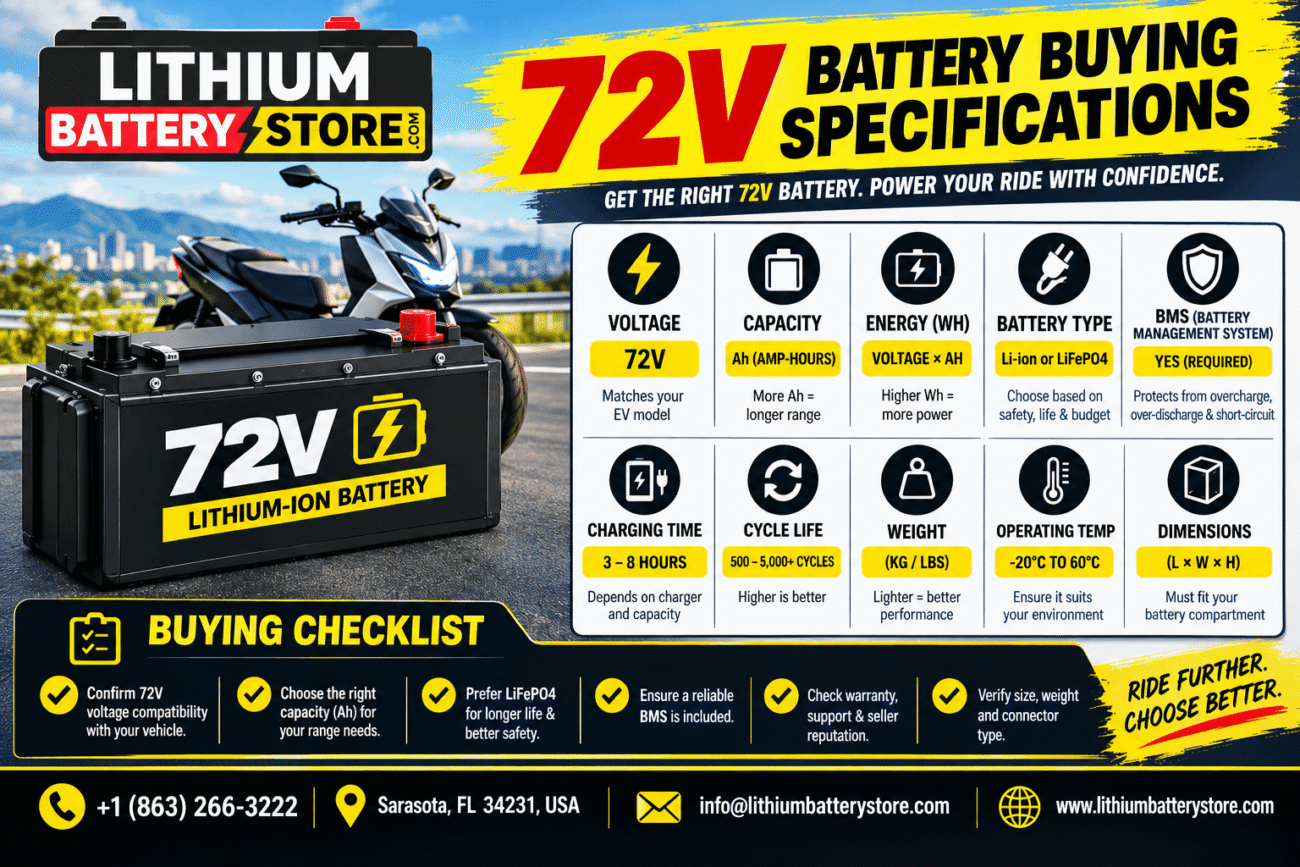
Selecting a battery involves more than matching the voltage printed on the product label. The following factors can help you make a better purchasing decision.
1. Confirm the ATV’s Battery Voltage
Before purchasing a replacement battery, confirm that your electric ATV is designed for a compatible 72V battery system.
Check the owner’s manual, original battery label, motor controller documentation, and manufacturer’s specifications. Do not assume that every battery marketed as 72V has the same electrical characteristics.
LiFePO4 battery packs have a specific nominal voltage and full-charge voltage based on their cell configuration. These values may differ from those of other lithium battery chemistries marketed for similar applications.
The battery’s operating voltage must remain within the limits supported by the ATV’s motor controller and electrical components.
2. Choose the Right Battery Capacity
Battery capacity is generally measured in amp-hours (Ah). It indicates how much electrical charge the battery can store, while watt-hours provide a more useful estimate of stored energy.
For example, a nominal 72V battery rated at 50Ah represents approximately 3,600Wh of nominal energy. A 100Ah battery at the same nominal voltage represents approximately 7,200Wh.
These figures are estimates of nominal energy, not guaranteed usable energy or driving range.
When selecting battery capacity, consider how you intend to use your ATV. Recreational riding on relatively flat terrain may require a different capacity from regular operation on steep trails or demanding work sites.
Your decision should account for riding duration, terrain, vehicle load, motor efficiency, charging frequency, and available battery space.
3. Check Continuous and Peak Discharge Current
Electric ATVs can draw substantial current when accelerating, climbing hills, or carrying heavy loads. A battery must be capable of supplying the current demanded by the motor controller.
Two specifications are especially important:
- Continuous discharge current indicates how much current the battery can supply under its specified operating conditions.
- Peak discharge current indicates the higher current the battery can provide for a limited period, according to the manufacturer’s rating.
A battery with insufficient discharge capability may trigger protection shutdowns or fail to deliver the performance expected from the ATV.
Before buying a 72V lithium battery pack, compare its current ratings with the controller’s requirements and the motor’s expected power demand.
4. Look for a Reliable Battery Management System
A battery management system, or BMS, monitors the battery pack and provides protective functions based on its design.
A suitable lithium battery with BMS protection can help protect against conditions such as overcharging, excessive discharge, overcurrent, and high or low temperatures.
For off road ATVs, the BMS must be rated for the vehicle’s continuous and peak current requirements. It should also be suitable for the battery’s cell configuration and intended operating environment.
Other features to investigate include cell balancing, short-circuit protection, temperature monitoring, and communication capabilities where required.
A BMS is an important part of a reliable battery system, but it cannot compensate for an incorrectly selected battery or an incompatible motor controller.
5. Consider Durability and Environmental Conditions
Electric ATVs may operate in environments where dust, vibration, moisture, and changing temperatures are common.
When choosing a battery for off road use, check its enclosure design, mounting requirements, operating temperature range, and stated protection rating.
An appropriate enclosure and secure mounting system help protect the battery during normal vehicle operation. However, do not assume that every lithium battery is waterproof or designed to withstand heavy vibration.
Review the manufacturer’s specifications to determine whether the battery is suitable for your intended environment.
6. Verify Charger Compatibility
A 72V lithium battery needs a charger that matches the specific battery chemistry and pack configuration.
A charger designed for lead acid batteries should not automatically be used with a LiFePO4 battery. Its charging profile and output voltage may not be suitable.
Before purchasing a battery, confirm the required charger output voltage, charging current, charging profile, and any communication requirements between the charger and BMS.
Using a compatible charger according to the manufacturer’s instructions helps support safe charging and long-term battery performance.
7. Check Battery Dimensions and Connections
Even a battery with the correct voltage and capacity may not fit your ATV.
Measure the available battery compartment and compare it with the replacement pack’s dimensions. Check the terminal arrangement, connector type, cable requirements, mounting points, and available clearance.
Also verify that the replacement battery’s weight is appropriate for the vehicle’s design.
Electrical installation should use correctly rated cables, connectors, fuses, and other required protection. For a custom battery conversion, consult a qualified electric vehicle technician to confirm compatibility and installation safety.
Where Are 72V LiFePO4 Batteries Used?
A compatible 72V lithium battery pack may be suitable for several electric vehicle applications, depending on the vehicle’s electrical specifications.
Electric Off Road ATVs
Electric ATVs designed for 72V systems can use compatible lithium battery packs for recreational riding and selected utility applications. Battery selection should account for motor demand, terrain, operating time, and environmental conditions.
Electric Utility Vehicles
Some electric utility vehicles use high-voltage battery systems to support regular operation across farms, large properties, and industrial facilities. Confirm the required voltage and discharge characteristics before selecting a replacement battery.
Electric UTVs and Specialty Vehicles
Certain electric UTVs and specialty vehicles may use 72V battery configurations. Compatibility depends on the original battery architecture, controller, charger, and installation requirements.
A battery intended for one vehicle category should not be assumed to work in another without checking the technical specifications.
Why Choose Lithium Battery Store for Your Battery Requirements?
Finding the right battery supplier is an important part of upgrading an electric ATV. Buyers should look for clear product specifications, suitable battery protection, charger guidance, warranty information, and technical support.
Lithium Battery Store can be a starting point for exploring lithium battery options for compatible electric vehicles and utility applications.
Before purchasing a 72V LiFePO4 battery, confirm the nominal voltage, full-charge voltage, amp-hour capacity, continuous and peak discharge current, BMS specifications, dimensions, and charging requirements.
Providing your ATV model, model year, motor controller details, and current battery specifications can help the supplier assess whether a particular battery configuration is appropriate.
Lithium Battery Store can also be contacted to discuss battery specifications and identify the information needed to evaluate a potential replacement or upgrade.
Tips for Maintaining Your 72V LiFePO4 ATV Battery
Proper battery care can help support reliable operation and maximize service life.
Use only a compatible charger and follow the battery manufacturer’s charging recommendations. Avoid charging or operating the battery outside its rated temperature range.
Inspect battery cables, connectors, mounting hardware, and the enclosure periodically for damage or looseness. Keep the battery clean and dry according to the manufacturer’s instructions.
If the ATV will remain unused for an extended period, follow the recommended storage state of charge and inspection schedule.
Never bypass the BMS or continue using a battery that shows signs of physical damage, unusual heating, swelling, or repeated protective shutdowns.
Conclusion
The best 72V lithium battery for an electric off road ATV is one that matches the vehicle’s electrical requirements, delivers sufficient current, provides suitable capacity, and includes appropriate battery management protection.
LiFePO4 batteries can offer long cycle life, reduced maintenance, and lower weight compared with many lead acid alternatives. However, the benefits depend on battery quality, correct installation, charging practices, and operating conditions.
Before buying a replacement battery, verify the ATV’s voltage requirements, capacity needs, controller current limits, charger compatibility, BMS specifications, and battery dimensions.
By evaluating these factors carefully and consulting a knowledgeable supplier, you can choose a suitable lithium battery solution for your electric ATV.
Frequently Asked Questions
What is the best 72V lithium battery for an electric ATV?
The best battery is one that matches the ATV’s voltage, capacity, continuous and peak current requirements, physical dimensions, and charging system. LiFePO4 batteries are worth considering for applications that benefit from cycle life and reduced maintenance.
Are LiFePO4 batteries suitable for off road ATVs?
They can be suitable for electric ATVs designed for compatible LiFePO4 battery systems. The battery must also have adequate discharge capability, appropriate environmental protection, and a compatible charger.
How long does a 72V LiFePO4 battery last?
Battery lifespan depends on cell quality, charging practices, temperature, depth of discharge, and operating conditions. Compare the manufacturer’s cycle-life rating and warranty rather than relying on a single lifespan estimate.
Does a 72V lithium battery need a BMS?
A suitable BMS is an important part of a lithium battery pack. It monitors battery conditions and provides protective functions based on its design. The BMS must be rated for the vehicle’s power requirements.
Can I replace a lead acid ATV battery with a 72V LiFePO4 battery?
A replacement may be possible if the ATV supports the selected lithium battery’s voltage range, discharge current, charging requirements, and physical configuration. Confirm compatibility with the vehicle manufacturer or a qualified technician before converting the system.
Does a higher Ah rating provide more driving range?
A higher amp-hour rating at the same nominal voltage generally indicates more nominal stored energy. However, actual driving range depends on usable battery capacity, motor efficiency, terrain, vehicle load, speed, and riding conditions.
Can I use my existing charger with a 72V LiFePO4 battery?
Only if the charger manufacturer or battery supplier confirms that the charger’s output voltage and charging profile are compatible with the specific battery pack.
How do I choose a reliable 72V lithium battery supplier?
Look for transparent specifications, BMS protection details, charging guidance, warranty terms, and technical support. Share your ATV model and electrical specifications so compatibility can be evaluated before purchasing.

Add a review
Your email address will not be published. Required fields are marked *