48V lithium battery

12V vs 24V vs 48V Lithium Batteries: Which Do You Need?

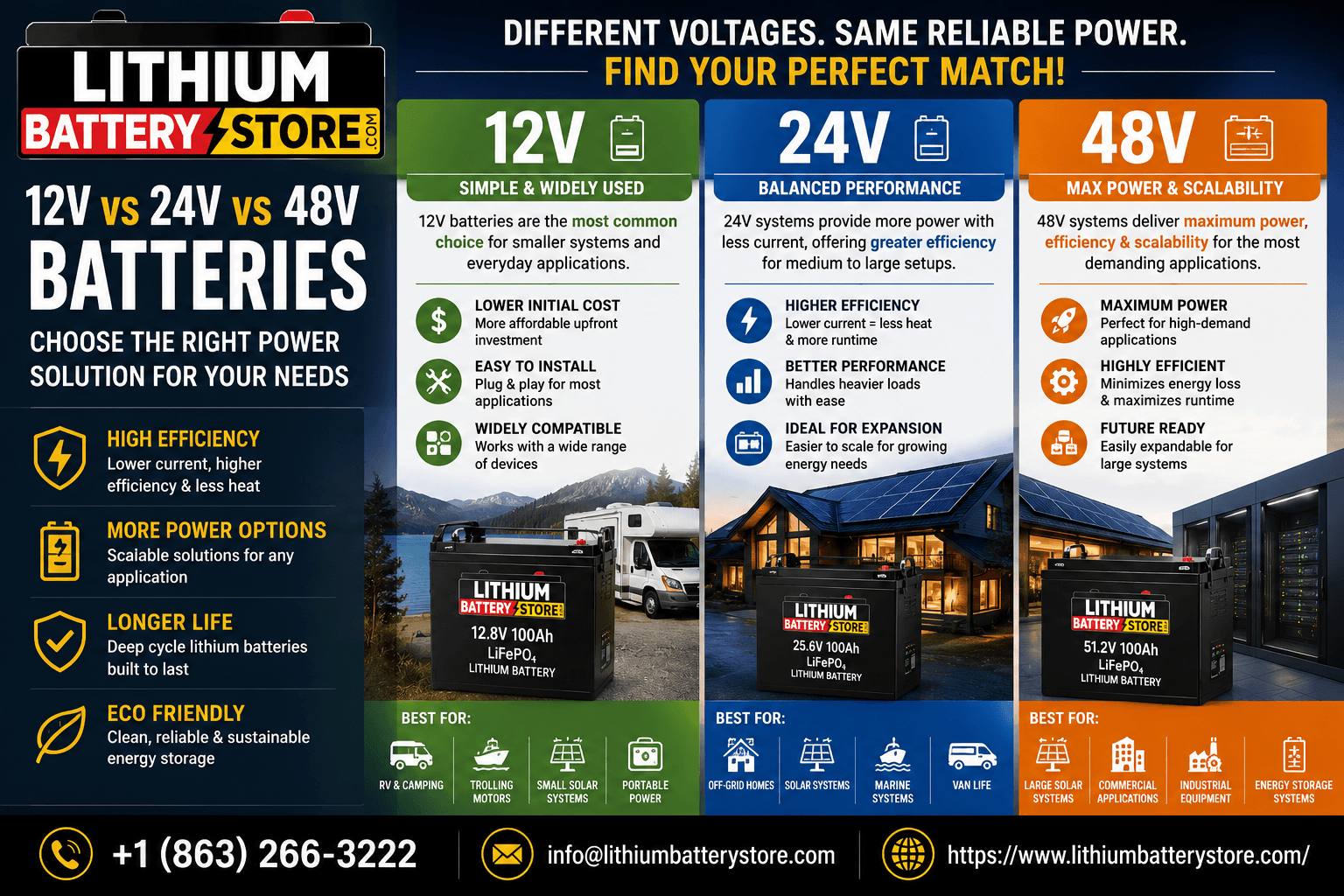
Quick answer: Choose a 12V battery for small systems like basic RV setups, small boats, or backup power for a few appliances. Choose a 24V battery for mid-sized applications such as larger trolling motors, golf carts, or moderate solar setups. Choose a 48V battery for larger systems, including whole-home solar backup, larger golf carts and off-road vehicles, and commercial or industrial equipment like forklifts, where higher power output and efficiency matter most.

Battery voltage isn’t just a technical spec, it directly affects how efficiently your system runs, how much current flows through your wiring, and how well your battery matches your appliances, motor, or inverter. Choosing the wrong voltage can mean inefficient power delivery, excess heat in your cabling, or a system that simply can’t keep up with demand. Here’s how to work out which voltage is right for your application.

Why Voltage Matters

At the same power output, a higher voltage system draws less current (amps) than a lower voltage one. Since heat and energy loss in cabling are directly related to current, higher voltage systems are generally more efficient, especially for setups covering longer wiring runs or drawing significant power. This is why larger systems, such as whole-home solar setups or industrial equipment, typically move to 48V rather than staying at 12V or 24V.

The formula behind this is simple: Power (Watts) = Voltage × Current. For the same wattage requirement, increasing the voltage reduces the current needed, which in turn reduces cable heating and voltage drop over distance.

12V Batteries: Best for Smaller, Simpler Systems

Common Uses

  • Small RVs, campervans, and basic off-grid setups
  • Small boats and marine trolling motors
  • Backup power for a handful of essential appliances
  • Small solar setups for cabins, sheds, or basic off-grid power
  • Golf carts (in some smaller or older configurations)

Why Choose 12V

12V systems are the most common starting point for smaller power needs, largely because they’re widely supported by a huge range of consumer electronics, chargers, and accessories originally designed around traditional 12V lead-acid batteries. If you’re running a small number of appliances, a basic solar setup, or a smaller marine motor, a 12V LiFePO4 battery is often sufficient and typically the most straightforward option to source, wire, and maintain.

Limitations

As power demands increase, 12V systems require higher current to deliver the same wattage as a higher-voltage system, which means thicker cabling is often needed to handle that current safely and efficiently. For larger systems, this can make 12V setups less practical and more expensive to wire correctly.

24V Batteries: A Middle Ground for Moderate Power Needs

Common Uses

  • Larger marine trolling motors requiring more sustained power
  • Mid-sized golf carts and electric vehicles
  • Moderate off-grid or backup solar systems
  • Warehouse vehicles and some robotics applications

Why Choose 24V

24V systems offer a practical middle ground, delivering more power capability than a 12V setup while still being manageable in terms of wiring and component availability. For applications like larger trolling motors or mid-sized golf carts, a 24V battery can deliver noticeably better performance and range compared to a 12V system, without the added complexity that sometimes comes with 48V setups.

Limitations

While more efficient than 12V for higher-power applications, 24V systems still draw more current than an equivalent 48V setup at the same wattage, so very large or high-demand systems may still benefit more from moving up to 48V.

48V Batteries: Built for Higher-Power Applications

Common Uses

  • Whole-home or larger off-grid solar backup systems
  • Larger golf carts and off-road electric vehicles
  • Commercial and industrial equipment, including forklifts and warehouse vehicles
  • Larger marine propulsion systems
  • Yachts and higher-demand electric vehicle applications

Why Choose 48V

For systems with higher power demands, 48V batteries deliver significantly more power while keeping current draw, and therefore cable heating and energy loss, lower than an equivalent 12V or 24V setup. This makes 48V the standard choice for larger solar installations, commercial vehicles, and applications where consistent, efficient power delivery matters most.

48V batteries are also commonly used as direct replacements for combinations of smaller batteries wired in series. Rather than connecting several 12V batteries together to reach 48V, using a single dedicated 48V battery reduces the number of connection points, simplifies wiring, and avoids potential balancing issues between individual cells in a series setup.

Limitations

48V systems and their associated components, including chargers and inverters, are generally more expensive upfront than 12V or 24V equivalents, and may be more than necessary for smaller applications with modest power needs.

Quick Comparison: 12V vs 24V vs 48V

Factor12V24V48V
Best forSmall systems, basic appliancesMid-sized motors, moderate solarLarge systems, commercial/industrial use
Current draw at same wattageHighestModerateLowest
Cabling requirementsThicker cables needed for higher powerModerateThinner cables possible for same power
Typical applicationsSmall RVs, small boats, cabinsLarger trolling motors, mid-sized golf cartsWhole-home solar, forklifts, larger EVs
Component availabilityWidest rangeModerateGrowing, but more specialized
Upfront costGenerally lowestModerateGenerally highest

Should You Wire Batteries in Series Instead?

It’s technically possible to reach a higher voltage by wiring multiple lower-voltage batteries together in series, for example, connecting two 24V batteries to reach 48V. However, it’s generally better to choose a single battery rated for your target voltage rather than relying on series connections.

Choosing the Right Voltage for Your Application

At Lithium Battery Store, we stock LiFePO4 batteries across 12V, 24V, 36V, 48V, and 72V configurations, suited to everything from small RV and marine setups to larger solar installations and commercial or industrial vehicles. If you’re unsure which voltage best matches your application, our team can help you work through your power requirements and recommend the right battery and charger combination.

Browse our full range of lithium batteries or get in touch with our team for personalized advice.

Frequently Asked Questions

What voltage battery do I need for a solar system?

This depends on your system size. Small off-grid setups often use 12V or 24V, while larger or whole-home solar backup systems typically move to 48V for improved efficiency.

Is a 48V battery always better than 12V or 24V?

Not necessarily. A 48V battery is more efficient for high-power applications, but for smaller systems, a 12V or 24V battery is often simpler, more cost-effective, and perfectly adequate.

Can I connect lower-voltage batteries to reach a higher voltage?

Yes, this is possible through series wiring, but it’s generally better to use a single battery rated for your target voltage where available, to reduce complexity and potential balancing issues.

Do 12V, 24V, and 48V batteries use different chargers?

Yes. Battery chargers are voltage-specific, so it’s important to choose a charger rated for your exact battery voltage and capacity.
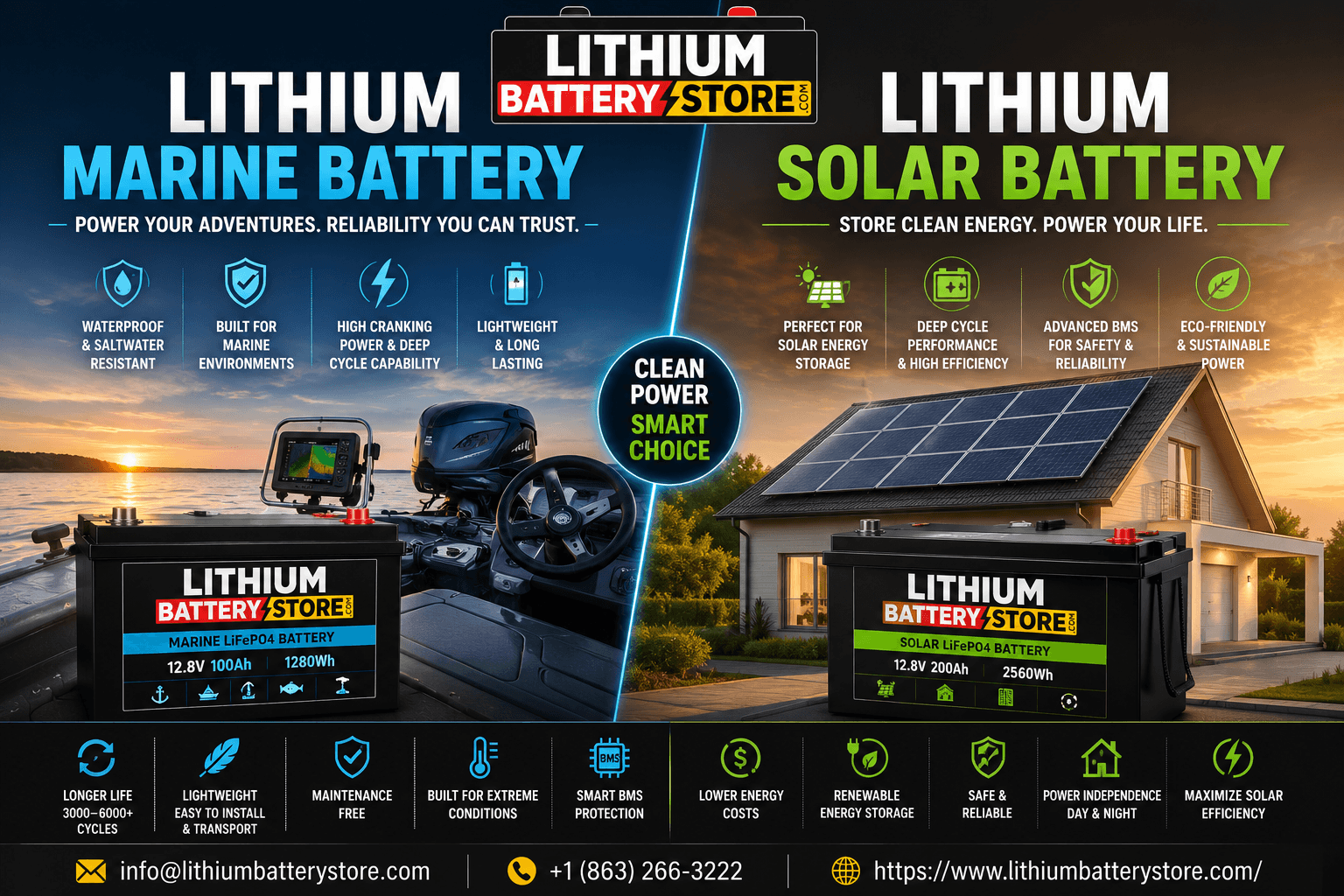
Lithium Battery for Solar Energy

How to Choose a Lithium Battery for Solar Energy Storage?

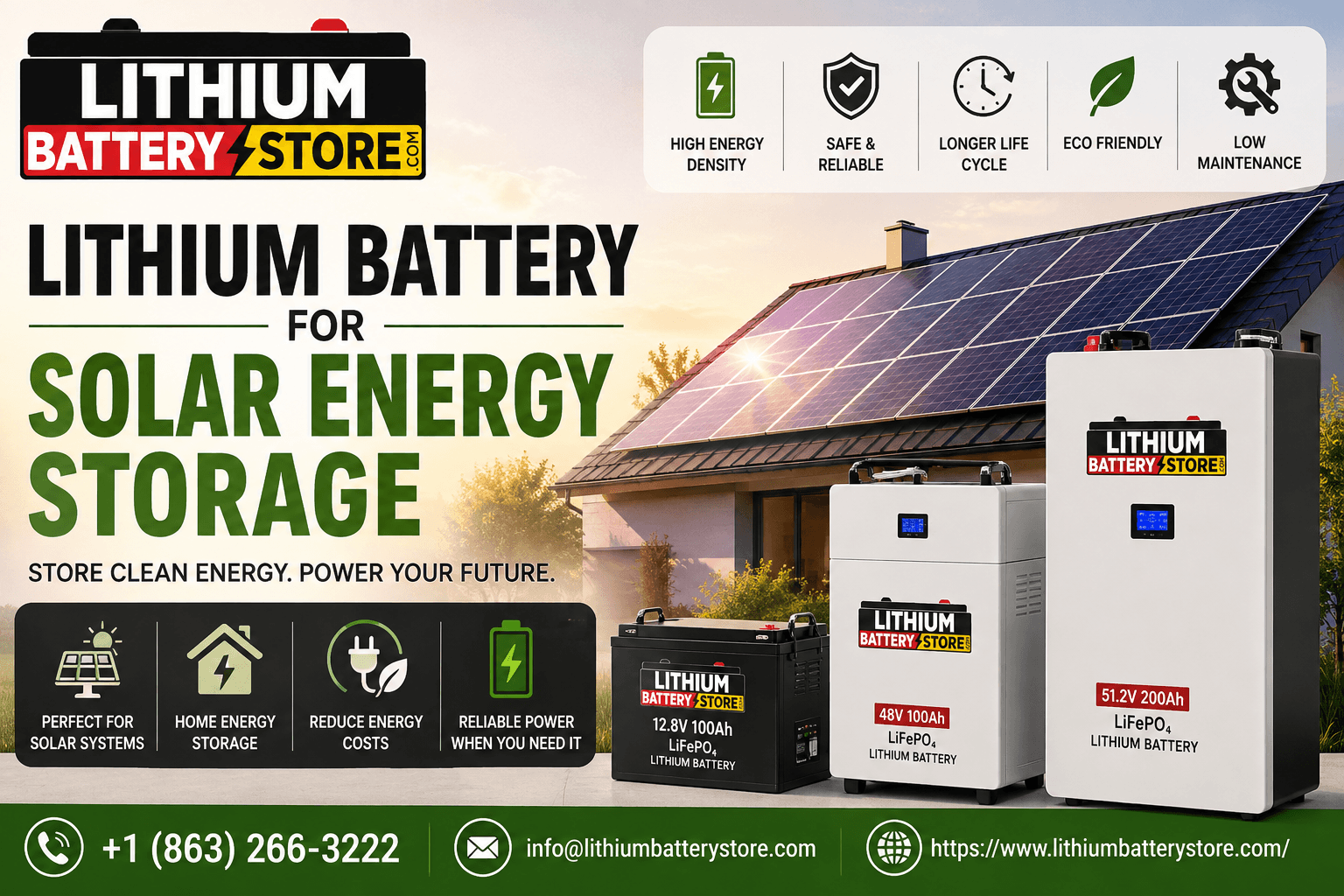
Quick answer: The right lithium battery for solar energy storage depends on three main factors: your system’s voltage (commonly 12V, 24V, or 48V), your daily energy usage in amp-hours (Ah) or kilowatt-hours (kWh), and how many days of backup power you want without sunlight. LiFePO4 (lithium iron phosphate) batteries are the standard choice for solar storage due to their long cycle life, safety, and consistent performance, with most solar batteries ranging from 100Ah to 300Ah depending on system size.

Choosing a battery for a solar energy storage system isn’t just about picking a large capacity and hoping it’s enough. Matching the battery to your solar panel output, your inverter, and your actual daily energy consumption makes the difference between a system that reliably powers your home or off-grid setup and one that falls short when you need it most. This guide walks through exactly how to make that decision.

Why LiFePO4 Is the Standard for Solar Storage

Lithium Iron Phosphate (LiFePO4) batteries have become the go-to choice for solar energy storage, replacing older lead-acid and AGM battery banks. Compared to lead-acid batteries, LiFePO4 batteries offer:

  • A significantly longer cycle life, often rated for thousands of charge cycles at full depth of discharge, compared to a few hundred for lead-acid
  • Higher usable capacity, since LiFePO4 batteries can typically be discharged to 100% depth of discharge (DoD) without damage, while lead-acid batteries are usually limited to 50% DoD to preserve their lifespan
  • Lighter weight, making installation and mounting easier, particularly for off-grid cabins, vans, or remote installations
  • More consistent voltage output throughout the discharge cycle, which helps connected appliances and inverters perform more reliably
  • Lower long-term cost, since the extended lifespan typically offsets the higher upfront price compared to repeatedly replacing lead-acid batteries

Step 1: Determine Your System Voltage

Solar battery systems are commonly built around 12V, 24V, or 48V configurations, and choosing the right one depends on the size of your system and the appliances or inverter you’re powering.

  • 12V systems are typically suited to smaller setups, such as cabins, small off-grid systems, or supplementary storage for basic appliances.
  • 24V systems offer a step up in power handling and are common in mid-sized off-grid or backup power setups.
  • 48V systems are generally recommended for larger solar installations, whole-home backup power, or setups powering higher-demand appliances, since higher voltage systems can carry more power with less energy loss over cabling.

As a general rule, it’s better to choose a single battery rated for your target voltage rather than wiring multiple lower-voltage batteries in series to reach it. A dedicated 48V battery, for example, is generally more efficient and reliable than connecting four 12V batteries in series, and avoids the extra wiring, connection points, and balancing issues that come with series configurations.

Step 2: Calculate Your Daily Energy Usage

Before choosing a battery capacity, you need a reasonably accurate picture of how much energy your system needs to store and deliver each day. This involves adding up the power draw (in watts) of everything you plan to run, multiplied by how many hours per day you expect to use it, to arrive at your total daily watt-hour (Wh) usage.

Once you know your daily Wh requirement, you can convert this to amp-hours (Ah) for your chosen system voltage using the formula:

Ah needed = Total Wh ÷ System Voltage

For example, a system with a daily usage of 2,400Wh on a 24V setup would need approximately 100Ah of battery capacity to cover a single day’s use, before accounting for any additional backup days.

Step 3: Decide How Many Days of Backup You Need

Solar energy storage isn’t just about covering daily use, it’s also about having enough reserve capacity for cloudy days or periods with reduced sunlight. Most solar storage setups are sized to provide at least one to three days of backup power, depending on the reliability of sunlight in your location and how critical continuous power is for your needs.

If you’re in an area with frequent cloud cover or want a larger safety margin, sizing your battery bank for two to three days of autonomy is generally a safer approach than sizing for daily use alone.

Step 4: Check Compatibility with Your Solar Charge Controller and Inverter

Not every lithium battery is automatically compatible with every solar charge controller or inverter. Before purchasing, it’s worth confirming:

  • That your charge controller supports LiFePO4 charging profiles, since lithium batteries have different charging voltage requirements than lead-acid
  • That your battery’s built-in Battery Management System (BMS) is compatible with your intended application, particularly for higher-power setups
  • That your inverter’s voltage input matches your chosen battery system voltage

Many solar batteries, including most modern LiFePO4 models, come with upgraded BMS protection as standard, but it’s still worth confirming compatibility with your specific charge controller and inverter setup before installation.

Common Solar Storage Applications

Off-Grid Cabins and Small Solar Setups

Smaller off-grid systems, such as cabins or sheds, typically work well with a single 12V or 24V LiFePO4 battery in the 100Ah–200Ah range, depending on daily energy needs.

Whole-Home Backup and Larger Off-Grid Systems

Larger installations powering a full home or multiple high-demand appliances generally benefit from a 48V system, often using higher-capacity batteries or multiple units connected in parallel to reach the required storage capacity.

Generator Replacement Systems

LiFePO4 battery banks paired with solar panels and a charge controller are increasingly used as a full generator replacement, offering quieter, maintenance-free power with no fuel costs. These setups typically require careful sizing based on peak load demands as well as daily usage, since generator-replacement systems often need to handle higher instantaneous power draws.

Choosing the Right Solar Battery for Your System

At Lithium Battery Store, we supply a full range of LiFePO4 batteries across 12V, 24V, 36V, 48V, and 72V configurations, suited to solar storage systems of all sizes, from small off-grid cabins to full generator-replacement setups. Our team is happy to help you work through voltage, capacity, and compatibility questions to find the right battery, and the right charger, for your specific solar application. Browse our solar battery range or get in touch with our team for personalized sizing advice.

Frequently Asked Questions

What size lithium battery do I need for solar power?

This depends on your daily energy usage and desired backup days. As a starting point, calculate your daily watt-hour usage, convert it to amp-hours for your system voltage, then multiply by the number of backup days you want.

Can I use a 12V battery for a whole-home solar system?

It’s possible for small loads, but larger or whole-home systems generally perform more efficiently on 24V or 48V systems, since higher voltage reduces current draw and energy loss across cabling.

Do LiFePO4 batteries work well in cold climates?

LiFePO4 batteries generally perform well in a wide range of temperatures, though charging in very cold conditions can require specific BMS protections. Checking a battery’s rated temperature range is worthwhile for installations in colder climates.

How many solar batteries do I need?

This depends on your total capacity requirement. If a single battery doesn’t meet your Ah needs, multiple batteries of the same voltage can typically be connected in parallel to increase total capacity.

Best Lithium Marine Battery

Choosing the Best Lithium Marine Battery and Solar Battery Supplier

Energy storage has become an essential part of modern life, especially as people move toward cleaner and more efficient power solutions. Whether it is for boating, outdoor marine activities, or renewable energy systems at home, lithium battery technology is now widely used due to its reliability and long lifespan. Two important areas where this technology plays a major role are marine power systems and solar energy storage. A lithium marine battery for boats ensures smooth and reliable performance on water, while choosing a trusted solar battery supplier Sarasota Florida helps homeowners and businesses maintain efficient energy storage systems.

Selecting the right battery and supplier is not just a technical decision; it is a long-term investment. The quality of the battery directly affects performance, safety, and cost savings over time. Understanding what to look for in both marine batteries and solar suppliers can help users make better and more informed decisions.

Importance of Lithium Battery Technology

Lithium batteries have revolutionized the energy storage industry. Compared to traditional lead-acid batteries, lithium batteries offer higher energy density, faster charging, and significantly longer life cycles. These advantages make them ideal for demanding applications such as marine environments and solar power systems.

A lithium marine battery for boats provides consistent and stable energy output, even in challenging water conditions. Similarly, working with a reliable solar battery supplier Sarasota Florida ensures that solar systems are equipped with efficient storage solutions that maximize energy usage and reduce dependency on the grid.

Lithium technology is also known for its lightweight design, which improves efficiency in boats and reduces installation complexity in solar setups. This combination of performance and convenience is the reason lithium batteries are quickly becoming the industry standard.

Choosing a Lithium Marine Battery for Boats

Boats require dependable and durable power sources to support navigation systems, lighting, communication devices, and onboard electronics. A lithium marine battery for boats is specifically designed to handle these demands while offering long-lasting performance.

One of the biggest advantages of a lithium marine battery is its ability to maintain stable voltage throughout its discharge cycle. This ensures that boat systems operate smoothly without sudden drops in power. Additionally, these batteries are built to withstand harsh marine environments, including vibration, humidity, and temperature changes.

Another important factor is weight. A lithium marine battery for boats is significantly lighter than traditional battery types, which improves fuel efficiency and overall boat performance. The longer lifespan of lithium batteries also means fewer replacements, reducing long-term maintenance costs for boat owners.

Understanding Solar Battery Suppliers in Sarasota, Florida

As solar energy becomes more popular, the demand for efficient storage systems continues to grow. A professional solar battery supplier Sarasota Florida plays a key role in providing high-quality batteries that store solar energy effectively and reliably.

Solar batteries allow users to store excess energy generated during the day and use it at night or during power outages. Without proper storage, much of the generated solar energy would go unused. This makes battery selection a critical part of any solar installation.

A reliable solar battery supplier Sarasota Florida ensures that customers receive batteries that are compatible with their solar systems and capable of handling long-term energy storage needs. These suppliers also help customers understand system requirements and recommend suitable battery capacities based on usage patterns.

Key Factors in Choosing the Right Supplier

When selecting a battery supplier, quality and reliability should always come first. A trusted supplier provides not only the product but also technical support and after-sales service.

A good solar battery supplier Sarasota Florida offers batteries that are tested for safety, durability, and performance. This ensures that customers receive products that can handle long-term energy storage without frequent issues. Similarly, when choosing a lithium marine battery for boats, it is important to consider whether the battery is designed specifically for marine environments and can handle continuous use under demanding conditions.

Warranty support is another important factor. A reliable supplier stands behind their products and offers protection in case of defects or performance issues. This adds an extra layer of security for customers making long-term investments.

Benefits of Lithium Marine Batteries and Solar Storage Systems

Lithium batteries provide several advantages across both marine and solar applications. A lithium marine battery for boats delivers consistent power output, making it ideal for long trips and extended use on the water. Its ability to discharge deeply without damage also improves overall efficiency and usability.

In solar systems, working with a trusted solar battery supplier Sarasota Florida ensures that energy is stored efficiently and used effectively. Lithium batteries charge faster and last significantly longer than traditional alternatives, making them a cost-effective solution over time.

Another key benefit is low maintenance. Unlike older battery technologies, lithium batteries do not require frequent upkeep, which saves both time and effort for users. Their high efficiency also means less energy loss during charging and discharging cycles.

Why Quality Should Be a Priority

Choosing high-quality batteries and reliable suppliers is essential for long-term performance. Poor-quality batteries can lead to system failures, reduced efficiency, and higher replacement costs.

A well-designed lithium marine battery for boats ensures safe and stable operation in all marine conditions. Similarly, a dependable solar battery supplier Sarasota Florida guarantees that customers receive energy storage solutions that match their system requirements and deliver consistent performance.

Investing in quality products not only improves efficiency but also enhances safety and long-term value. This is especially important for systems that are used daily or in critical environments.

Future of Lithium Energy Storage

The future of energy storage is strongly connected to lithium battery technology. As demand for renewable energy and electric mobility continues to grow, lithium batteries will play an even more important role in powering homes, vehicles, and marine systems.

Advancements in battery design are expected to improve energy density, charging speed, and lifespan even further. This means that both marine and solar applications will benefit from more efficient and reliable energy storage solutions in the coming years.

Conclusion

Choosing the right battery and supplier is a critical decision for anyone investing in marine or solar energy systems. A lithium marine battery for boats provides reliable, lightweight, and long-lasting power for marine applications, while a trusted solar battery supplier Sarasota Florida ensures efficient and dependable energy storage for solar systems.

By focusing on quality, reliability, and proper system compatibility, users can enjoy better performance, lower maintenance costs, and long-term energy savings. Lithium technology continues to reshape the energy storage industry, making it one of the most reliable and efficient solutions for both marine and solar applications today.

24V lithium ion battery

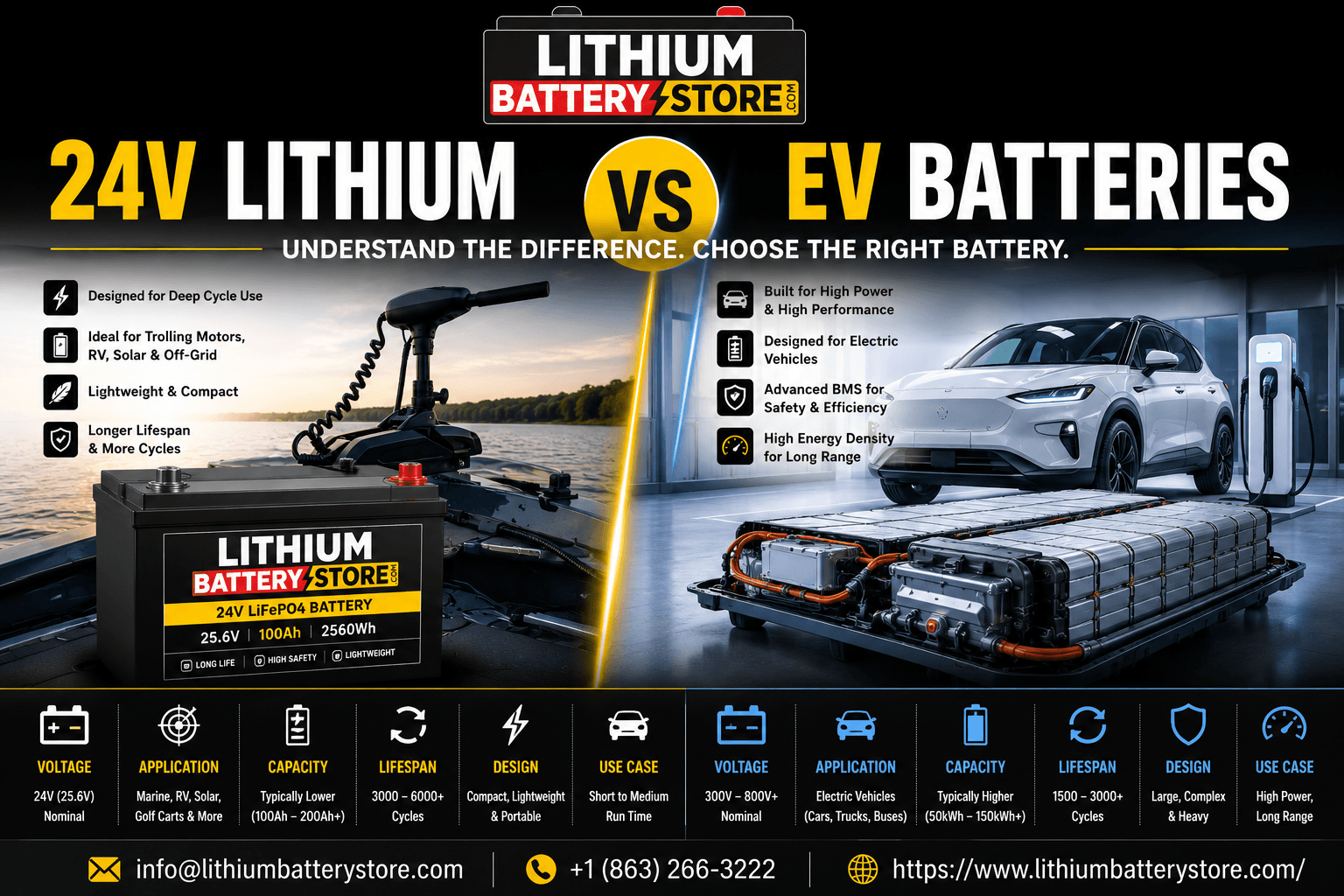
What Is the Difference Between 24V Lithium and EV Batteries?

Lithium battery technology has become the preferred power solution for modern applications ranging from energy storage systems to electric transportation. As more consumers and businesses move away from traditional lead-acid batteries, two popular options often come into discussion: the 24V lithium ion battery and the lithium battery for electric vehicles. Although both use advanced lithium technology, they are designed for different purposes and deliver different levels of performance. Understanding these differences can help buyers choose the right battery solution for their needs.

Understanding 24V Lithium Ion Batteries

A 24V lithium ion battery is designed to deliver stable and efficient power for equipment that requires a 24-volt energy system. These batteries are widely used in solar energy storage, marine applications, recreational vehicles, industrial equipment, and portable power solutions. Their popularity continues to grow because they offer longer service life, faster charging times, and better efficiency than conventional battery technologies.

One of the biggest advantages of a 24V lithium ion battery is its versatility. It can provide reliable power while remaining lightweight and compact. Users also benefit from lower maintenance requirements and improved overall efficiency. For businesses and homeowners looking for dependable energy storage, a 24V lithium ion battery is often an excellent choice.

Understanding Lithium Batteries for Electric Vehicles

A lithium battery for electric vehicles is specifically engineered to power electric transportation systems. Unlike a standard 24V lithium ion battery, these batteries are designed to handle the higher energy demands of electric cars, electric scooters, electric motorcycles, and commercial electric vehicles.

The main goal of a lithium battery for electric vehicles is to provide sufficient energy for longer driving distances while maintaining high levels of efficiency. Modern electric vehicles rely on advanced battery systems that support rapid charging, enhanced safety features, and consistent performance. As the electric vehicle market continues to expand, the importance of reliable lithium battery technology becomes even greater.

The Main Difference Between 24V Lithium and EV Batteries

The most significant difference between these battery types lies in their intended application. A 24V lithium ion battery is commonly used in equipment, energy storage systems, and various industrial applications. A lithium battery for electric vehicles is specifically built for transportation and mobility.

Another major difference is battery capacity. Electric vehicles require much larger battery systems because they must power an entire vehicle for extended periods. A lithium battery for electric vehicles is therefore designed to store more energy and deliver higher performance than a standard 24V lithium ion battery.

Size also plays an important role. Electric vehicle batteries are generally larger and more complex because they contain multiple battery modules working together. A 24V lithium ion battery is often smaller and easier to integrate into compact systems.

Cost is another area where differences become clear. Because a lithium battery for electric vehicles contains advanced technology and higher energy capacity, it is usually more expensive. A 24V lithium ion battery is often a more affordable solution for applications that do not require large amounts of stored energy.

Why Lithium Batteries Continue to Grow in Popularity

Whether choosing a 24V lithium ion battery or a lithium battery for electric vehicles, users benefit from the advantages of lithium technology. These batteries offer excellent energy efficiency and can maintain reliable performance over thousands of charging cycles.

Compared with traditional lead-acid batteries, lithium batteries charge more quickly and deliver more usable energy. They also weigh significantly less, making them easier to transport and install. This lightweight design is especially important for electric vehicles, where reducing weight can improve overall efficiency and driving range.

Another reason for the growing popularity of lithium batteries is their long operational life. Many users find that investing in lithium technology reduces long-term replacement and maintenance costs. This makes both the 24V lithium ion battery and the lithium battery for electric vehicles attractive options for modern power applications.

Choosing the Right Battery for Your Needs

The best battery depends entirely on your intended application. If you need reliable energy storage for equipment, marine systems, solar installations, or recreational vehicles, a 24V lithium ion battery may be the ideal solution. It offers dependable performance while remaining compact and efficient.

If your goal is to power an electric car, scooter, motorcycle, or other electric transportation system, a lithium battery for electric vehicles is the better choice. These batteries are designed to handle the unique demands of electric mobility and provide the power necessary for long-distance performance.

When selecting any battery, quality should always be a priority. Purchasing from a trusted supplier helps ensure safety, performance, and long-term reliability.

Why Choose Lithium Battery Store

Lithium Battery Store is committed to providing high-quality battery solutions for a wide range of applications. Whether customers need a dependable 24V lithium ion battery or a high-performance lithium battery for electric vehicles, selecting the right supplier can make a significant difference. Quality batteries deliver better efficiency, longer service life, and greater overall value.

Conclusion

Understanding the difference between a 24V lithium ion battery and a lithium battery for electric vehicles is important when choosing the right power solution. While both rely on advanced lithium technology, they are designed for different applications and performance requirements. A 24V lithium ion battery is ideal for energy storage and equipment, while a lithium battery for electric vehicles is built specifically for transportation needs. By selecting the appropriate battery and purchasing from a trusted provider like Lithium Battery Store, users can enjoy reliable and efficient power for years to come.

Lithium Battery

Which Lithium Battery Is Best for Trolling Motors and Off-Grid Use?

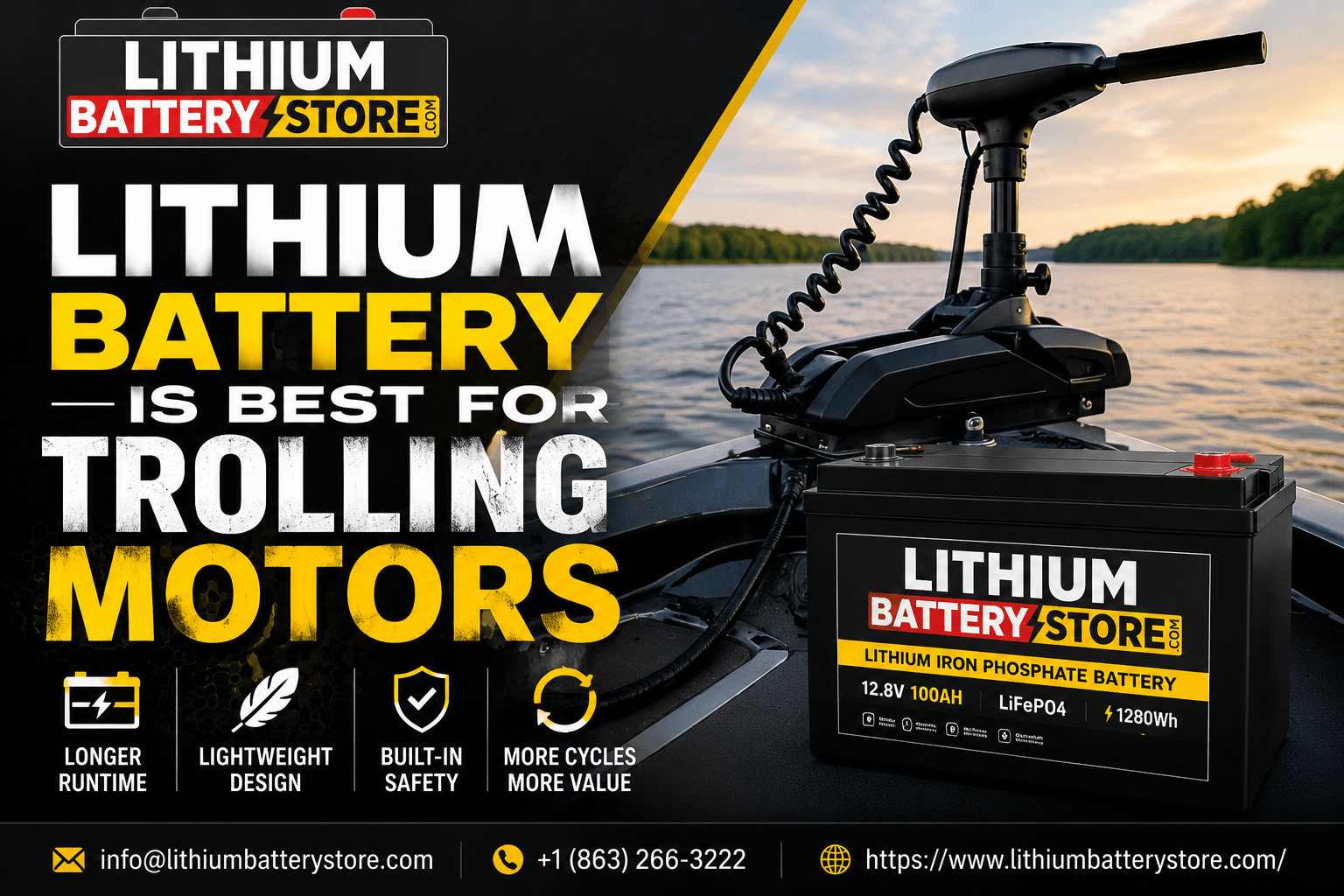
Choosing the right battery is one of the most important decisions for anyone who relies on marine equipment or independent power systems. Whether you are powering a fishing boat or creating a reliable energy solution away from the grid, selecting a quality lithium battery for trolling motor applications and finding the best lithium battery for off-grid system performance can significantly improve efficiency and reliability.

Traditional lead-acid batteries have served users for decades, but modern lithium technology has transformed the market. A high-quality lithium battery for trolling motor offers longer runtime, faster charging, and lighter weight, while the best lithium battery for off-grid system applications provides dependable energy storage and long-term savings.

At Lithium Battery Store, customers can find advanced lithium battery solutions designed to meet the demands of both marine and off-grid power users.

Why Are Lithium Batteries Becoming So Popular?

Lithium batteries have become the preferred choice for many boat owners and off-grid enthusiasts. Compared to traditional batteries, a lithium battery for trolling motor provides greater energy efficiency and a longer service life.

Similarly, the best lithium battery for off-grid system installations delivers consistent power while requiring less maintenance. These advantages make lithium batteries an attractive investment for those seeking reliable energy solutions.

The growing popularity of a lithium battery for trolling motor is also driven by improved performance on the water. Anglers and boaters appreciate the ability to spend more time operating equipment without worrying about battery depletion.

What Makes a Lithium Battery for Trolling Motor a Smart Choice?

A quality lithium battery for trolling motor offers several important benefits that improve overall boating performance.

Lightweight Design

One of the biggest advantages of a lithium battery for trolling motor is its lighter weight. Lithium batteries are significantly lighter than comparable lead-acid models, making boats easier to handle and improving efficiency.

Longer Runtime

A premium lithium battery for trolling motor can provide longer operating times, allowing users to spend more time on the water without interruption.

Faster Charging

Another benefit of a lithium battery for trolling motor is faster charging capability. This means less downtime between trips and more time enjoying outdoor activities.

Longer Lifespan

Most lithium batteries offer thousands of charge cycles. This makes a lithium battery for trolling motor a cost-effective long-term investment.

What Is the Best Lithium Battery for Off-Grid System Applications?

The best lithium battery for off-grid system installations is one that delivers dependable energy storage, efficient performance, and long-term durability. Off-grid systems often rely on solar panels, wind turbines, or backup generators, making battery storage a critical component.

A high-quality best lithium battery for off-grid system setup allows users to store energy efficiently and access power when needed. Whether powering a cabin, RV, workshop, or remote property, reliable battery storage ensures consistent performance.

The best lithium battery for off-grid system solutions also provide excellent depth of discharge, allowing users to utilize more of the battery’s capacity without causing damage.

Key Features to Look For

When selecting a lithium battery for trolling motor or the best lithium battery for off-grid system, several important features should be considered.

Battery Capacity

Capacity determines how much energy the battery can store. A larger capacity lithium battery for trolling motor can support longer operating times, while the best lithium battery for off-grid system should provide enough storage to meet daily energy demands.

Battery Management System (BMS)

A quality battery should include a built-in Battery Management System. This feature protects the lithium battery for trolling motor and the best lithium battery for off-grid system from overcharging, overheating, and excessive discharge.

Durability

Durability is essential in both marine and off-grid environments. A reliable lithium battery for trolling motor should withstand vibration and moisture, while the best lithium battery for off-grid system should handle varying environmental conditions.

Efficiency

The best lithium battery for off-grid system should maximize energy usage and reduce losses. Likewise, an efficient lithium battery for trolling motor ensures consistent performance throughout its charge cycle.

Benefits of Using Lithium Batteries for Off-Grid Living

The best lithium battery for off-grid system installations provides several advantages over traditional battery technologies.

Greater Energy Storage

A quality best lithium battery for off-grid system stores more usable energy, helping users maximize power availability.

Reduced Maintenance

Unlike lead-acid batteries, the best lithium battery for off-grid system requires minimal maintenance, saving both time and effort.

Reliable Performance

The best lithium battery for off-grid system delivers consistent energy output, making it ideal for remote locations and backup power applications.

Long-Term Savings

Although the initial investment may be higher, the extended lifespan of the best lithium battery for off-grid system often results in lower overall ownership costs.

Why Choose Lithium Battery Store?

Lithium Battery Store specializes in providing advanced battery solutions for marine, recreational, and off-grid applications. Whether you need a dependable lithium battery for trolling motor or are searching for the best lithium battery for off-grid system, the company offers products designed for performance and reliability.

Customers choose Lithium Battery Store because of its commitment to quality, innovative technology, and customer support. Their battery solutions are engineered to provide long-lasting power and dependable operation in demanding environments.

How to Select the Right Battery

Choosing the ideal lithium battery for trolling motor depends on factors such as boat size, motor requirements, and expected runtime. Users should carefully evaluate their power needs before making a purchase.

Similarly, selecting the best lithium battery for off-grid system requires consideration of energy consumption, solar generation capacity, and backup power requirements. Proper planning ensures optimal battery performance and long-term satisfaction.

Consulting experts and choosing trusted suppliers such as Lithium Battery Store can simplify the decision-making process and help users find the most suitable battery solution.

Conclusion

When evaluating modern energy storage solutions, a lithium battery for trolling motor and the best lithium battery for off-grid system stand out as excellent choices. Their lightweight design, long lifespan, fast charging capabilities, and efficient performance make them ideal for a wide range of applications.

Whether you are spending long days on the water or building a dependable off-grid energy system, investing in a high-quality lithium battery for trolling motor and the best lithium battery for off-grid system can provide years of reliable service. With trusted products available from Lithium Battery Store, users can enjoy advanced battery technology designed to meet today’s energy demands while preparing for future power needs.

Back to Top
Product has been added to your cart
Compare (0)