72V LiFePO4 Battery Replacement Guide for Off Road ATVs
A reliable battery is essential for electric off-road ATVs. It supplies the power needed for acceleration, climbing, and riding across uneven terrain. When an existing battery loses capacity, charges poorly, or fails to deliver enough current, replacing it with a suitable 72V LiFePO4 battery may be a practical solution.
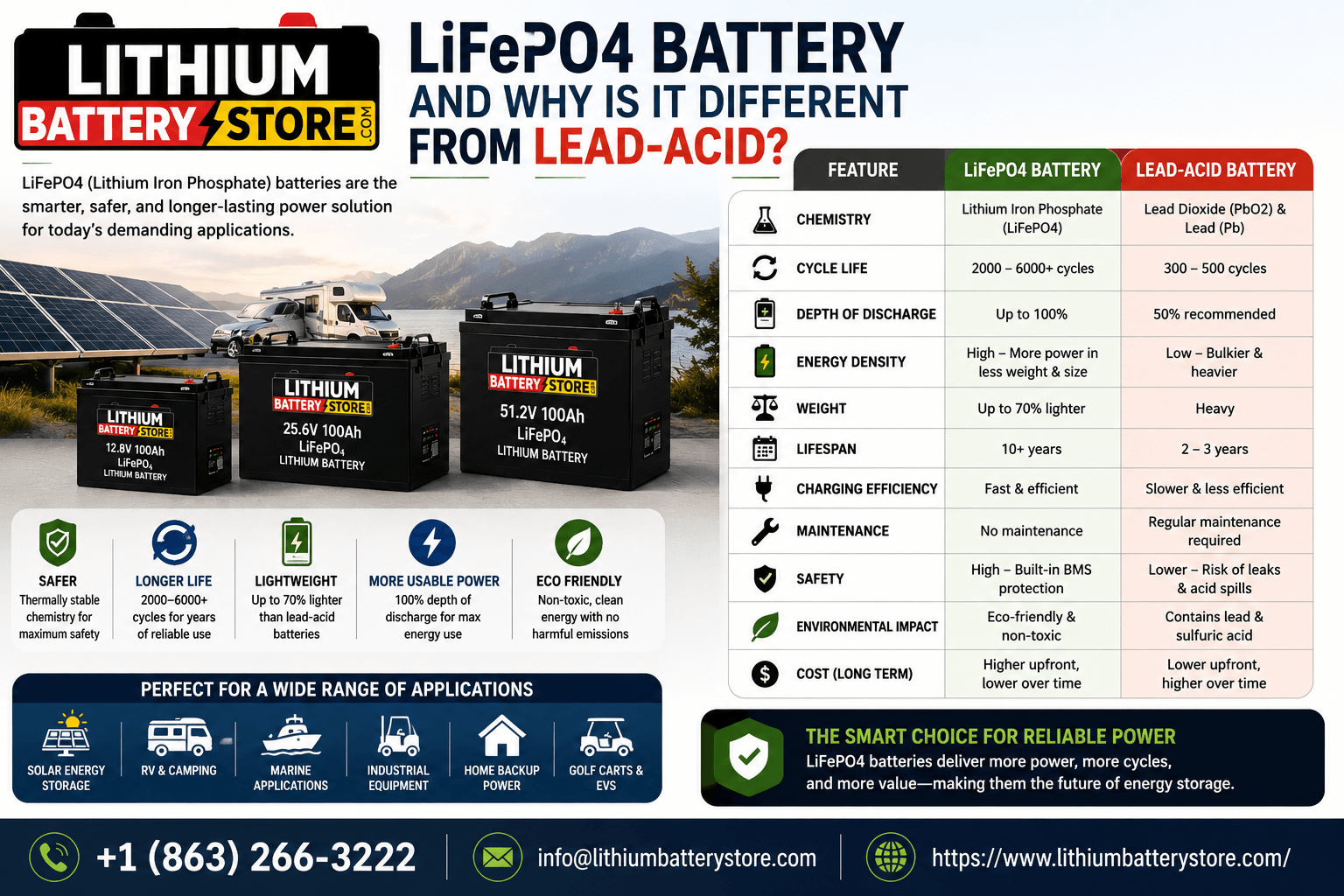
Lithium iron phosphate batteries are popular in electric vehicle applications because they offer stable performance and a long service life when used within their specifications. However, not every battery labeled 72V is compatible with every ATV. Before purchasing a replacement, riders should check the battery chemistry, voltage range, capacity, current requirements, charger, and physical dimensions.
This guide explains how to choose and replace a 72V LiFePO4 battery for an electric off-road ATV.
Why Consider a 72V LiFePO4 Battery Replacement?
A battery replacement can help restore an ATV’s usable riding time and consistent power delivery. LiFePO4 technology may also offer advantages over some traditional battery chemistries, depending on the original setup and the replacement battery’s specifications.
Key benefits can include:
- Long service life: A well-designed LiFePO4 battery can support many charge and discharge cycles when operated correctly.
- Stable power delivery: A suitable battery can provide consistent voltage during normal riding.
- Reduced battery weight: Some lithium packs weigh less than comparable lead-acid battery banks, although actual weight depends on the design and capacity.
- Integrated protection: Many packs include a battery management system (BMS) to protect against conditions such as overcurrent, overcharging, and excessive discharge.
- Convenient maintenance: LiFePO4 batteries generally do not require the routine watering associated with flooded lead-acid batteries.
The benefits depend on the selected battery and the ATV’s electrical system. A replacement should always meet the vehicle manufacturer’s requirements.
1. Confirm Your ATV’s Voltage Requirements
The first step is to verify that the ATV is designed for the replacement battery’s voltage range. A label stating 72V does not tell you the battery’s complete operating or charging voltage.
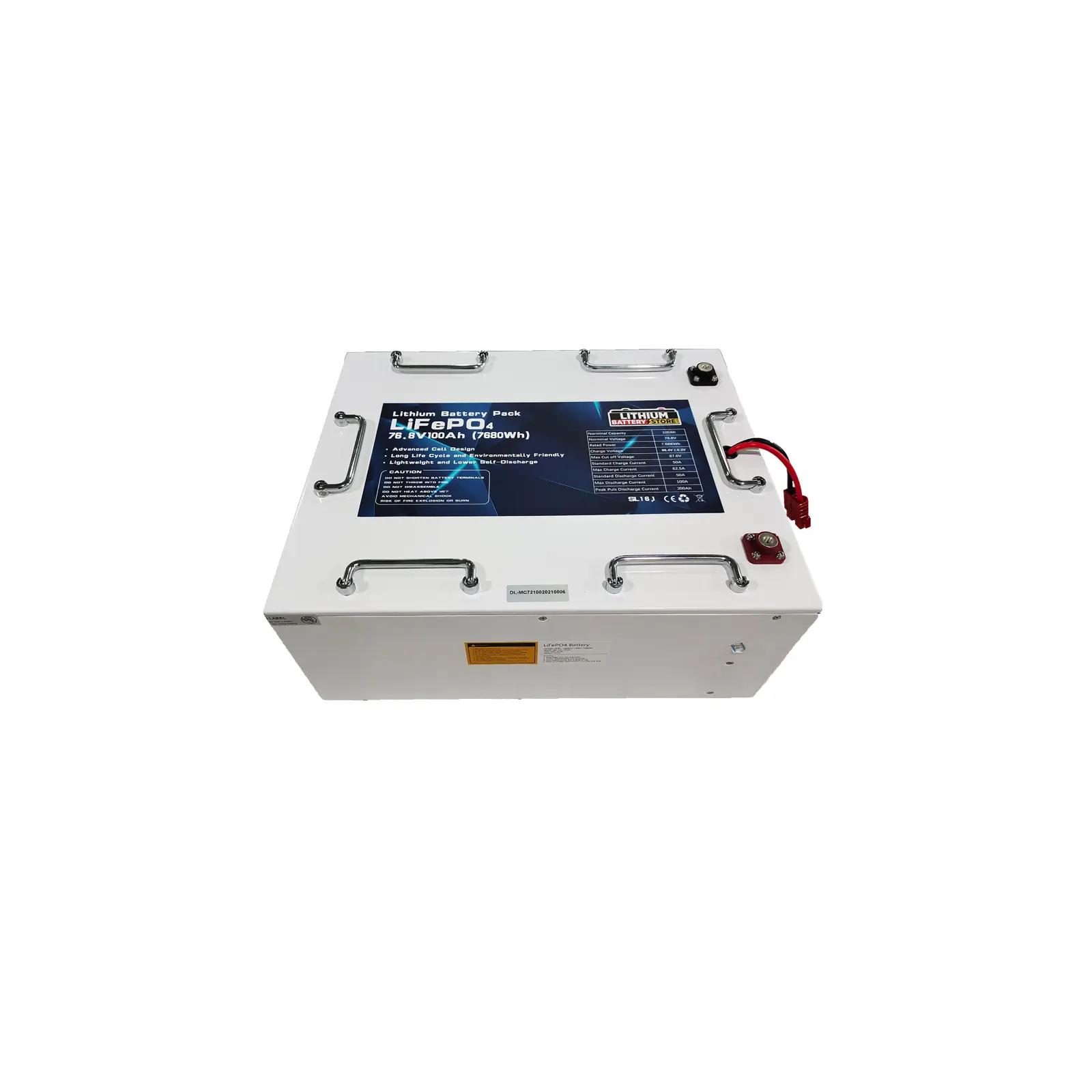
For example, a 24-series LiFePO4 pack typically has a nominal voltage of 76.8V and a full-charge voltage of 87.6V. Other battery chemistries marketed as 72V may have different voltage ranges.
Before buying a replacement, check:
- The original battery label and specifications
- The motor controller’s supported voltage range
- The manufacturer’s recommended battery configuration
- The maximum charging voltage
- The vehicle’s low-voltage cutoff requirements
Do not assume that a 72V lithium-ion battery and a 72V LiFePO4 battery are interchangeable. Their cell configurations and full-charge voltages may differ.
2. Choose the Right Battery Capacity
Battery capacity, measured in amp-hours (Ah), affects how much energy the battery can store. A higher-capacity battery may provide longer riding time, provided the vehicle and installation can accommodate it.
Battery energy is commonly estimated by multiplying nominal voltage by amp-hour capacity.
For example, a 76.8V, 50Ah LiFePO4 battery has approximately 3,840 watt-hours (Wh) of nominal energy.
Actual riding time depends on terrain, rider weight, speed, temperature, tire pressure, motor efficiency, and riding style. Frequent acceleration and steep climbs can increase energy consumption.
When choosing capacity, consider your usual riding conditions. A recreational rider on moderate trails may have different needs from someone using an ATV on demanding terrain for extended periods. Also confirm that a larger battery will physically fit and remain within the vehicle’s weight and mounting limits.
3. Check Continuous and Peak Current Ratings
Voltage and capacity are only part of battery selection. An off-road ATV may require high current during acceleration, hill climbing, and movement through mud or loose ground.
The battery and its BMS must support the current demanded by the motor controller.
Review these specifications:
- Continuous discharge current: The current the battery can supply under its stated operating conditions.
- Peak discharge current: The higher current available for a limited period, if specified.
- BMS current rating: The limits imposed by the battery management system.
- Controller requirements: The maximum battery current and any short-duration current demands.
A battery with adequate amp-hour capacity may still be unsuitable if its current rating is too low. If the BMS repeatedly disconnects power under acceleration, the battery may not be matched to the controller or the system may have another electrical fault.
Ask the battery supplier to confirm compatibility with your ATV’s controller before ordering.
4. Select a Compatible Battery Charger
A replacement battery may require a different charging setup from the original battery. Use a charger specifically approved for the selected LiFePO4 pack.
Check the charger’s output voltage, charging current, connector, polarity, and charging profile. Do not rely on a matching plug or a “72V” label alone.
For example, a 24-series LiFePO4 pack may require a charging voltage of 87.6V, while a different 72V battery configuration may require another value. Always follow the battery manufacturer’s datasheet.
Avoid chargers with lead-acid equalization or desulfation modes unless the battery manufacturer explicitly approves the equipment and settings. Never exceed the pack’s specified charging voltage or current.
5. Measure the Battery Compartment
Physical fit is another important part of a successful battery replacement. Lithium batteries can have different dimensions, terminal positions, and mounting requirements from the original pack.
Before purchasing, measure:
- Compartment length, width, and height
- Available mounting and fastening points
- Terminal orientation and connector clearance
- Cable routing space
- Ventilation and protection from dirt, moisture, and vibration
The replacement must be secured against movement during off-road use. Do not force a battery into a compartment or leave it loose because its dimensions are slightly different.
Also check whether the replacement requires a different connector, fuse, cable, or mounting bracket. Any changes should be correctly rated and installed according to the vehicle and battery manufacturers’ instructions.
6. Replace the Battery Safely
Battery replacement involves electrical and mechanical risks. A 72V-class battery can deliver substantial fault current, so installation should be performed by a qualified technician if you are unfamiliar with high-current electrical systems.
Use this general checklist:
- Switch off the ATV and follow the manufacturer’s shutdown and isolation procedure.
- Remove the key and disconnect the charging equipment.
- Isolate the battery using the designated disconnect, if fitted.
- Follow the vehicle service manual for disconnecting and removing the old battery.
- Inspect the compartment, cables, terminals, connectors, and fuse for damage or corrosion.
- Verify the replacement battery’s model, polarity, voltage, dimensions, and current ratings before connecting it.
- Secure the new battery using the approved mounting method.
- Reconnect the electrical system in the sequence specified by the manufacturer.
- Check that all covers and protective barriers are installed correctly.
- Charge the battery using its approved charger and perform the initial checks recommended by the supplier.
Never work on exposed live terminals with metal tools or allow the positive and negative terminals to short together. Do not open the battery enclosure, bypass the BMS, or improvise connections. If the old battery is swollen, leaking, unusually hot, or physically damaged, do not attempt a routine replacement procedure until the situation has been assessed safely.
7. Test the ATV After Installation
Once the battery has been installed and checked, follow the manufacturer’s commissioning instructions before riding.
Confirm that the battery display, charger, and vehicle indicators behave normally. Check for loose connections, unusual heat, warning lights, and unexpected power interruptions. If the ATV uses battery communication or a dedicated display, make sure the replacement supports the required interface.
Begin with a controlled, low-speed test in a safe area. Avoid demanding climbs or aggressive acceleration until normal operation has been confirmed. Stop using the vehicle if the battery overheats, the BMS repeatedly trips, or the ATV shows abnormal electrical behavior.
8. How to Choose a Reliable Replacement Supplier
A suitable supplier should provide clear technical specifications rather than relying on a generic 72V label. Look for documented information about the battery chemistry, nominal and full-charge voltage, capacity, continuous and peak current, BMS protections, charger requirements, dimensions, warranty, and support.
Lithium Battery Store can be considered when researching lithium battery replacement options. Before purchasing, provide the ATV’s make, model, model year, original battery specifications, and motor controller details so compatibility can be checked.
A supplier’s confirmation is especially important when replacing a lead-acid battery bank with a lithium pack or upgrading battery capacity. The vehicle may need a compatible charger, revised mounting, or other manufacturer-approved changes.
Conclusion
Replacing an off-road ATV battery with a 72V LiFePO4 battery can be a useful way to restore performance or meet different riding needs. The key is selecting a battery that matches the ATV’s electrical system, not simply choosing one with the right label.
Verify voltage and charging limits, capacity, continuous and peak current, BMS compatibility, charger settings, and physical fit before ordering. Follow the service manual during installation, secure the battery properly, and test the vehicle carefully before returning to the trail. With the right specifications and safe installation, a compatible LiFePO4 battery can provide dependable energy storage for an electric off-road ATV.
Frequently Asked Questions
Can I replace my ATV’s original battery with a 72V LiFePO4 battery?
Only if the ATV’s controller, wiring, voltage range, charger, and mounting arrangement are compatible. Confirm the exact specifications before purchasing.
Is every 72V lithium battery compatible with a 72V ATV?
No. Different lithium chemistries and cell configurations can have different nominal and full-charge voltages. Check the complete battery datasheet and the controller’s permitted voltage range.
What capacity should I choose for a 72V off-road ATV?
Choose capacity according to your desired riding time, energy consumption, available space, and vehicle limits. A higher Ah rating usually stores more energy, but it does not automatically guarantee better performance.
Can I use my existing ATV charger with a LiFePO4 replacement?
Not necessarily. The charger must match the replacement battery’s chemistry, charging voltage, and current requirements. Confirm compatibility with the battery manufacturer before charging.
Why does my replacement battery shut off during acceleration?
Possible causes include excessive current demand, a BMS limit, a poor connection, or a controller or battery fault. Stop riding and have the battery and electrical system checked rather than bypassing the BMS.
Does a LiFePO4 battery need regular maintenance?
LiFePO4 batteries generally require less routine maintenance than flooded lead-acid batteries. However, users should still inspect mounting and connections, keep the battery within its specified temperature range, use the correct charger, and follow the manufacturer’s storage instructions.
What details should I provide before ordering a replacement?
Provide the ATV make and model, model year, original battery voltage and chemistry, capacity, controller specifications, charger details, compartment dimensions, and connector information. These details help determine whether a replacement pack is suitable.